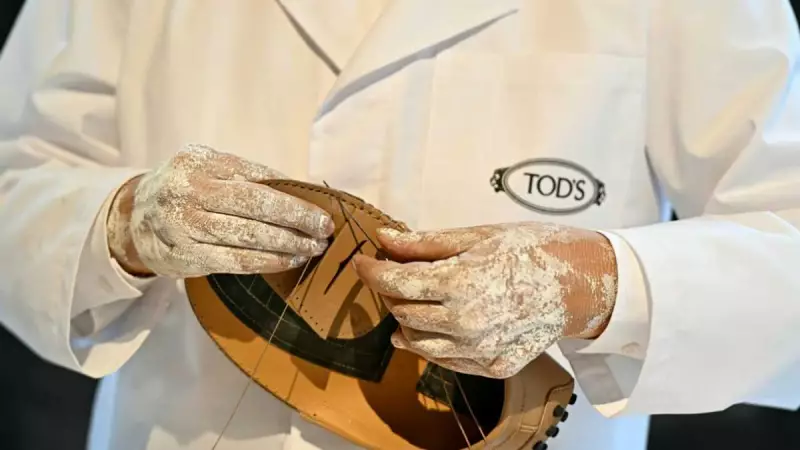
A wave of judicial investigations into exploitative labour practices at subcontractors has sent shockwaves through Italy's prestigious luxury fashion sector, prompting government intervention to defend the coveted 'Made in Italy' brand.
Court Actions and Government Response
Since 2024, Milan prosecutors have placed five major fashion brands under court administration after uncovering systemic worker abuses and a severe lack of oversight in their supply chains. The probe, led by prosecutor Paolo Storari, has exposed the dark underbelly of an industry built on glamour and high prices.
Most recently, lawyers for the famed leather goods maker Tod's appeared in a Milan court on Wednesday, December 3, 2025. Prosecutors are seeking a temporary advertising ban and the appointment of external administrators, citing what they label as 'malicious' actions by the company.
Italy's government, led by Industry Minister Adolfo Urso, has reacted strongly, claiming the reputation of national brands is 'under attack'. In October, Urso announced a proposed voluntary certificate for luxury firms to show compliance with the law, a move critics have dismissed as ineffective.
The Chain of Exploitation
Prosecutors allege that Tod's, whose leather loafers can sell for over $1,000, and three of its executives had 'full awareness' of the exploitation at its Chinese subcontractors but failed to implement preventive systems. The company allegedly ignored its own audit reports that revealed workers being paid as little as 2.75 euros per hour, violations of safety protocols, and 'degrading' living quarters inside factories.
Deborah Lucchetti, national coordinator of the Clean Clothes Campaign in Italy, describes a pervasive 'chain of exploitation.' She explains that major brands impose unsustainably low prices on their first-tier suppliers, who, in turn, outsource to subcontractors under even tighter margins, leading to rampant labour abuses, often targeting migrant workers.
The investigations have also ensnared other giants: Loro Piana, Dior's Italian subsidiary Manufactures Dior, Giorgio Armani Operations, and Alviero Martini. Prosecutors indicate more brands could face scrutiny.
Reputational Damage and Industry Pushback
Facing immense reputational risk, some brands are actively working to reassure consumers about their ethical standards. Last week, Prada invited journalists to its factory in Scandicci, near Florence, to showcase its in-house production process.
Lorenzo Bertelli, Prada's Chief Marketing Officer and head of social responsibility, stated that production is a core focus for the company, unlike some competitors. 'Other fashion executives don't view production as an area of responsibility,' Bertelli said, 'And this has led to many of things you have read in the newspapers.' Prada claims to have the highest rate of in-house production in the industry, with 25 owned factories, 23 of which are in Italy.
The scandal highlights a critical flaw in the global luxury model: the relentless outsourcing of production to cut costs, coupled with inadequate monitoring, which allows human rights violations to flourish far from the glossy storefronts of Milan and Paris.