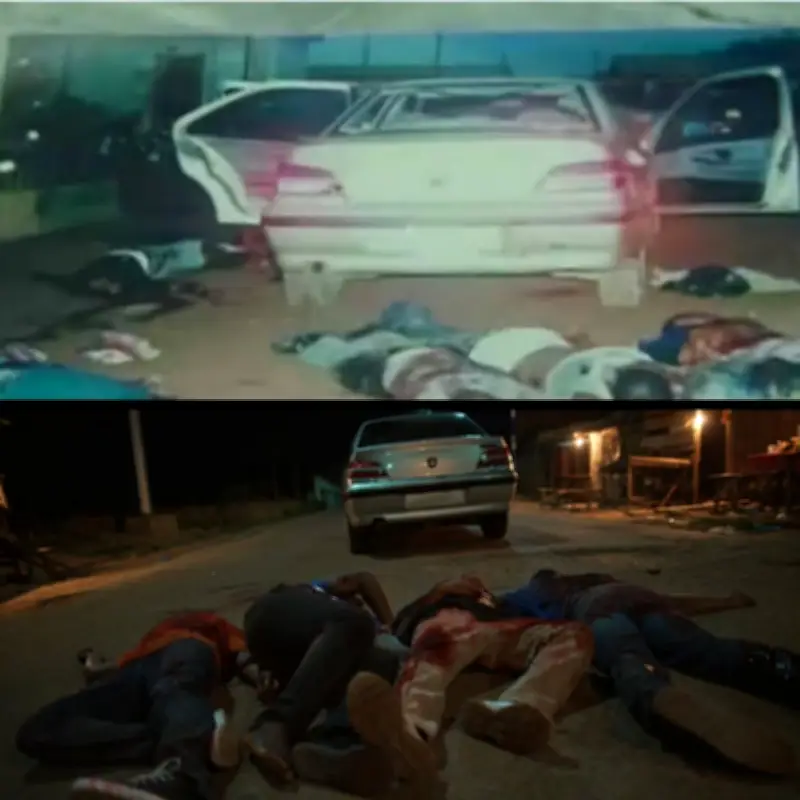
The upcoming Nollywood film The Night of June 7th is set to reignite national conversation about one of Nigeria's most infamous police brutality cases. The production recently released comparative images showing the real victims of the 2005 Apo Six killings alongside film stills, drawing sharp attention to the tragedy that unfolded in Abuja over two decades ago.
The Night of June 7th: A Brutal Extrajudicial Killing
On June 7, 2005, six young traders—Ifeanyi Ozor, Chinedu Meniru, Anthony Nwokike, Paulinus Ogbonna, Ekene Isaac Mgbe, and their female friend, Augustina Arebu—were murdered on their way home from an outing in the Apo district of Abuja. The victims, all in their twenties, were allegedly killed by police officers in what was later ruled as an extrajudicial execution.
The incident sparked national outrage as details emerged of how the officers, from the Federal Capital Territory Police Command, reportedly opened fire on the unarmed group. Witnesses later testified that the traders were forced to lie on the ground before being shot at close range. The police initially claimed the victims were armed robbers, but evidence contradicted this narrative.
Twelve-Year Legal Battle and Shocking Outcome
The case dragged through the courts for twelve years, with the families of the victims seeking justice. In 2017, a Federal High Court in Abuja delivered a judgment that stunned many: the court ordered the Nigerian government to pay N25 million in damages to each family of the five deceased traders, but no police officer was convicted or even disciplined for the killings.
According to legal analysts, the ruling highlighted the systemic impunity enjoyed by security forces in Nigeria. The court found that the killings violated the victims' rights to life, but the absence of criminal accountability sent a troubling message about the rule of law.
Human rights activist and lawyer, Femi Falana, commented, "The Apo Six case is a stark reminder of how extrajudicial killings have been normalized in Nigeria. The compensation is welcome, but without prosecutions, justice remains incomplete."
Film Brings the Tragedy to the Big Screen
The Night of June 7th, directed by a yet-to-be-announced filmmaker, aims to dramatize the events of that fateful night. The film's producers have emphasized their commitment to authenticity, working with the victims' families to ensure accuracy. The recently released photos juxtapose the real-life victims with their on-screen counterparts, highlighting the human faces behind the tragedy.
The film is scheduled to hit cinemas on August 28, and early buzz suggests it could become one of the most talked-about Nollywood releases of the year. Social media has already been abuzz with reactions, with many praising the production for keeping the memory of the Apo Six alive.
Remembering the Victims
The victims were more than just names in a court case. Ifeanyi Ozor was a 24-year-old father of two, Chinedu Meniru was a recent graduate, and Augustina Arebu was a 22-year-old fashion designer. Their deaths left families shattered and a community in mourning.
In a statement, the Apo Six Families Association said, "We hope this film will educate Nigerians about the dangers of police brutality and the need for reform. Our loved ones were not criminals; they were hardworking young people whose lives were cut short by men who swore to protect them."
Cinematic Tribute and Public Reaction
The release of the film stills has sparked a wave of nostalgia and anger on social media. Many users have drawn parallels between the Apo Six killings and more recent incidents of police brutality, such as the #EndSARS protests of 2020. The film's timing, coming just months after the sixth anniversary of the #EndSARS movement, adds to its relevance.
Nollywood critic, Olamide Akinwumi, noted, "This film is not just entertainment; it's a historical document. By showing the real faces of the victims, it forces us to confront the uncomfortable truths about our justice system."
Looking Ahead: The Night of June 7th in Cinemas
As the August 28 release date approaches, anticipation is building. The film's producers have promised a gripping narrative that balances emotional depth with factual accuracy. They have also announced plans for a documentary series that will explore the broader context of police violence in Nigeria.
For now, the public is left with the haunting images of the real victims and their cinematic representations. The juxtaposition serves as a powerful reminder that behind every statistic of police brutality, there are real people with dreams, families, and futures that were brutally stolen.
As Augustina Arebu's mother, Mrs. Ngozi Arebu, said in an interview, "We have waited 21 years for this story to be told. I hope the world will see the faces of my daughter and her friends and know that they were innocent."