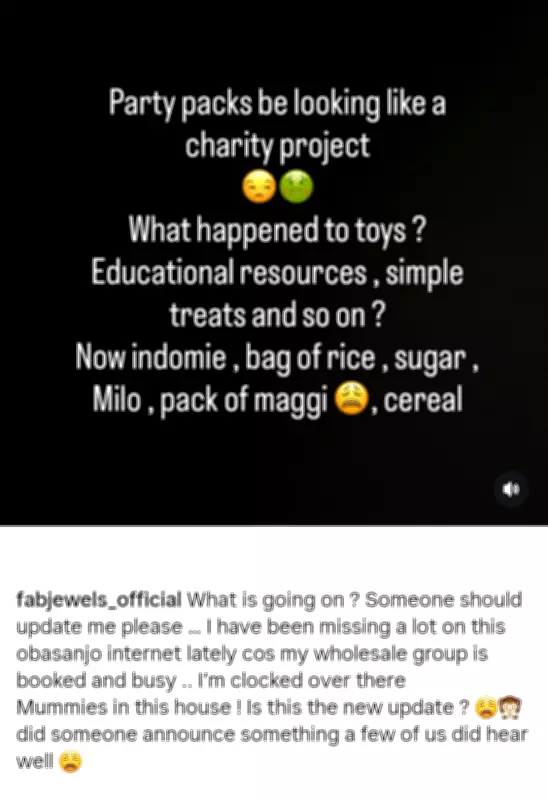
Businesswoman and social media personality Grace Makun has raised pointed questions about the evolving contents of children's party packs, expressing bewilderment at what she perceives as a significant shift from traditional items to more practical, food-based offerings. In a recent online post, Makun highlighted a trend that has left many parents and observers divided over the appropriateness and symbolism of modern party favors.
The Shift from Toys to Food Items
Grace Makun reminisced about a time when party packs for children's birthdays were typically filled with toys, small games, or educational resources that added an element of fun and learning to the celebration. She noted that these items were designed to delight young guests and serve as memorable tokens of the event. However, she observed that this practice has undergone a dramatic transformation in recent years.
According to Makun, parents are now increasingly including food items in these packs, such as indomie noodles, bags of rice, sugar, Milo, packs of Maggi seasoning, and cereal. She expressed confusion and concern over this change, questioning whether it aligns with the spirit of children's parties. "Party packs be looking like a charity project," she wrote, emphasizing her disbelief at the departure from toys and simple treats.
Social Media Reaction and Broader Implications
Makun's comments have ignited a lively discussion on social media, with many users weighing in on the topic. Some parents defended the inclusion of food items, citing economic considerations and the practicality of providing household staples that can benefit families. Others echoed Makun's sentiments, arguing that party packs should retain their playful and celebratory nature, focusing on items that bring joy to children rather than serving utilitarian purposes.
In her post, Makun humorously referenced the "obasanjo internet," a colloquial term for the fast-paced and often overwhelming flow of information online, suggesting that she might have missed announcements or trends explaining this shift. She asked, "What is going on? Someone should update me please... I have been missing a lot on this obasanjo internet lately. Is this the new update? Did someone announce something a few of us did not hear well?" This remark underscores the rapid changes in social norms and parenting practices that can sometimes leave individuals feeling out of touch.
Analyzing the Trend: Charity or Practicality?
The debate touches on broader themes of parenting, consumerism, and social values. On one hand, the inclusion of food items in party packs could be seen as a response to economic pressures, with parents opting for gifts that have immediate, tangible benefits for recipients. This approach might reflect a growing awareness of food security issues or a desire to support families in need, even in small ways.
On the other hand, critics like Makun argue that this trend risks stripping party packs of their original purpose: to celebrate childhood and create happy memories. Toys and educational resources, she suggests, foster imagination and learning, whereas food items, while practical, may not capture the same sense of excitement and wonder for young children. The comparison to a "charity project" highlights a potential disconnect between the festive atmosphere of a birthday party and the more sobering connotations of essential goods.
As this discussion continues to unfold, it raises important questions about how societal changes influence everyday traditions. Whether this trend represents a temporary shift or a lasting change in parenting culture remains to be seen, but Grace Makun's candid observations have certainly brought it into the spotlight, encouraging reflection on what we value in our celebrations and how we choose to share joy with the next generation.