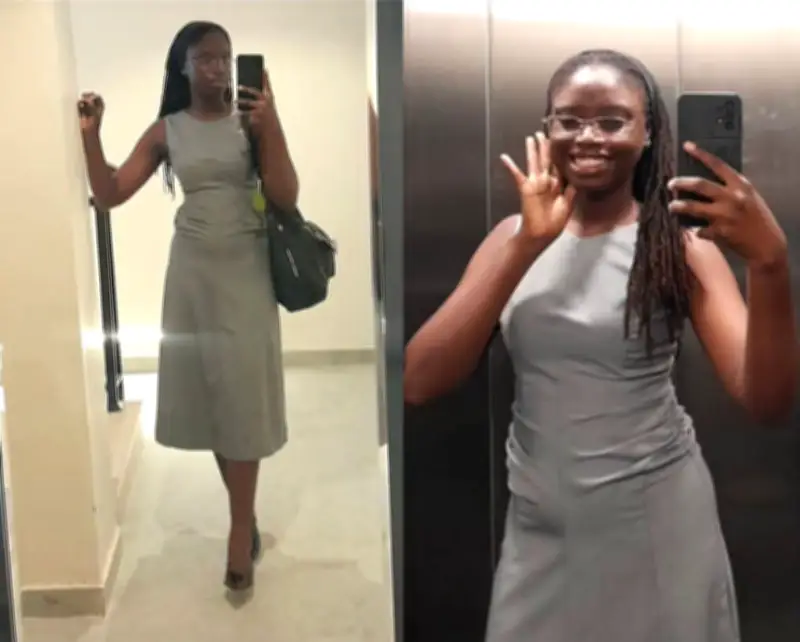
A woman has shared her experience of being asked to cover up with a jacket at her workplace because her sleeveless dress was deemed “unprofessional.” The incident, which she recounted on social media, has sparked a wave of reactions from users who expressed disbelief and offered support.
What Happened
The woman, who did not disclose her name or employer, revealed that she wore a grey sleeveless dress to work. The dress, as she described, covered her body modestly, exposing only her arms and lower legs. Despite its conservative cut, she was instructed to put on a jacket to comply with the office dress code.
In her post, she wrote: “Got asked to wear a jacket. I thought we left shoulders being unprofessional behind.” Her comment highlights her surprise at the policy, suggesting she believed such restrictions were outdated.
Public Reaction
The post quickly gained traction on social media, with numerous users commenting on the situation. Many expressed disbelief that a sleeveless dress would be considered inappropriate in a modern workplace. Others slammed the workplace for enforcing what they perceived as an overly strict dress code, particularly for women.
One user remarked, “This is ridiculous. Women should not be policed for their clothing choices when they are dressed professionally.” Another added, “It’s 2026, and we still have these double standards. Men wear sleeveless shirts in summer, but women are told to cover up.”
Broader Implications
The incident has reignited conversations about workplace dress codes and gender bias. Critics argue that such policies often disproportionately target women, imposing outdated standards of modesty. Supporters of the woman’s stance called for more inclusive and flexible dress codes that respect individual choices while maintaining professionalism.
The woman’s post has been shared widely, with many tagging HR departments and workplace equality advocates to draw attention to the issue. As of this report, her employer has not publicly responded to the backlash.