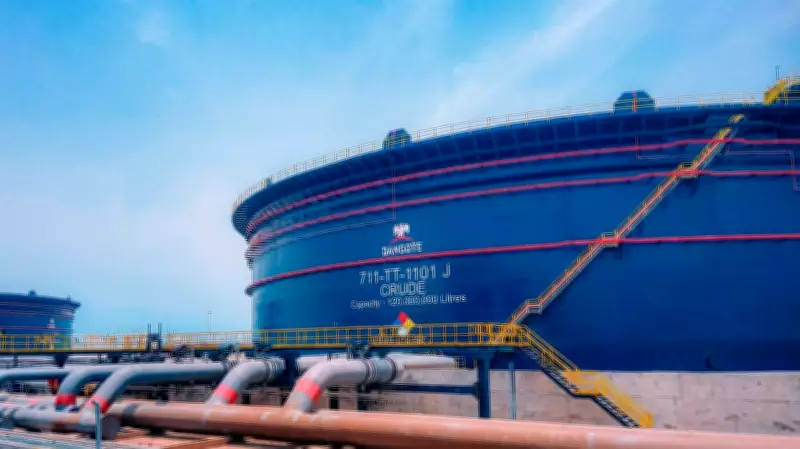
Europe's escalating jet fuel crisis has propelled Dangote Petroleum Refinery to new heights, with exports to the continent surging by 75% in April. The refinery now supplies 20% of Europe's total jet fuel imports, up from just 4% a year ago, according to data from energy intelligence platform Kpler.
Record Deliveries
Deliveries from the Dangote refinery to Europe reached a record 272,000 metric tonnes between April 1 and 29. This represents a 75% increase compared to March volumes and is nearly two-thirds above the previous record set in September last year. The sharp rise comes as Europe struggles to replace supplies disrupted by the escalating conflict in the Middle East and the closure of the Strait of Hormuz, a critical global energy transit route that previously accounted for about 40% of Europe's jet fuel import flows.
Key Destinations
France emerged as the largest destination for Nigerian jet fuel imports in April, receiving 163,000 tonnes. Spain followed with 88,000 tonnes, and the United Kingdom imported 22,000 tonnes. These figures highlight Nigeria's growing role in the global refined products market.
Geopolitical Impact
George Maher-Bonnett, Head of Europe and Africa gasoline pricing at Argus Media, noted that Dangote Refinery has rapidly become one of Europe's few large-scale alternative suppliers. Buyers are pivoting from Middle Eastern supply routes increasingly exposed to geopolitical risks. Nigerian cargoes, driven almost entirely by Dangote Refinery, accounted for 20% of Europe's total jet fuel imports in April, compared to 10% in March and just 4% a year ago.
Europe has also increased imports from the United States since the Middle East conflict intensified. However, alternative supply sources are still only replacing about half of the lost Gulf volumes, according to the International Energy Agency (IEA).
Supply Shortages and Price Increases
Market participants warn that Europe may be unable to fully offset the supply disruption, with shortages expected to emerge between May and June. This situation is likely to increase reliance on supplies from Nigeria and the United States. The supply crunch has already triggered sharp increases in jet fuel prices across key trading hubs.
Maher-Bonnett said Nigerian jet fuel prices have risen steadily since the conflict began on February 28. This prompted airline operators under the umbrella of the Airline Operators of Nigeria (AON) to accuse fuel marketers of profiteering amid escalating costs. The concerns forced the Federal Government to convene an emergency meeting in Abuja on April 22 to address pricing tensions in the domestic aviation fuel market.
Price Trends
Argus Media, which began assessing jet fuel prices on a free-on-board offshore Lomé ship-to-ship basis on March 16, said prices have averaged $1,588.50 per tonne since assessments commenced. Although premiums for offshore Lomé cargoes relative to ICE gasoil futures have declined from around $500 per tonne in mid-March to the low-to-mid $200 range by April 29, outright prices have remained elevated, hovering just below $1,600 per tonne. The report noted that West African jet fuel prices have remained slightly cheaper than those in northwest Europe due to strong product availability from the Dangote refinery.
Growing Dependence on Atlantic Basin
The latest supply shift highlights Europe's growing dependence on Atlantic Basin suppliers following successive geopolitical shocks, including Russia's invasion of Ukraine in 2022 and the ongoing tensions involving Iran and the United States. According to Maher-Bonnett, Europe remains structurally short of jet fuel and diesel, forcing the continent to seek more proximate and stable supply sources.
While Dangote refinery has yet to market diesel aggressively into Europe, its jet fuel specifications are already aligned with European standards, making Nigerian cargoes increasingly attractive to buyers across the region. This development further cements Nigeria's emergence in Europe's replacement supply chain and strengthens the refinery's growing reputation as a reliable exporter into international markets.