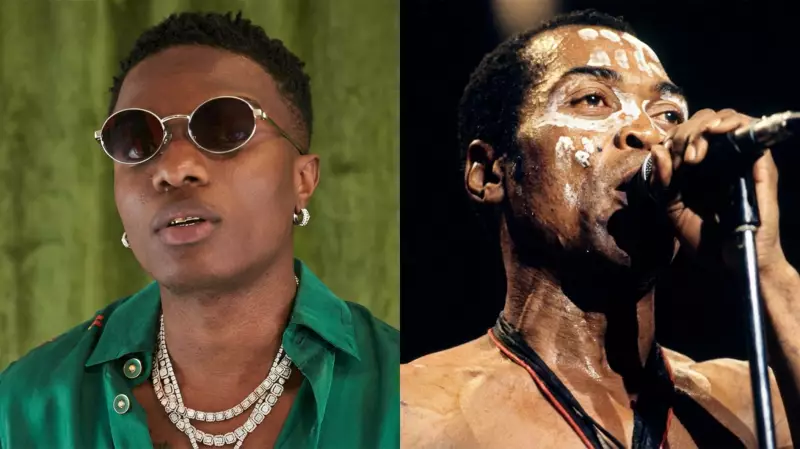
Five Wizkid Songs That Echo Fela Kuti's Musical Spirit
The recent online clash between Afrobeats superstar Ayodeji Ibrahim Balogun, popularly known as Wizkid, and Afrobeat singer Seun Kuti has reignited passionate conversations among music enthusiasts across Nigeria and beyond. This debate delves deep into themes of artistic influence, cultural legacy, and the enduring presence of Fela Anikulapo Kuti's revolutionary sound in contemporary music. As the exchange unfolded on social media platforms, many listeners revisited Wizkid's extensive discography, drawing parallels with the works of the late Afrobeat pioneer.
Beyond the heated online arguments, fans and critics alike have identified several Wizkid records that incorporate musical elements reminiscent of Fela's style. These are not mere copies but rather subtle similarities in rhythm, song structure, emotional mood, and vocal delivery that highlight how profoundly Fela's artistic DNA continues to permeate modern Nigerian music. Here are five notable pairings that illustrate this fascinating musical connection.
Jaiye Jaiye (feat. Femi Kuti) and Lady
When Wizkid released Jaiye Jaiye featuring Femi Kuti in 2013, it was immediately clear that this track diverged from his typical pop offerings. Produced by the talented Sarz, the song embraced themes of reflection, gratitude, and narrative storytelling over conventional club appeal. Fela Kuti's classic Lady, released in 1972, similarly followed a path of message-driven music, using his platform to deliver sharp social commentary.
The lyrical parallels are striking. Fela's lines, "If you call am woman, African woman no go gree… She go say, I be lady o," powerfully address gender and identity. Wizkid echoes this sentiment in his own rendition, singing, "If you call am woman / African woman no go 'gree (She go say 'I be lady o')." Both artists utilize their music to explore and affirm cultural narratives, demonstrating a shared commitment to meaningful expression.
Sweet Love by Wizkid and Shakara Oloje by Fela Kuti
Wizkid's Sweet Love, released in 2017, introduced a noticeably softer and more minimalist sound. With subdued drums and a calm vocal delivery, the track prioritizes groove and atmosphere over high-energy production. The lyrics, "Toba ba oni shakara pade. Pa'shan toh ma fi na eh oh Oje loun jeh. Kilon se je, shakara olo'je ni," showcase a rhythmic, repetitive style.
This approach is quintessentially Fela, as seen in Shakara Oloje, where the lyrics "To ba b'oni shakara pade. Pasan to ma fi na e oje l'o nje. Ki lo'n se npe o. Shakara oloje ni" rely on repetition, rhythm, and storytelling to convey its message. Both songs thrive on subtle, infectious rhythms rather than heavy instrumental layers, highlighting a common musical philosophy.
Joro and Zombie
The power of chant and repetition is central to both Wizkid's Joro (2019) and Fela's Zombie (1976). Joro is constructed around chant-like hooks and a repetitive structure, depending heavily on rhythm and call-and-response patterns to engage listeners. Similarly, Zombie utilized chanting, repetition, and driving rhythms to deliver its potent political message.
The enduring cultural impact of Zombie was formally recognized when the album was inducted into the 2025 Grammy Hall of Fame, underscoring its significant weight in music history. This accolade reinforces how Fela's techniques continue to influence and resonate within the industry, as evidenced by tracks like Joro.
Wonder and Just Like That
Soft melodies with strong emotional pull define both Wizkid's Wonder (2014) and Fela's Just Like That (1989). Wonder, a follow-up to Wizkid's Ayo album, leans on melody and emotion rather than percussion, creating a gentle and relaxed ambiance. The lyrics, "Wonder wonder wonder ah Oh my sexy wonder ah. Pull me down make i no craze o," evoke a dreamy, introspective mood.
Fela's Just Like That, from the Beasts of No Nation album, follows a similarly calm direction with lyrics like "Wonder wonder fulumenti. Wonder. Wonder wonder wonder .Wonder. Wonder fulumenti." Both tracks demonstrate how artists can convey deep feelings through minimalist, melodic approaches, bridging generations of Nigerian music.
Expensive Shit and Expensive Shit
Wizkid's Expensive Shit, released in 2015 with visuals shot in South Africa and directed by Sesan, shares its title directly with Fela's 1975 track Expensive Shit. While Fela's version was rooted in political satire and sharp social commentary, Wizkid's interpretation focuses more on themes of lifestyle, success, and affluence.
Despite their differing meanings, the shared title symbolizes a tangible link between the two artists. It reflects how contemporary musicians like Wizkid engage with and reinterpret the legacy of pioneers like Fela, adapting classic concepts to modern contexts while acknowledging their origins.
The ongoing dialogue between Wizkid and Seun Kuti, along with fan reactions on platforms like X, continues to fuel discussions about originality and influence in Afrobeats. As one user posted, "U copy me finish, then u say u bigger than me…… make it make sense Wizkid copy copy he nearly copy fela name ?" This highlights the passionate and sometimes contentious nature of these musical comparisons.
Ultimately, these five song pairings illustrate not imitation, but a deep-seated musical lineage. They show how Fela Kuti's innovative spirit lives on in the works of modern icons like Wizkid, enriching Nigeria's vibrant musical landscape with layers of history and innovation.