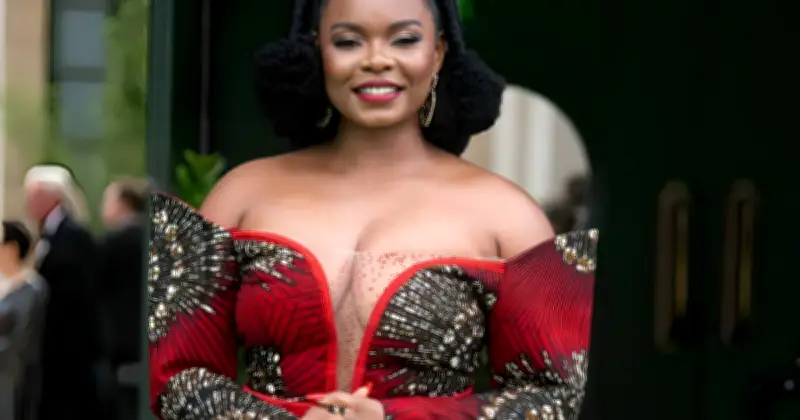
Popular Nigerian singer Yemi Alade has revealed that she deliberately chose to keep her birth name rather than adopt a stage name, explaining that she wanted to avoid predictability and let her music speak for itself. Speaking in an interview with the BBC, Alade disclosed that she considered the names “Electra” and “Ginger” before deciding to retain her birth name.
Why Electra and Ginger were rejected
Alade said she initially played with the name Electra but changed her mind because she felt it would create too much expectation. “One of the names that I had played with in my early days was Electra, but I changed my mind because I felt that the minute you hear Electra, you already expect me to be electrifying, and I didn’t want people to see me coming or overexpect. I wanted them not to know what’s coming,” she explained.
She then tried the name Ginger, but quickly realised it would be too revealing in her home country. “The problem is, in Nigeria, when you say ginger, it means energy, and I’m just telling everybody who I am before they meet me,” Alade added.
Turning to God for direction
After struggling with the decision, the award-winning singer turned to prayer for guidance. “I had a moment where I just sat on the idea, and I honestly just reached out to God and just asked, ‘Please lead me,’ and the reckoning that came to me was that I needed to stick to my birth name because it had a huge meaning behind it,” she revealed.
Her birth name, Opeyemi Alade, holds deep significance. “Opeyemi means ‘thanks be to God,’ and Alade means ‘the one who holds the crown.’ I feel like that embodies who I am, so I held on to it,” she stated.
Translating music for African fans
Alade also shared that her decision to translate her songs into French, Swahili, and Portuguese was inspired by the overwhelming support from fans across Africa who did not speak English or her native languages. “The first language I translated my music into was French, and it was born out of curiosity. I felt a very strong connection with many French-speaking African fans when I saw them in the front row of my concerts, singing my songs even though they didn’t speak English or any of my native languages. So I thought to myself, why don’t I do something very dear to them and show them I truly love them? That’s where my desire to start translating my music came from. I later went on to translate my music into Swahili and Portuguese,” she said.
Women in the music industry
When asked about the current state of the music industry for female artists, Alade noted that while the industry has become more accommodating, women still need to push for greater representation. “The industry is not necessarily easier for women today, but people have become more accepting. Women need to continue coming out in their thousands and millions to occupy more space,” she concluded.