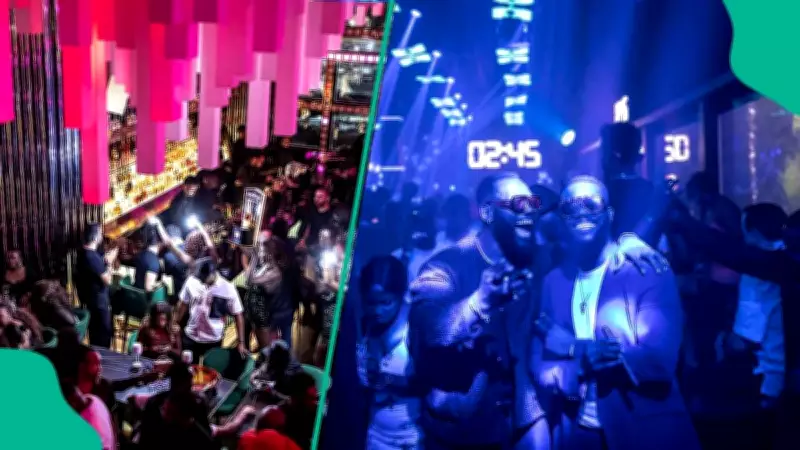
Digital Payments Dominate Nigeria's Nightlife Economy as Electronic Transfers Surpass Cash
Moniepoint has released a groundbreaking new study demonstrating that electronic transfers have overtaken cash as the predominant payment method within Nigeria's vibrant nightlife economy. The comprehensive report, titled "The Business of Community Nightlife in Nigeria," reveals significant shifts in consumer behavior and economic patterns across the country's informal nighttime sector.
Study Methodology and Scope
The research analyzed transactions from more than 27,000 bars, clubs, and lounges operating on Moniepoint's extensive payment network nationwide. The company supplemented this transactional data with field interviews and observational research conducted with nightlife operators and workers across multiple Nigerian cities, providing both quantitative and qualitative insights into the sector.
Payment Method Revolution
According to the findings, digital payments are increasingly dominant in nightlife transactions, with bank transfers leading transaction volumes followed by card payments. This represents a stark contrast to wider trends in Nigeria's informal economy, where cash traditionally plays a more substantial role. Many nightlife operators actively discourage cash payments due to security concerns, accelerating the shift toward electronic alternatives.
Moniepoint's data reveals that transfers exceed card payments by nearly two million transactions during peak night hours across its network. The company has implemented security-focused features including cards without visible numbers, expiry dates, or CVVs, along with "POS Transfers" that assign dedicated bank accounts to each terminal with instant audio-visual payment confirmation.
Spending Patterns and Timing
The study examined detailed spending patterns throughout nighttime hours, finding that transaction volumes begin rising sharply from 8pm, peak before midnight, and gradually decline afterward. Although Nigerian nightlife often continues into early morning hours, most purchases occur earlier in the evening. For operators, the critical operational window for staffing, restocking, and managing cash flow falls between midnight and 6am.
Food Outperforms Alcohol in Many Venues
While alcohol remains a significant revenue source, the data indicates that food plays a stabilizing role in the night economy, particularly in informal settings. In several neighborhood venues, bottled water and meals reportedly outsell beer and spirits, especially during earlier evening hours. The most common transaction descriptions observed included "food," "pay," "sent," "POS," and "cash," reflecting diverse spending on meals, entry fees, transport, and other nightlife-related expenses.
Employment and Economic Impact
Moniepoint's report suggests that local bars typically increase their workforce by 30 to 50 percent on peak nights, with at least 54,000 people engaged in nightlife-related work across Nigeria every evening. Tosin Eniolorunda, Moniepoint's Co-Founder and Group Chief Executive Officer, emphasized the sector's vital economic role, stating, "Nigeria's local bars and nighttime operators are not peripheral to the economy; they are a critical part of its architecture."
The company aims to support sector growth through tools including credit facilities, same-day settlements, and inventory management solutions. Many loan applications from bar and lounge operators target renovations, furniture upgrades, lighting, and sound systems—investments aimed at improving ambience and attracting customers.
Geographical Distribution
The report provides a detailed state-by-state breakdown of nightlife establishments on Moniepoint's network:
- Lagos State leads with 4,856 bars, clubs, and lounges
- Federal Capital Territory follows with 2,515 outlets
- Rivers State (2,362), Delta State (1,930), and Edo State (1,574) rank among top locations
Interestingly, Katsina State recorded the highest payment value for nighttime food trucks over the past twelve months, with vendors generating more than N130 million, while Kwara State led in transaction count. This distribution suggests the nightlife sector is widespread and not limited to high-end urban centers.
Broader Context and Company Background
The report notes that while premium "Detty December" venues often attract attention for recording daily revenues up to N360 million with table bookings priced as high as N1.2 million, everyday neighborhood nightlife tells a broader story. Roadside bars, suya spots, and local lounges form the foundation of social and commercial life for millions of Nigerians.
As one of Nigeria's leading financial service providers, Moniepoint processes billions of naira in transactions monthly and supports millions of businesses with payment, credit, and banking solutions. The company previously reported that digital payments account for 43 percent of fuel transactions in Nigeria, indicating broader trends toward cashless transactions across multiple sectors.