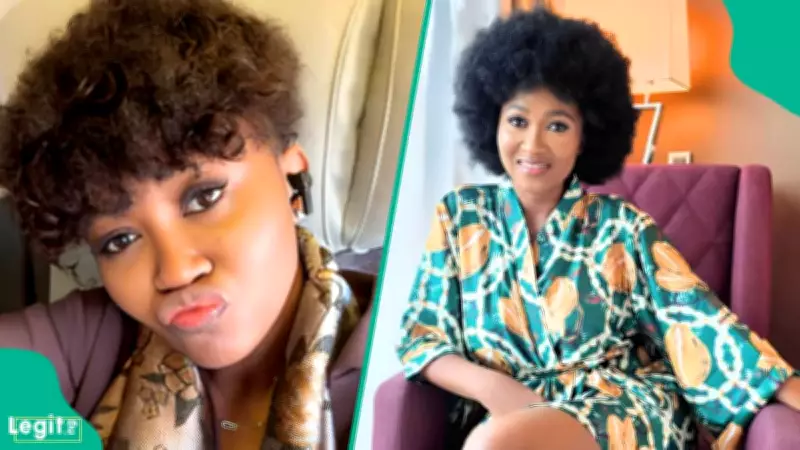
Mary Njoku Challenges the 'Independent Woman' Narrative as a Response to Circumstances
Nollywood actress and filmmaker Mary Remmy Njoku has sparked a significant conversation by addressing the popular phrase 'independent woman' that dominates contemporary discourse. In a thought-provoking Instagram post, Njoku explained that what society often labels as independence in women is not typically a choice but rather a learned response to challenging circumstances.
The Reality Behind Self-Sufficiency
The founder of ROK Studios emphasized that no human being genuinely desires to navigate life in complete isolation. According to Njoku, people develop self-sufficiency when they lack dependable support systems around them. She pointed out that women are frequently categorized as independent or overly self-reliant without proper consideration of the underlying reasons driving such behavior.
"There's really no such thing as an independent woman. Independence is not a preference; it's usually a response," Njoku wrote in her social media statement. "No human truly wants to do life alone. We become independent when we don't have dependable people around us."
From Necessity to Strength
The accomplished actress elaborated that independence is typically acquired in the absence of reliability, suggesting that the strength displayed by many women emerges from necessity rather than personal preference. Njoku argued that when individuals consistently demonstrate dependability, isolation becomes a less attractive option, and trust becomes significantly easier to establish.
In her detailed explanation, Njoku advised: "So before labeling a woman as 'independent' or 'overly self-sufficient,' it's worth asking why. Are you DEPENDABLE? Because when someone shows up CONSISTENTLY, nobody chooses isolation. Independence is learned in the absence of reliability. She is strong because she has to be. Be dependable. And watch her strength soften into trust."
Nigerian Social Media Reactions
The post generated diverse perspectives from Nigerian netizens, with many relating personally to Njoku's message while others offered alternative viewpoints:
- @drealmiztee commented: "Can I say there is a difference between independence and hyper independence. I believe what you are describing is hyper independence which is usually a response to trauma. Please being independent is a good thing."
- @lilianpahar shared: "Last night, I was told I don't ask for help and that I need to learn that no one is an island. No matter how hard I tried to explain that I wasn't born like that, I just learned to carry on because I never got help when I needed it, they insisted I was just proud."
- @annesanaekwe responded: "Wisdom too much. Nobody was actually born independent or wants to be independent but what will you do if you have no one to depend on? Become independent and own it with your full chest."
- @seunfunmi_johnson reacted: "This is why I hate hearing the you're a strong woman cliche. I'm not a strong woman anything! This is what life has thrown at me & I have no choice but to stand up & run else!!! I'll cave in."
- @salmathier offered a different perspective: "There is another side to the coin. Some women were raised by loving Fathers who taught them to be independent women. These women grow understanding how damaging Co-dependency can be even in marriages."
Broader Context of Njoku's Commentary
This discussion about independence and self-reliance follows previous commentary from Mary Njoku regarding employment challenges in Nigeria. The actress had previously highlighted the disconnect between impressive CVs and actual capabilities during job interviews, noting that many applicants present inflated qualifications that don't match their real-world skills.
Njoku's consistent engagement with social issues demonstrates her role as a thought leader within Nigeria's entertainment industry, using her platform to address both personal development topics and broader societal challenges facing contemporary Nigerian women.