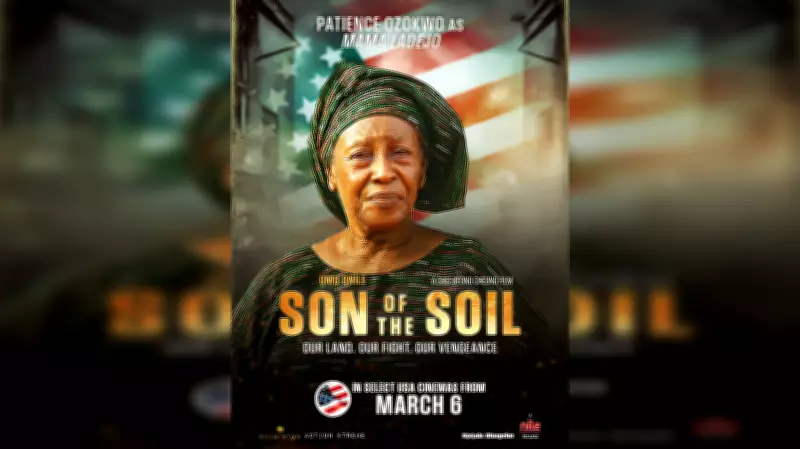
Son of the Soil: A Bold Lagos Revenge Thriller Expands Nollywood's Horizons
In recent years, Nollywood has been consistently pushing beyond its traditional narrative confines, exploring new genres and storytelling approaches. Son of the Soil emerges as a significant entry in this evolution, delivering the intensity and scale of a full-fledged action spectacle. Directed by Chee Keong Cheung and written by and starring Razaaq Adoti, this film ambitiously merges classic Western revenge cinema tropes with the gritty, complex realities of contemporary Lagos.
A High-Stakes Narrative of Loss and Vengeance
The film centers on Zion Ladejo, a former Nigerian special forces operative whose life is shattered when his sister is brutally murdered. What initially appears as a random act of violence soon unravels into a deeper conspiracy, revealing connections to a powerful criminal drug network operating within Lagos. Consumed by grief and driven by an unwavering sense of justice, Zion launches a solitary crusade to dismantle the syndicate responsible, plunging him into a dangerous world of traffickers, corrupt officials, and shadowy power brokers.
While the revenge thriller formula is familiar—loss triggering vengeance that escalates into greater conflict—Son of the Soil executes this framework with a raw, unapologetic energy. The narrative moves with deliberate, forceful purpose as Zion systematically hunts and confronts his enemies, though the screenplay occasionally prioritizes action sequences over deeper character exploration.
Lagos as a Living, Breathing Character
What truly distinguishes Son of the Soil from other genre entries is its immersive Lagos setting. The city functions almost as a secondary protagonist, with its crowded streets, bustling markets, and relentless urban energy providing rich texture and heightened stakes to Zion's mission. The filmmakers deliberately avoid sanitizing Lagos's rougher edges, instead plunging the camera directly into the city's chaotic rhythm, creating an atmosphere where danger feels ever-present and unpredictable.
This authentic portrayal transforms Lagos from mere backdrop into an active, influential presence throughout the film, grounding the narrative in a recognizable socio-cultural context that adds unique local flavor to the global revenge thriller template.
Visual Style and Action Choreography
Director Chee Keong Cheung, known for high-octane action filmmaking, employs tilted camera angles and handheld cinematography to amplify tension and unease. While this stylistic choice initially enhances the urgency of sequences, its persistent application sometimes becomes distracting, drawing attention to technique rather than the unfolding drama.
Where the film truly excels is in its action choreography. Fight scenes are raw, fast-paced, and brutally physical, favoring improvised-feeling confrontations where environmental objects become weapons and punches land with visceral impact. One particularly memorable sequence features a chaotic pursuit through Lagos traffic utilizing the city's distinctive tricycles, injecting welcome local specificity into conventional chase tropes.
Performances and Narrative Shortcomings
Razaaq Adoti delivers a stoic, controlled performance as Zion, effectively conveying a man hardened by military experience and personal tragedy. However, the script provides limited opportunity to explore his character's psychological depth, occasionally reducing him to a vessel for the film's relentless action momentum.
The supporting cast adds crucial emotional grounding, with Ireti Doyle bringing measured authority and Patience Ozokwor lending significant emotional weight in her appearances. Their performances offer brief but important reminders that the violence depicted carries consequences beyond mere spectacle.
Where Son of the Soil encounters difficulties is in narrative coherence. Several plot developments rely on convenient coincidences, while certain story threads are introduced only to be abandoned without resolution. At times, the screenplay seems to race toward the next confrontation rather than allowing characters or thematic elements proper development.
A Promising Step Forward for Nollywood Action
Despite these imperfections, Son of the Soil represents a promising evolution in Nollywood's action ambitions. It is not a flawless film, but it is a courageous one that prioritizes physical storytelling and genre energy while authentically rooting its narrative in Nigerian urban reality.
Ultimately, the film's power resides in its kinetic movement: the relentless drive of a wronged man, the chaotic force of Lagos itself, and the visceral impact of its combat sequences. For action thriller enthusiasts seeking something that blends authentic local texture with genre intensity, Son of the Soil offers a compelling cinematic experience that marks another step in Nollywood's expanding creative landscape.