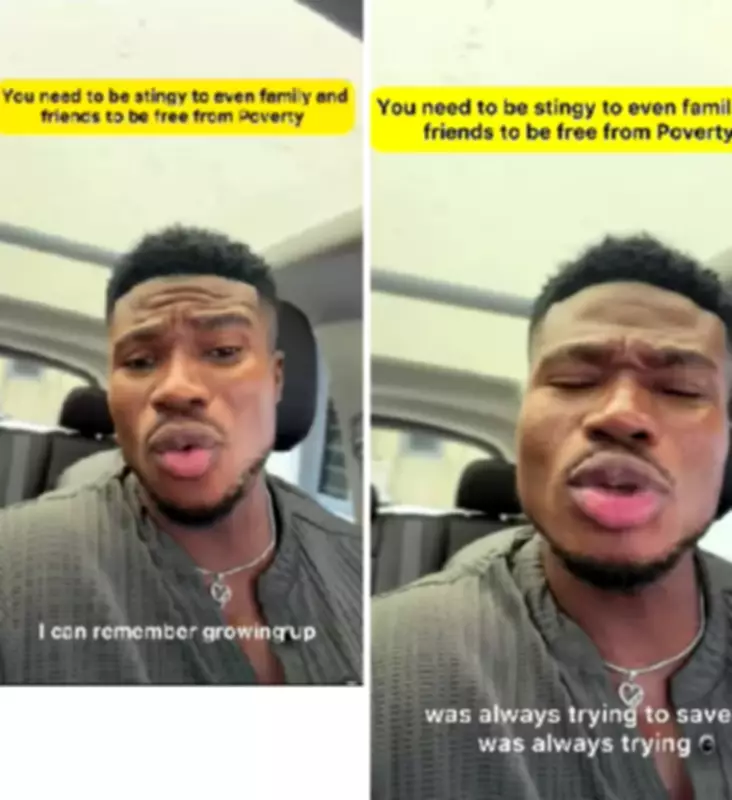
Content Creator ZicSaloma Ignites National Debate on Financial Boundaries
Popular Nigerian skitmaker and content creator ZicSaloma has sparked a serious and intense conversation across social media platforms following his candid Instagram video where he delivered a blunt message to Nigerians. In the viral clip, ZicSaloma advised citizens that they must become financially heartless if they genuinely desire to escape the persistent cycle of poverty that affects many households.
Clarifying the Concept of Financial Heartlessness
According to ZicSaloma, his controversial advice is not about being wicked or abandoning family responsibilities. Instead, he frames it as a necessary survival tactic and a strategy for long-term financial thinking within the Nigerian context. He specifically highlighted how extended family systems often create environments where relatives feel entitled to a portion of one individual's income, regardless of their own financial planning needs.
The comedian shared personal experiences to illustrate his point, revealing that several of his past business ventures failed not due to lack of discipline or poor planning, but because his savings were consistently redirected to address family emergencies and requests. From covering rent payments for relatives to handling sudden financial crises, ZicSaloma explained how these constant diversions repeatedly disrupted his wealth-building plans.
The Entitlement Culture in African Households
ZicSaloma elaborated on what he described as a widespread cultural phenomenon in many African homes. He noted that once an individual's salary or financial status becomes public knowledge within the family circle, everyone automatically assumes they have a legitimate share of that income. Some relatives, he observed, may even reduce their own work efforts or stop working entirely under the assumption that the financially successful family member will always provide assistance.
In his analysis, this sense of entitlement creates a destructive cycle that keeps entire families trapped in the same poverty patterns generation after generation. The comedian argued that this dynamic prevents individuals from accumulating the capital necessary for investments, business growth, or personal financial security.
Practical Strategies for Financial Protection
To combat these challenges, ZicSaloma offered several practical recommendations:
- Financial Privacy: He advised people to avoid disclosing their real income levels to family and friends
- Strategic Downplaying: In some situations, he suggested deliberately understating or hiding financial success
- Selective Assistance: He recommended reserving financial help only for genuine life-or-death emergencies
The content creator emphasized that building sustainable wealth in the Nigerian economic environment sometimes requires difficult actions, including:
- Saying no to financial requests, even from close relatives
- Ignoring social pressure and expectations regarding family support
- Accepting that some people will be upset or disappointed by financial boundaries
Beyond Family: The Friend Factor
ZicSaloma extended his advice beyond family relationships to include friendships. He warned against the pattern of constantly giving money to friends, noting that this often creates unhealthy dependency rather than genuine gratitude. Surprisingly, he added that people may still harbor resentment toward you even after you've helped them financially, which can damage relationships in the long term.
The skitmaker's message has resonated with many Nigerians who recognize the tension between cultural expectations of family support and the practical realities of financial planning. While some have criticized his approach as too harsh or individualistic, others have praised his honesty in addressing a taboo subject in Nigerian society.
This conversation comes at a time when many Nigerians are grappling with economic challenges, inflation, and unemployment, making discussions about financial strategies particularly relevant. ZicSaloma's blunt message continues to generate reactions across social media platforms, with thousands of comments debating the merits and ethics of his financial heartlessness approach.