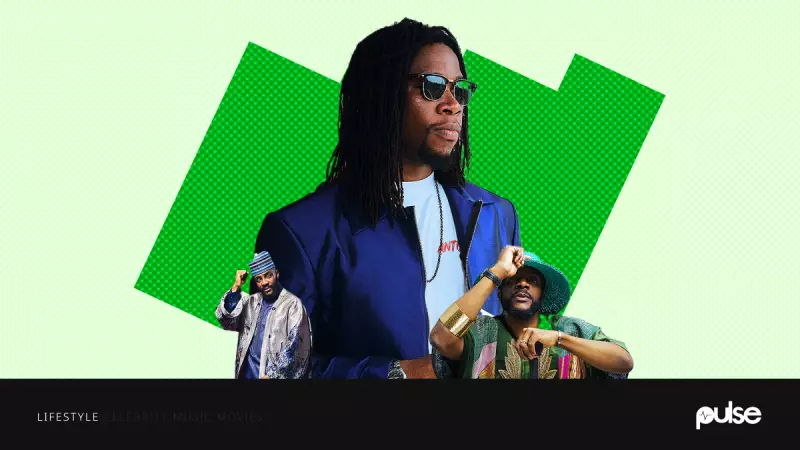
When Ebuka Obi-Uchendu steps onto the Big Brother Naija stage, social media platforms typically experience immediate disruption. The sophisticated outfits that generate year-long fashion discussions and dominate timelines don't just happen by accident—they represent the creative vision of photographer Oladayo Odunaro.
The Creative Partnership Behind the Camera
Over the past five years, Odunaro has developed what can only be described as a complete visual language for Nigerian celebrity culture. Through his lens, he has captured the elegance, confidence, and distinctive Nigerian identity that defines contemporary fashion.
Odunaro has produced approximately 90 to 95 percent of Ebuka's visual content, creating not just photographs but comprehensive visual narratives. Their collaboration began in 2019 after Odunaro completed work on Banky W's election campaign, connecting with Ebuka through Captain Tunde Demuren.
"What made our partnership work from that very first photoshoot was our shared work ethic," Odunaro recalls. "That efficiency became the foundation of a creative relationship that has outlasted temporary trends."
The Art of Minimalistic Storytelling
Each new Big Brother Naija season presents fresh creative challenges, requiring new concepts and visual moods. Yet the fundamental trust between photographer and subject remains constant, creating a collaboration that operates on both instinct and mutual respect.
"The BBN looks demonstrate sophistication. We're essentially showcasing African fashion capability," Odunaro explains. "My responsibility involves representing that in the most favorable light—both literally and figuratively. I typically employ a minimalistic approach: clean compositions where Ebuka and the fashion pieces command attention."
This minimalistic philosophy doesn't represent restraint but rather reverence. Every shadow, color selection, and composition communicates something more significant. The images transcend mere clothing documentation to capture presence, and over time, that presence has evolved into genuine influence.
"It's genuinely humbling to witness how the work circulates and permeates through culture," Odunaro shares. "What Ebuka wears during the show typically establishes fashion trends for the entire year. Recognizing that our work impacts culture in this manner—it's not something I treat lightly."
Collaboration and Creative Freedom
The resonance of Odunaro's work stems from its humanity. His process contains no ego—only precision and respect for the craft. Each frame results from collaboration involving designers, stylists, lighting technicians, and crucially, Ebuka himself.
"The process is completely collaborative," Odunaro emphasizes. "Many people don't realize that Ebuka actually serves as his own stylist. He collaborates with designers to bring looks to life, then transfers responsibility to me to present appropriate visuals to the world."
This shared responsibility maintains both artists at their sharpest, while mutual trust has created space for creative experimentation. "Ebuka completely trusts my visual judgment. When I propose an idea, there's rarely any questioning. We proceed directly to production."
Beyond Fashion Photography
Despite his composure, Odunaro displays artistic wonder when discussing his craft. He becomes animated when conversation turns to color, light, and their relationship with human skin.
"I find the interaction between light and color completely fascinating," he reveals. "My visual language draws heavily from my personal experiences. I'm somewhat obsessed with how this interaction functions with my photographic subjects. Another influence comes from the diverse mixture of movies and television programs I watch—I attempt to recreate what I observe in my work."
These experiences extend well beyond fashion photography. Since 2012, Odunaro has worked as a director, producer, and visual storyteller across multiple formats including documentaries, commercials, and television programming, consistently exploring how imagery can communicate deeper narratives.
"If someone knew me exclusively through my Ebuka photographs," he acknowledges, "they would only be seeing one aspect of my work. I've always maintained multiple creative dimensions—directing, producing, storytelling. There exists an entire universe of content I've created beyond fashion photography."
Challenges and Future Aspirations
Odunaro has successfully navigated the balance between artistic expression and commercial requirements. "I'm fortunate to report that balance exists seamlessly, as my commercial projects permit me to express my artistic side. I'm essentially hired to bring artistic and creative expression to commercial work that ultimately satisfies both clients and my artistic pursuits."
Nevertheless, beneath his work's polished surface lies a frustration familiar to many Nigerian creatives: inadequate structure and unfair compensation for artistic labor.
"We need to establish standards for our pricing," he states firmly. "Considering the world-class work Nigerian creatives produce, we remain significantly undercompensated. This isn't an issue one individual can resolve—we ultimately need to form unions to establish these standards."
When envisioning the future, Odunaro's perspective expands beyond fashion, celebrity culture, and the glowing six-inch screens of social media platforms.
"Within the next decade," he says thoughtfully, "I aspire to shape the visual identity of world leaders, to communicate transformative stories for individuals and brands." He aims to deliver substantial value while receiving appropriate returns.
This ambition suits someone who has spent years defining how an entire generation perceives celebrities on screen. His work has already become visual shorthand for Nigerian confidence: bold, precise, and exceptionally stylish.