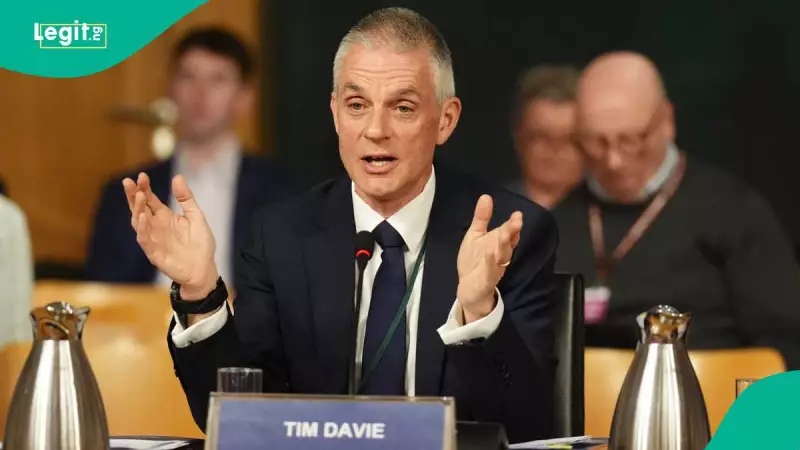
The Director-General of the British Broadcasting Corporation, Tim Davie, has stepped down from his position amid growing controversy over the editing of former US President Donald Trump's Capitol speech in a documentary.
Leadership Exodus at BBC
Tim Davie announced his resignation on November 9, 2025, marking the end of his five-year tenure as the head of the UK's public broadcaster. His departure came alongside that of BBC News chief Deborah Turness, creating a significant leadership vacuum at the organization.
The crisis erupted after a Panorama documentary aired shortly before the 2024 US election faced accusations of misrepresenting Trump's January 6, 2021 speech. Critics argued the program selectively edited footage to make it appear the former president directly incited the Capitol riots.
Controversial Editing Revealed
The documentary featured edited segments of Trump's speech that included the line: "We're going to walk down to the Capitol and I'll be there with you, and we fight. We fight like hell." However, the program omitted crucial context where Trump called for peaceful protest, creating what many described as a misleading narrative.
Davie accepted "ultimate responsibility" for the editorial missteps, stating his decision to leave was "entirely my decision." He explained he had been reflecting on the intense demands of managing the role during challenging times.
Deborah Turness similarly acknowledged the damage caused by the controversy, emphasizing that "the buck stops with me" as CEO of BBC News and Current Affairs.
Political Fallout and Broader Bias Accusations
The resignations followed strong criticism from UK Culture, Media and Sport Minister Lisa Nandy, who described the allegations as "incredibly serious" and pointed to "systemic bias in the way that difficult issues are reported at the BBC."
The controversy intensified when The Daily Telegraph published a memo from Michael Prescott, a former member of the BBC's editorial standards committee. The document raised concerns not only about the Trump speech editing but also about alleged anti-Israel bias in the BBC's Arabic service.
Conservative MP Priti Patel called for the UK Foreign Office to review its funding of BBC Arabic, accusing the service of "pro-Hamas and anti-Israel bias." Meanwhile, the broadcaster has also faced internal criticism for allegedly favoring Israel in its Gaza war coverage.
Cross-Atlantic Reactions
The backlash reached the United States, with Trump's press secretary Karoline Leavitt branding the BBC "100 percent fake news" and a "propaganda machine."
In the UK, Reform UK party leader Nigel Farage welcomed Davie's resignation, warning that "this is the BBC's last chance" and threatening that many people might refuse to pay the television license fee if reforms aren't implemented.
The BBC now faces mounting pressure to restore public trust as it begins the search for new leadership amid calls for greater editorial accountability and reform within the organization.