Nigeria's Digital Broadcasting Disaster: N60 Billion Wasted Over 17 Years
The Federal Government has squandered over N60 billion on Nigeria's failed Digital Switch Over program, according to documents from the National Broadcasting Commission. This staggering financial loss spans seventeen years of mismanagement and systemic failures that have left the country's broadcasting sector in disarray.
Systemic Breakdown and Failed Implementation
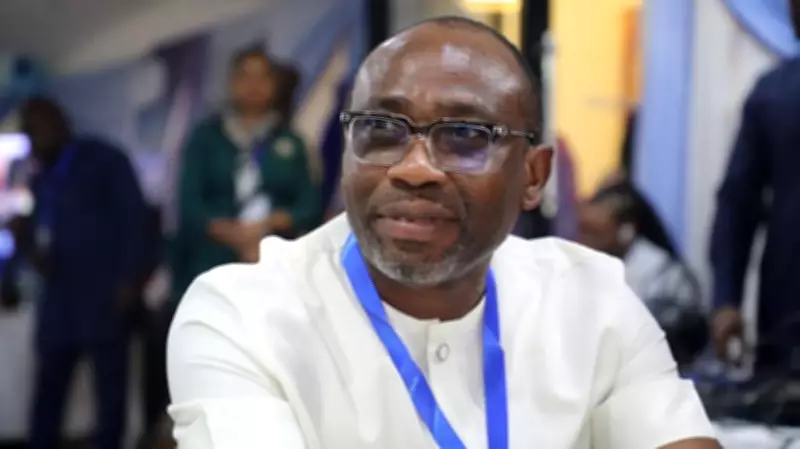
NBC Director General Dr. Charles Ebuebu acknowledged what he described as a systemic breakdown in the DSO program. Not a single cause but a cascade of failures has plagued Nigeria's transition from analogue to digital broadcasting since discussions began in 2008.
The Guardian reports that only eight of Nigeria's thirty-six states have digital signals after nearly two decades of effort. The fragmented state-by-state rollout destroyed broadcaster confidence, while the absence of enforceable rate cards for carriage fees and nonexistent audience measurement drove advertisers away from television platforms.
Without verifiable audience data, you have been flying blind, Ebuebu stated, highlighting one of the fundamental problems that has prevented television from capturing its share of Nigeria's N605.2 billion advertising market.
Manufacturers Accuse NBC of Policy Breaches
The Association of Licensed Set Top Box Manufacturers of Nigeria has launched serious accusations against the broadcasting commission. STBMAN chairman Godfrey Ohuabunwa signed a statement alleging persistent abuse of power and processes by the NBC, claiming regulatory decisions have consistently worked against local manufacturers and investors.
Central to the dispute is NBC's alleged plan to approve hybrid set-top box imports from China, which manufacturers say contradicts the Federal Government's local content policy and threatens domestic investments. The association referenced President Bola Tinubu's Nigeria First policy, arguing that prioritizing imports undermines national economic objectives and discourages indigenous enterprise.
STBMAN has raised legal concerns about an existing court order and warned that continued disregard for industry concerns could further erode investor confidence, potentially leading to legal action against the commission.
FreeTV: A Complete Rebuild Launching May 15
The National Broadcasting Commission is now attempting a complete reboot of digital broadcasting with its FreeTV platform, scheduled for national launch on May 15, 2026. Unlike the failed encrypted model, FreeTV will operate as true free-to-air television with no encryption or set-top box barriers.
This is not an upgrade, Ebuebu stressed. This is a rebuild. The platform will launch with over one hundred national, regional, and state channels across multiple content categories, all available in high definition and featuring programming in Hausa, Yoruba, Igbo, Tiv, Ijaw, Edo, Fulfulde, Ibibio, Efik, and Nupe languages.
Technical Infrastructure and Audience Measurement
FreeTV will utilize hybrid DTH/IP delivery via NigComSat-1R, with any DVB-T2/S2 television compatible with the system. A mobile app will extend reach to phones and tablets, while six regional production hubs in Lagos, Abuja, Port Harcourt, Enugu, Kano, and Benin will function as local content factories expected to generate five hundred to one thousand jobs per zone within two years.
Most significantly, the NBC has partnered with Bulgarian firm GARB to implement a ninety-four percent accurate audience measurement system using return-path data, app analytics, demographic panels, and artificial intelligence. This addresses the critical data gap that has plagued Nigerian broadcasting for decades.
Financial Model and International Benchmarks
The strategic rationale behind FreeTV is simple: build viewers first, monetise later. Qualifying broadcasters who commit their channels, produce a minimum of sixty percent local content, and promote FreeTV will pay nothing until January 2029. After that date, a regulated tiered rate card will take effect.
The NBC has explicitly benchmarked successful international transitions, pointing to the UK's Freeview public-private partnership, South Africa's forty percent surge in local content post-DSO, Kenya's spectrum-funded rollout, and Bulgaria's GARB measurement system. Ghana's stalled DSO serves as a cautionary tale about governance confusion.
Binding Deadline and Industry Implications
Analogue switch-off is now binding for December 31, 2028, with the NBC declaring that the era of missed deadlines ends now. This represents a critical juncture for Nigeria's broadcasting industry, which has suffered from minimal results despite massive investment.
The Independent Broadcasters Association of Nigeria has echoed concerns about the broader challenges plaguing the digital transition, with Nigeria now lagging behind countries that once looked to it for guidance in broadcasting modernization.