The Curative Paradox: Waiting Until It’s Too Late
Across Nigeria, a dangerous healthcare philosophy prevails: the hospital is not a sanctuary for wellness but an emergency room of last resort. This pattern—waiting for complete physical breakdown before seeking medical help—costs thousands of lives annually, with women bearing a disproportionately heavy burden, according to the article by Stephanie Madumelu, BS, MPH.
In many households, the threshold for declaring oneself “sick” is complete incapacitation. Minor symptoms like persistent headaches, mild fatigue, blurred vision, or pelvic pain are routinely self-medicated or ignored. This curative mindset means healthcare only begins after disease has taken deep, often irreversible root.
By the time a patient sees a physician, pathology has often progressed from treatable acute to complex chronic states. Hypertension leads to stroke; undiagnosed diabetes causes renal failure; localized abnormalities become advanced malignancies. This approach is medically catastrophic and financially devastating for families who must secure exorbitant sums for complex curative interventions with no guarantee of recovery, as noted by the World Health Organization (2023).
Why Women Face the Highest Risk
While systemic avoidance of preventive medicine affects all, women are biologically and socially at higher risk. The reproductive system undergoes continuous hormonal and anatomical shifts from adolescence through menopause, each phase presenting unique vulnerabilities requiring consistent oversight.
Conditions like uterine fibroids, ovarian cysts, and pelvic inflammatory disease are prevalent among African women. Left unmonitored, they cause chronic pain, severe anemia, and reproductive complications. Gynecological malignancies—cervical and breast cancer—are leading causes of cancer-related mortality in Nigeria, according to the International Agency for Research on Cancer (2024).
Cervical cancer is almost entirely preventable through routine screenings like Pap smears, but early stages are asymptomatic. By the time pain or abnormal bleeding appears, the cancer has often metastasized. When a woman’s health collapses, the stability of her entire household is compromised, making women’s health synonymous with protecting the home.
The Maky Bloom Foundation: Knowledge, Prevention, Empowerment
Recognizing this gap, the Maky Bloom Foundation works to empower women through reproductive health education, facilitate access to basic medical screenings, and build health-conscious communities. Having educated over a thousand women and established ten community partnerships, the foundation de-stigmatizes reproductive biology and breaks the cycle of late-stage disease detection.
Its core philosophy: knowledge is the first line of clinical defense. By equipping women and supportive men with accurate, culturally sensitive information, the foundation dismantles taboos, myths, and fears that keep individuals from seeking medical validation.
Inside the Community Outreach Event
The foundation’s grassroots educational and medical screening model focuses on four vital areas:
- Healthy Lifestyle Choices: Practical nutrition, physical practices, and behavioral habits to prevent metabolic and cardiovascular disorders.
- Deciphering Body Signals: Training to pay attention to subtle biological shifts and the necessity of annual physical checks to identify asymptomatic anomalies early.
- Reproductive Health Literacy: Clarity on menstrual health, fibroids, and cancer prevention strategies.
- Free Diagnostic Screenings: Immediate, cost-free clinical screenings at the end of each session.
The event is open to both women and men. Men are strongly encouraged to attend to obtain vital health intelligence for their wives, mothers, daughters, and sisters, making family health a unified priority.
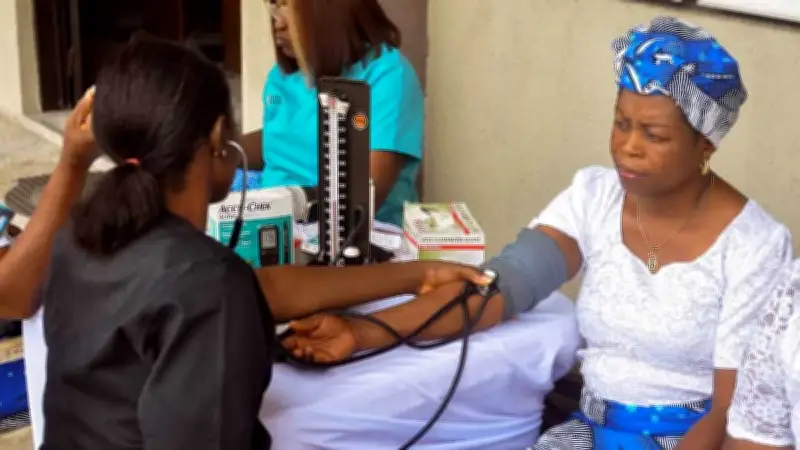
The practical screening includes Free Blood Pressure Checks and Free Blood Glucose Testing—direct markers for hypertension and diabetes, the twin “silent killers” driving adult mortality across sub-Saharan Africa, as noted by the Commission on Non-Communicable Diseases (2024). Should supply constraints affect glucose test strips in certain areas, operations shift to comprehensive blood pressure mapping, ensuring every attendee leaves with actionable cardiovascular data.