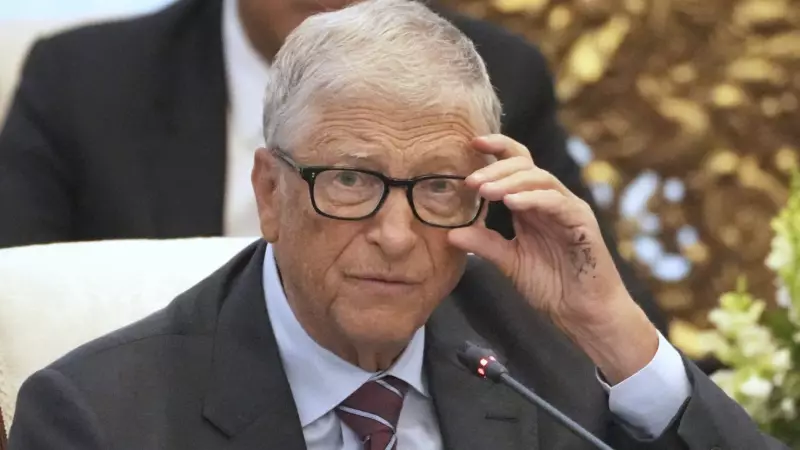
Bill Gates, the co-founder of Microsoft and a leading global philanthropist, has issued a stark warning that the world is witnessing a dangerous and heartbreaking reversal in the fight to save children's lives.
A Troubling Reversal in Progress
In the latest Goalkeepers report titled "We Can’t Stop at Almost," Gates sounds an alarm that cannot be ignored. For the first time this century, the steady global progress in reducing child mortality is going backwards. The number of children dying before their fifth birthday is now rising again after decades of consistent improvement.
"It doesn’t have to be like this," Gates begins with a sobering reminder. Yet, data from the Institute for Health Metrics and Evaluation paints a grim picture. In 2024, an estimated 4.6 million children died before age five. This year, that number is projected to jump by more than 200,000, reaching a devastating 4.8 million young lives lost.
Gates powerfully frames this tragedy, describing it as the equivalent of losing over 5,000 classrooms of children who will never learn to write their names or tie their shoes.
Funding Collapse Worsens the Crisis
This surge in child deaths coincides with a severe collapse in global health funding. Development assistance for health has plummeted by nearly 27% compared to last year. Major international aid programs have been either dismantled or sharply reduced, leaving vulnerable communities without critical support.
Gates calls this a "significant reversal in child deaths" and insists it must serve as a wake-up call for everyone committed to scientific and humanitarian progress. The report outlines catastrophic scenarios if funding cuts continue.
- If global health support drops by 20%, an additional 12 million children could die by 2045.
- If cuts deepen to 30%, the number of additional child deaths could reach a staggering 16 million.
Gates warns that the world risks being remembered as the generation that possessed the most advanced science in history but still failed to save the lives it could have protected.
Solutions Exist, But Collective Action is Needed
Earlier this year, Gates pledged almost all his remaining wealth, approximately $100 billion, to help end deadly diseases and continue reducing child mortality. However, he stresses that philanthropy alone is insufficient. Governments, especially in wealthier nations, must step up their commitments.
The report's message is clear: if the world turns away now, it will be the generation that almost ended preventable child deaths, almost eradicated polio, and almost made history against malaria and HIV.
Despite financial strains, Gates points to powerful, existing solutions. The challenge is to "do more with less." Strengthening primary health care remains one of the most effective strategies, capable of preventing up to 90% of child deaths through early diagnosis and basic medical access.
Routine immunization is still hailed as the best investment in global health, with every dollar spent generating massive returns. Furthermore, emerging innovations—from advanced malaria prevention to new maternal vaccines for RSV and Group B strep—hold the promise to save millions of young lives in the coming years if properly funded and deployed.