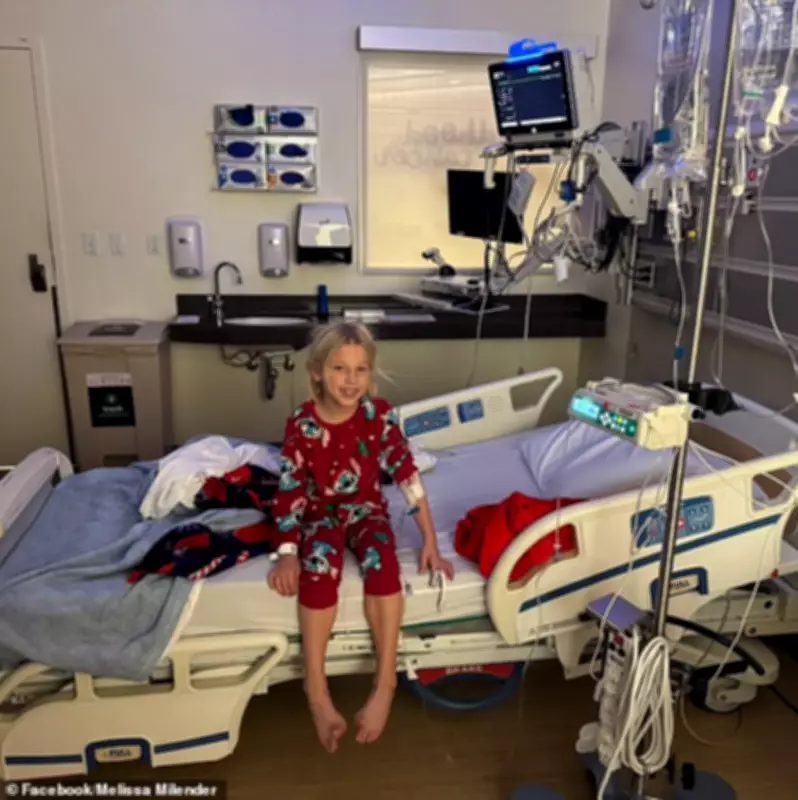
A harrowing incident in the United States has highlighted the critical importance of medication safety in homes with young children. A seven-year-old girl, Jessa Milender, was rushed to the hospital after overdosing on her mother's GLP-1 weight loss injection, a medication often prescribed for obesity management.
A Terrifying Discovery
In December 2024, Melissa Milender found her daughter Jessa, now eight years old, lying lifeless on the floor. The young girl had mistakenly injected herself with approximately 60 percent of a GLP-1 injector pen, believing it was stomach medicine. 'I thought it was stomach medicine,' Jessa told WHAS-11. 'My mom takes it and I thought it helped her with her stomachaches.'
Immediate Medical Crisis
Upon discovering the overdose, Melissa immediately contacted poison control. Medical records revealed that Jessa began vomiting almost hourly, accompanied by diarrhea, constipation, and intense abdominal pain. She was taken to the emergency room presenting with sunken eyes and ashy skin, clear signs of severe dehydration, and was promptly hooked up to an IV.
However, the emergency room staff initially struggled to manage the situation. 'The ER staff didn't know what to do,' Melissa recounted to CBS 8. 'They just called Poison Control, and Poison Control told them the same thing they told me. They didn't know how to respond.'
A Relapse and Escalating Concerns
After her symptoms seemed to subside, Jessa was discharged, but the relief was short-lived. Upon returning home, she began vomiting again, prompting Melissa to regret the early release. 'I don’t think we were prepared for how bad it was gonna get,' she told WHAS-11. 'I should have never let them discharge her.'
The situation deteriorated rapidly. Jessa became so weak that her mother had to carry her to the bathroom. 'She was thirsty. That's the only thing that she wanted to do was drink water, but then she would throw it up,' Melissa explained. The young girl was readmitted to the hospital, where doctors noted she had stopped urinating and expressed serious concerns about potential kidney damage.
A Mother's Agony
Melissa described the ordeal as 'the worst week of our lives,' revealing that Jessa did not eat for six consecutive days. 'She's my little girl,' she added emotionally. 'So that was rough.' In an interview with CBS 8, Melissa expressed her fear, stating she felt like Jessa was dying. 'That's how she looked. She had lost significant weight... her cheeks were sunken in, her eyes were sunken in.'
Jessa's suffering was profound. 'She couldn't walk from exhaustion and severe pain. She wouldn't even allow them to touch her stomach. She'd scream out in pain in her sleep. It was awful,' Melissa recalled. She emphasized that it was 'a miracle that she didn't have long-term effects.'
Lessons Learned and Safety Measures
In the aftermath, Melissa has taken stringent precautions, now keeping her medication securely locked in a box. She reflected on the severity of the overdose, noting, 'Once you've injected too much, there's no "Whoops, let me take this to counteract it." Like no, now you're dealing with whatever the consequences are of that.' The medication remains unused in her refrigerator since the incident.
A Call to Action for Parents
By sharing her story, Melissa hopes to prevent similar tragedies. She admitted, 'I felt like no one had the answer on how to help her. I should have told her, "Don't ever touch this." It was just such an unprecedented event that I didn't think to plan for, prepare for,' she told CBS 8. This case serves as a stark reminder for all parents to store medications safely and educate children about the dangers of unknown substances.