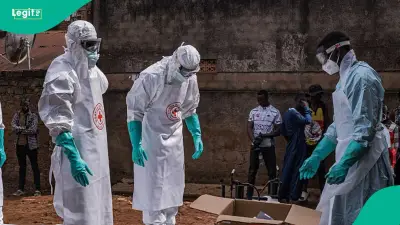
The Democratic Republic of the Congo (DRC) has reached a grim milestone in its ongoing Ebola outbreak, recording 3,200 confirmed cases and 1,405 deaths across six provinces, according to the country's latest situation report. The data, current through Saturday, shows that 571 patients have recovered, while 773 remain in isolation under medical supervision. In the previous 24 hours alone, health authorities reported 125 new infections and 51 deaths, underscoring the continued transmission of the virus.
Bundibugyo Strain and Transmission Challenges
Declared on 15 May, the outbreak is caused by the Bundibugyo strain of the Ebola virus, which currently has no approved vaccine or specific treatment. Candidate vaccines are undergoing evaluation, according to health officials. Ituri Province remains the epicentre, accounting for 89 per cent of all confirmed infections nationwide. Authorities attribute the sustained spread to population movements, insecurity, artisanal mining activities, and cross-border travel involving Uganda and South Sudan. The outbreak remains in a phase of sustained transmission, with high virus circulation across affected communities.
Health Facilities Under Strain
The report highlights mounting pressure on treatment facilities, particularly in North Kivu Province, where 171 patients occupy centres designed for 141 beds. Nationwide, Ebola treatment centres have reached an occupancy rate of 82.1 per cent, reflecting the increasing burden on the health system. Authorities said surveillance and response measures would be intensified to curb transmission and prevent further spread.
Regional Response and Preparedness
Neighbouring Uganda is moving closer to being declared Ebola-free after discharging its last Ebola patient from an isolation unit, triggering the mandatory 42-day countdown. Under World Health Organisation (WHO) guidelines, a country can only be declared Ebola-free if no new cases are recorded during that period. In Nigeria, health authorities have intensified surveillance and emergency preparedness to reduce cross-border transmission risk. The Nigeria Centre for Disease Control and Prevention (NCDC) activated its Emergency Operations Centre, strengthened screening at points of entry, and heightened surveillance across states. The federal government has identified 21 states and the Federal Capital Territory as high-risk based on a dynamic risk assessment and has urged state governments to strengthen surveillance, isolation capacity, and infection prevention measures.