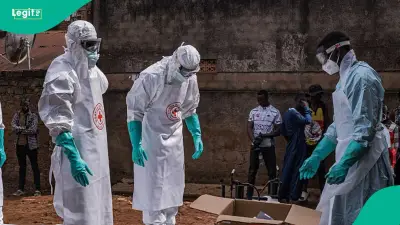
The Democratic Republic of the Congo (DRC) is facing its most devastating Ebola outbreak on record, with the World Health Organization (WHO) reporting 3,605 confirmed cases and 1,587 deaths as of 30 July. The outbreak, caused by the Bundibugyo virus, has shown no signs of slowing down, prompting urgent calls for a substantial scale-up of response efforts.
In a situation update released on Saturday, the WHO warned that sustained transmission and the disease's expanding geographical spread continue to fuel the crisis, making it the largest Ebola outbreak the country has ever experienced. The agency said the rapid rise in infections and deaths highlights the urgent need to intensify public health interventions to bring the epidemic under control.
Outbreak Expands Across Five Provinces
Initially confined to the Mongbwalu Health Zone in Ituri Province, the virus has expanded significantly over the past two months. The WHO said the outbreak has now spread to five provinces—Ituri, North Kivu, South Kivu, Haut-Uélé, and Tshopo—affecting 49 health zones in total.
According to the agency, epidemiological week 30 recorded the highest weekly figures since the outbreak began, with 567 confirmed cases and 296 deaths. The staggering numbers underscore the rapidly evolving nature of the emergency, as the virus continues to outpace response efforts.
"The continued increase in cases, expanding geographic spread, and persistently high mortality underscore the rapidly evolving nature of this public health emergency," the WHO said in its update.
Insecurity and Displacement Hinder Response
The health agency noted that insecurity, population displacement, high population mobility, and frequent cross-border movements are complicating response operations and increasing the risk of further spread within the region. These factors have made it difficult for responders to reach affected communities and conduct effective surveillance and case management.
While the Congolese government, WHO, and partners have intensified surveillance, case management, contact tracing, community engagement, and other emergency response measures, the agency stressed that significantly more resources are required to keep pace with the growing outbreak. "National authorities in the DRC, in collaboration with WHO and partners, continue to implement extensive response measures. However, a substantial scaling up of response activities is needed to get ahead of the outbreak," the WHO said.
A regional preparedness and prioritisation framework remains in place to strengthen readiness and response efforts across African countries at risk, the agency added.
Uganda Declares Outbreak Over
In a positive development, Uganda has officially declared an end to its Bundibugyo virus disease outbreak after completing 42 consecutive days without a new locally transmitted confirmed case. According to the WHO, Uganda's Ministry of Health made the declaration on 28 July, after the last locally transmitted patient was discharged from treatment on 16 June.
The country's most recent imported case was discharged on 16 July after testing negative twice for the virus. In line with international guidelines, the WHO said it will continue to monitor Uganda for another 42 days from that date to ensure that no undetected chains of transmission remain.
Despite the declaration, Uganda remains at risk of new imported infections because of ongoing transmission in neighbouring DRC. The WHO urged countries in the region to maintain heightened surveillance, preparedness, and infection-prevention measures, particularly in border communities where population movement remains high.
Nigeria on High Alert
As the outbreak worsens, Nigerian health authorities are strengthening preparedness measures against a possible importation of the virus. Premium Times recently reported that the Nigeria Centre for Disease Control and Prevention (NCDC) has classified the risk of Ebola importation into the country as high, despite no confirmed case in Nigeria.
The NCDC attributed the elevated risk to ongoing transmission in the DRC and neighbouring countries, international travel, porous land borders, and regional population movements. The agency has directed states to intensify surveillance, strengthen screening at points of entry, improve infection prevention and control in health facilities, and ensure rapid detection and isolation of suspected cases.
In related news, the Coalition for Epidemic Preparedness Innovations (CEPI) has begun the first human trial of a Bundibugyo Ebola vaccine, offering a glimmer of hope for future prevention.
Echoes of 2014 Outbreak
The resurgence of Ebola in Central Africa revives memories of Nigeria's successful containment of the disease in 2014, after an infected Liberian-American traveller, Patrick Sawyer, introduced the virus into Lagos. That experience demonstrated the importance of swift and coordinated action.
However, health experts have warned that the ongoing outbreak in the DRC presents a different challenge because it involves the Bundibugyo strain, unlike the Zaire strain responsible for the 2014 West African epidemic. Unlike the Zaire strain, there is currently no licensed vaccine or approved targeted therapy for Bundibugyo virus disease, making early detection and strong public health measures even more critical.