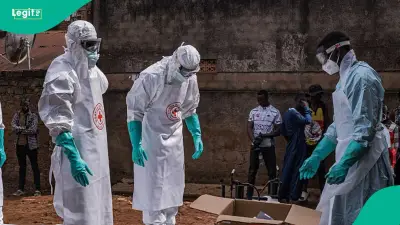
The Saudi Public Health Authority, known as Weqaya, has announced a temporary suspension of entry for travellers from the Democratic Republic of the Congo (DRC), Uganda and South Sudan, effective immediately. The decision, reported by the Saudi Press Agency, forms part of precautionary measures designed to prevent the spread of Ebola into the Kingdom. According to Arab News, the restrictions affect both foreign travellers and Saudi citizens, with additional screening procedures introduced for visitors arriving from several neighbouring African countries.
Three African countries under travel ban
Travellers arriving from the three affected countries will not be allowed to enter Saudi Arabia until further notice. The full list of banned countries is as follows:
- Democratic Republic of the Congo (DRC)
- Uganda
- South Sudan
Furthermore, the Saudi authorities have suspended the issuance of all entry visas for anyone who had stayed in any of these three countries within 21 days before travelling to the Kingdom, even if they travelled through another country before their arrival. This measure is aimed at closing potential loopholes in travel routes.
Saudi citizens also barred from travelling
The restrictions extend to Saudi nationals as well. The government has temporarily prohibited its citizens from travelling to the Democratic Republic of the Congo, Uganda and South Sudan until the health situation improves. Officials said the move is intended to reduce the risk of importing Ebola into the Kingdom. The travel ban for citizens will remain in place as long as the outbreak continues to pose a threat.
Enhanced health screening for four more African countries
Although travellers from four other African countries are still permitted to enter Saudi Arabia, they will face tighter health protocols at all ports of entry. The designated countries are:
- Rwanda
- Burundi
- Tanzania
- Republic of the Congo (Congo-Brazzaville)
Visitors arriving from these nations will undergo enhanced health screening, disease surveillance and other preventive checks before being granted entry. This step is seen as a proactive approach to ensuring that potential carriers of the virus are identified early.
No Ebola case in Saudi Arabia since 2019
Weqaya said Saudi Arabia's disease surveillance and epidemic response systems remain active around the clock, in collaboration with domestic and international health authorities. The agency confirmed that no confirmed Ebola cases have been reported in the Kingdom since 2019. It also said it would continue monitoring developments across affected countries and would update its recommendations whenever necessary. The confirmation is intended to reassure residents and travellers that the public health system is on high alert.
France confirms first Ebola case linked to current outbreak
The announcement came a day after French authorities confirmed the country's first Ebola case connected to the current outbreak. According to reports, a doctor contracted the virus while on a humanitarian mission in the Democratic Republic of the Congo and was placed in a specialised quarantine facility after returning to France. The case highlights the global dimension of the outbreak and underpins the importance of cross-border preventive measures such as those enacted by Saudi Arabia.
About Ebola: key facts
Ebola was first identified in 1976 in what is now the Democratic Republic of the Congo. According to the World Health Organization, the disease has an average fatality rate of around 50 per cent, although outbreaks have varied in severity. More than 15,000 people have died from Ebola since it was first discovered. The virus is transmitted to people from wild animals and spreads through human-to-human transmission via direct contact with bodily fluids.
Saudi authorities said they would continue reviewing the situation and could adjust travel restrictions depending on how the outbreak develops. International health agencies are monitoring the situation closely, and further updates are expected as more information becomes available. The new measures underscore the Kingdom's commitment to safeguarding public health while ensuring that travel and trade continue to operate as safely as possible.