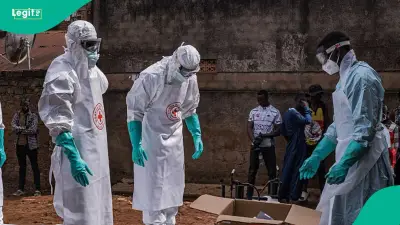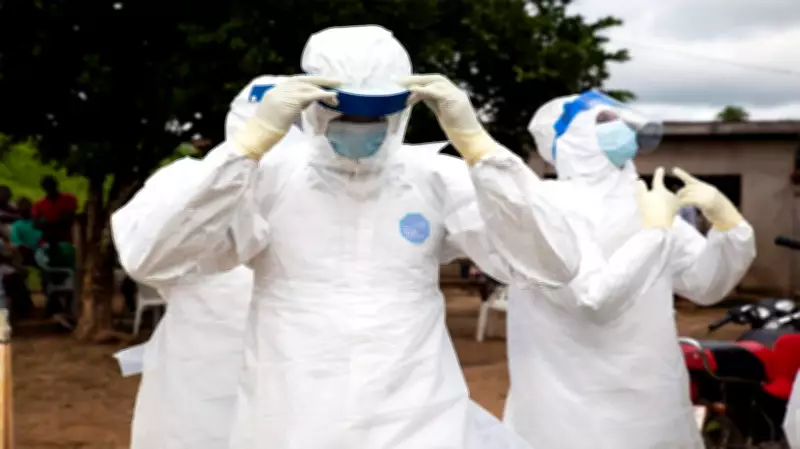
The World Health Organisation (WHO) has raised alarm over the Ebola outbreak in the Democratic Republic of Congo (DRC), warning that the virus may have already spread beyond the country's borders and into other provinces. The death toll has reached 131, with growing concerns over cross-border transmission.
WHO Investigation Reveals Wider Transmission
WHO representative Anne Ancia stated that investigations into the outbreak are revealing wider transmission than initially thought. "The more we are investigating this outbreak, the more we realise that it has already disseminated at least a little bit across the border and also in other provinces," Ancia was quoted as saying by the BBC.
She described Ituri province, the epicentre of the outbreak, as a very insecure area with significant population movement, complicating efforts to trace infections and contain the disease. The outbreak has also spread to South Kivu province, a region already facing a prolonged humanitarian crisis.
Global Concern Over Cross-Border Spread
The outbreak, which has killed at least 131 people, has raised global concern following reports of cross-border transmission into neighbouring Uganda, where one death has been recorded. Officials reported that more than 513 Ebola cases were suspected in the DRC as of yesterday.
The WHO recently declared the outbreak a public health emergency of international concern, citing the virus's escalating spread and the growing risk of cross-border transmission. However, the organisation noted that the outbreak has not yet met the threshold for a pandemic emergency under the International Health Regulations.
No Vaccine for Current Strain
Currently, there is no vaccine for the strain of Ebola driving the latest outbreak. The WHO is evaluating whether existing drugs could offer some level of protection.
Meanwhile, Professor Sylvester Odion Akhaine has expressed concern over the recent Ebola outbreak in the DRC, where over 131 people have died, with the virus spreading into Uganda. The professor noted the frightening reality that the current strain of Ebola has no vaccine specifications.
Akhaine observed that while countries in Eastern Africa are manning their borders, there is a prevalent sense of unperturbedness in Nigeria. "Last time, it was Dr Ameyo Stella Adadevoh that paid the supreme price, by restraining the Liberian carrier of Ebola virus, Patrick Sawyer, in quarantine despite antics to let him loose in 2014," he said.
"Politics is about the affairs of the people, the repository of popular sovereignty. Incumbent state actors should rise to the occasion and begin to give the emerging global health emergency the attention it deserves," Akhaine added.