Nigerian Doctor Delivers Fiery Response to Man's Derogatory Comments About Girl Child
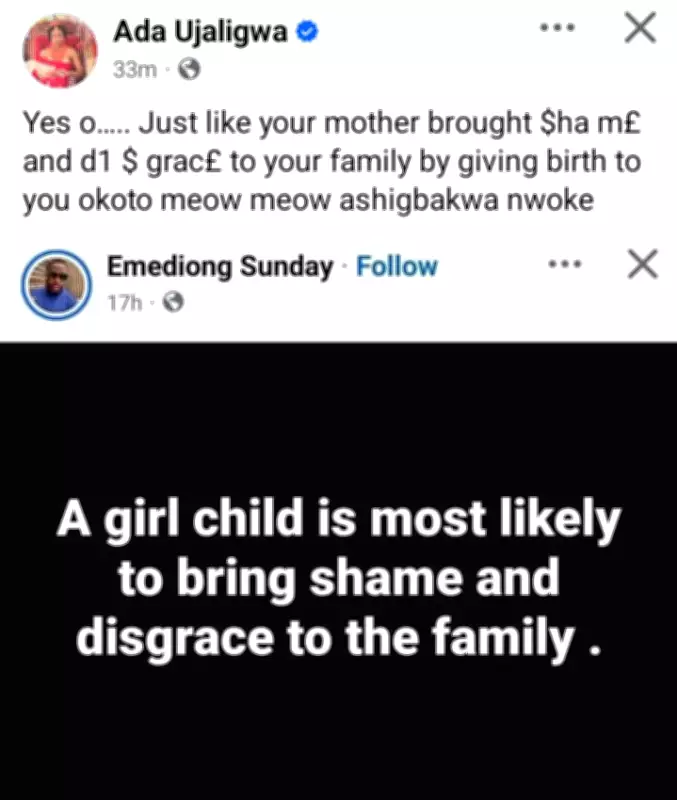
A prominent Nigerian doctor and social media influencer, Ada Ujaligwa, has issued a sharp and unapologetic rebuke to a man named Emediong Sunday over a controversial Facebook post that disparaged the value of the girl child. The incident, which has sparked widespread discussion online, centers on Sunday's assertion that a female child is most likely to bring shame and disgrace to her family.
Controversial Social Media Post Sparks Outrage
According to screenshots circulating on social media platforms, Emediong Sunday posted a statement on his Facebook account claiming, "a girl child is most likely to bring shame and disgrace to her family." This remark, perceived by many as deeply misogynistic and harmful, quickly drew criticism from various quarters, highlighting ongoing societal debates about gender equality and the treatment of women in Nigeria.
The post reflects persistent negative stereotypes that some individuals hold regarding female children, often rooted in cultural biases that undervalue their contributions and potential. Such views can perpetuate discrimination and limit opportunities for girls in education, career advancement, and personal development.
Doctor Ada Ujaligwa's Forceful Rebuttal
In a swift and passionate response, Dr. Ada Ujaligwa took to social media to condemn Sunday's statement. She wrote a pointed reply, stating, "Yes o…..Just like your mother brought shame and disgrace to your family by giving birth to you okoto meow meow ashigbakwa nwoke." This retort, which includes Igbo phrases translating roughly to derogatory terms for a foolish man, emphasizes the hypocrisy and disrespect inherent in Sunday's comment by turning the insult back on him.
Ujaligwa's response has been widely praised by netizens for its boldness and wit, with many applauding her for standing up against gender-based prejudice. As a medical professional and influencer, her voice carries significant weight in advocating for social change and challenging harmful narratives.
Broader Implications for Gender Discourse in Nigeria
This exchange underscores the critical role of public figures and professionals in shaping societal attitudes. By publicly calling out such derogatory remarks, Ujaligwa contributes to a larger conversation about the importance of empowering girls and combating sexism in Nigerian society.
Key points from the incident include:
- The need for continued education and awareness campaigns to address deep-seated gender biases.
- The power of social media as a platform for advocacy and accountability.
- The responsibility of influencers and leaders to model respectful and inclusive behavior.
While the original post by Emediong Sunday has been met with backlash, it also serves as a reminder of the work still needed to achieve gender equality. Incidents like this highlight how everyday interactions on social media can reflect and reinforce broader societal issues, making it essential for individuals to speak out against discrimination.
As discussions continue online, many hope that this episode will inspire more constructive dialogues about the value and potential of every child, regardless of gender, in Nigeria and beyond.