At a time when Nigeria still loses thousands of women to pregnancy-related causes each year, an expert on birth-related issues argues that the country's maternal health crisis is not only a tragedy of the present but a predictor of its future burden of chronic disease.
The Child is Father of the Man
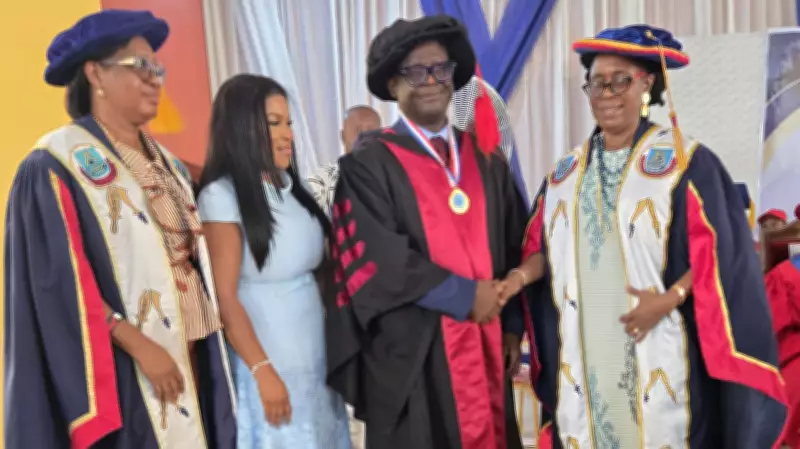
In a lecture that moved from poetry to public health with unusual force, Professor Reuben Agbons Eifediyi urged Nigeria to rethink pregnancy not simply as a moment that ends in childbirth, but as the beginning of a lifelong health story. Delivering the 145th inaugural lecture at Ambrose Alli University (AAU), Ekpoma, the pre-natal obstetrics and gynaecology specialist used William Wordsworth's famous line, "The Child is the Father of the Man," to frame a stark medical argument: what happens to a child in the womb may determine how that child will live, and what diseases they may suffer, decades later.
A Stark Medical Argument
At first glance, the title sounds literary, even gentle. But Eifediyi's message was anything but soft. He argued that poor maternal nutrition, untreated illness, placental dysfunction, stress in pregnancy and weak health systems do more than threaten mothers and newborns in the short term. Indeed, beyond witches and wizards, they may also "programme" future risks of hypertension, diabetes, heart disease and other non-communicable illnesses in the unborn child. In this view, antenatal care is no longer only about surviving labour; it becomes a frontline defence against the adult diseases of tomorrow.
Nigeria's Maternal Health Record
The urgency of that argument becomes clearer when set against Nigeria's maternal health record. According to figures cited in the lecture, Nigeria accounts for nearly 20 per cent of global maternal deaths despite holding about one per cent of the world's population. Eifediyi placed the maternal mortality ratio at 917 deaths per 100,000 live births, with roughly 40,000 women dying each year from pregnancy-related causes, or more than 100 every day. He also cited a lifetime risk of 1 in 22 for Nigerian women dying from pregnancy or childbirth-related causes. Those are not just grim statistics; they are signs of a health system under sustained strain.
The wider global data reinforces the scale of the emergency. A maternal and newborn health country profile highlighted that nearly 28.5 per cent of global maternal deaths occurred in Nigeria and estimated the country's lifetime risk of maternal death at 1 in 19, far above the risk in high-income countries. The World Health Organisation also continues to track maternal mortality and skilled birth attendance as key health indicators for Nigeria, underlining how central the issue remains to the country's development trajectory.
Beyond Counting Deaths
Yet the lecture did not stop at counting deaths. It sought to explain why maternal health matters even beyond the delivery room. Central to that explanation was Barker's hypothesis, now widely known as the Developmental Origins of Health and Disease. First advanced by David Barker, the theory proposes that adverse conditions in fetal life, especially poor nutrition, can permanently shape organs, metabolism and physiology. A baby that adapts to scarcity in the womb may survive birth, but those same adaptations can become harmful later if adult life brings abundance, sedentary living or other risk factors. The result may be higher vulnerability to obesity, type 2 diabetes, stroke, kidney disease and cardiovascular illness.
The Fetus as an Active Witness
That idea turns the fetus from a passive passenger into an active biological witness. Eifediyi argues that the fetus is not a blank slate. Every insult in pregnancy, from malnutrition to maternal hypertension, leaves a mark. The placenta, he noted, sits at the centre of this story. It is not merely an organ of exchange, but the crucial interface between mother and child, the site where blood flow, oxygen, nutrients and inflammatory signals can shape development. When placentation goes wrong, the consequences can appear as pre-eclampsia, fetal growth restriction, preterm birth and, later in life, adult disease.
A Nigerian Perspective
The lecture also gave this science a distinctly Nigerian face. Eifediyi identified familiar direct causes of maternal death, including haemorrhage, hypertensive disorders, sepsis and obstructed labour, alongside indirect threats such as anaemia, malaria and heart disease. He warned too of the rising role of non-communicable diseases in pregnancy, especially diabetes and hypertension, which increasingly complicate maternal outcomes in sub-Saharan Africa. Research cited from Irrua Specialist Teaching Hospital, where he serves as Chief Medical Director and CEO, linked severe maternal outcomes to many of these same complications.
Linking Emergency Care and Long-term Prevention
What made the lecture especially compelling was its refusal to separate emergency care from long-term prevention. Eifediyi acknowledged that many maternal deaths can be prevented through already familiar interventions: skilled birth attendance, quality antenatal care, postnatal follow-up, emergency obstetric services, blood transfusion capacity and effective referral systems. But he insisted that a deeper shift is needed, away from waiting for catastrophe and toward earlier, preventive action. If the origins of disease begin before birth, then public health must move upstream as well.
Recommendations for Action
His recommendations followed that logic. He called for stronger maternal nutrition programmes and earlier screening for high-risk pregnancies, including first-trimester assessment and the use of biomarkers for major obstetric syndromes. He said care givers must pay greater attention to the first 1,000 days, from conception to a child's second birthday, as the most critical window for brain and organ development. He also suggested that low birth weight and gestational history should be taken more seriously in later risk assessment for adult chronic disease. In other words, obstetrics, paediatrics and internal medicine should no longer operate as if they were strangers.
A Moral Core
There was also a moral core to the lecture that went beyond physiology. "No society can attain true greatness when its women continue to die in the process of giving life," Eifediyi said. It was both a lament and an indictment. For all the technical language of placentas, biomarkers and fetal programming, the underlying challenge remains political and social: whether a country is willing to invest in women early enough, deeply enough and consistently enough to change outcomes.
Three Crises, One Continuum
The lecturer tried to connect three crises often treated separately: maternal mortality, newborn survival and the rise of chronic disease. Eifediyi's warning was that they are, in fact, one continuum. A fragile pregnancy can become a fragile childhood; a poorly nourished fetus can become a high-risk adult; a neglected mother can foreshadow a nation's future disease burden. If that argument gains ground, then maternal health may begin to be seen not only as a women's issue or a childbirth issue, but as one of the most important development, prevention and nation-building questions Nigeria faces.
University Leadership Responds
Vice Chancellor of Ambrose Alli University, Ekpoma, Professor Mrs. Eunice Omonzejie said the topic draws attention to the importance of the perinatal period in shaping future health outcomes and urged participants to draw lessons that would inform research, policy and practice. She congratulated Professor Eifediyi on attaining the academic milestone and praised him for his outstanding contributions to medical science, especially in maternal and child health, as well as his dedication to teaching, research and service.
Addressing members of the academic community, guests, students and friends of the university, Omonzejie described the inaugural lecture series as a vital academic tradition that showcases years of rigorous scholarship, research and professional experience. She said the university was steadily regaining its esteemed place in the academic community, citing the recent success of three Law graduates who earned First Class honours at the Nigerian Law School as evidence of improved quality and mentorship.
Omonzejie also highlighted other recent achievements of the institution, including the successful hosting of the 5th Annual International Conference by the Faculty of Social Sciences on artificial intelligence and emerging realities, and a health seminar and outreach programme organised by the National Association of Women Academics for staff welfare.