X Users Share Heartbreaking Realities of Nigeria's Healthcare Struggles
Social media users on the platform X have recently shared deeply personal and distressing accounts that highlight the severe financial challenges many Nigerian families encounter during medical emergencies. These stories paint a grim picture of a healthcare system where life-saving treatment often hinges on immediate cash availability, forcing impossible choices upon vulnerable citizens.
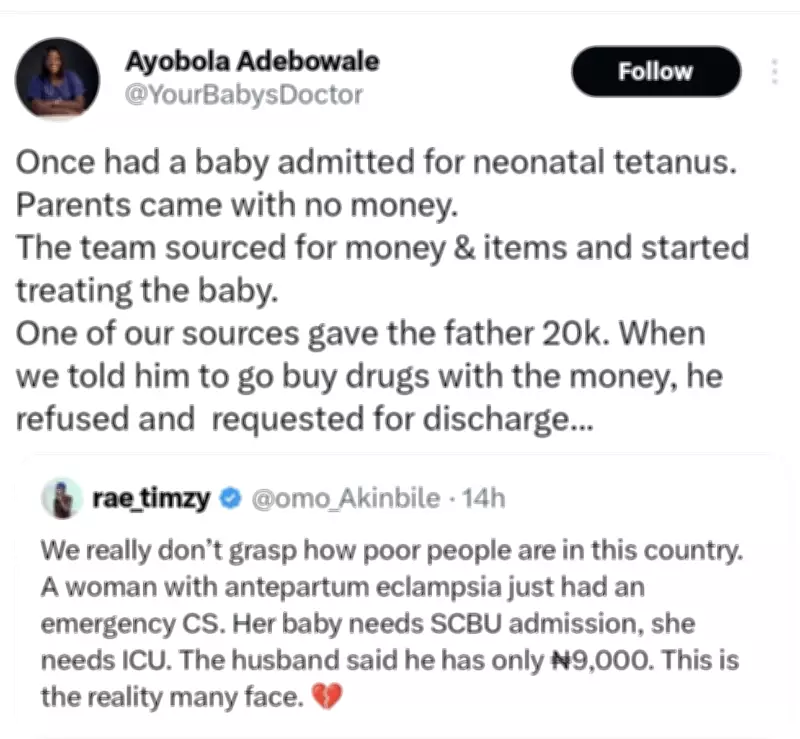
A Husband's Desperate Dilemma: ₦9,000 for ICU and SCBU
One particularly poignant post recounted the case of a woman suffering from antepartum eclampsia, a serious pregnancy complication, who required an emergency cesarean section. The situation grew even more critical post-delivery, as the newborn baby needed admission into the Special Care Baby Unit (SCBU) for specialized neonatal care, while the mother urgently required intensive care in the ICU.
According to the X user, the husband was faced with this dual crisis while reportedly stating he had only ₦9,000 available. This minuscule amount stood in stark contrast to the substantial costs typically associated with such advanced medical interventions. The post framed this not as an isolated incident, but as a stark reflection of the harsh reality confronting countless Nigerians when health crises strike.
Neonatal Tetanus and a Father's Painful Choice
Another user shared a similarly tragic experience involving a newborn diagnosed with neonatal tetanus, a severe and often fatal infection. In this instance, the medical team themselves had to scramble to source funds and necessary medical items to initiate treatment because the parents arrived at the hospital with no money whatsoever.
The narrative took a further heartbreaking turn. After compassionate individuals managed to raise ₦20,000 specifically for the father to purchase the required drugs, he made the agonizing decision to decline. Instead, he requested the baby's discharge from the hospital.
His reasoning, as shared in the post, revealed a layer of familial tragedy beneath the medical one. The man explained he could not justify spending that money on one child while his other children at home were without food. He concluded with a resigned statement, "Whatever happens to him, God knows best," encapsulating a sense of helpless faith in the face of an impossible financial and moral calculation.
A Broader Crisis of Healthcare Affordability
These shared experiences on X transcend individual anecdotes and point to a systemic issue. They underscore the dire consequences when life-saving healthcare becomes inaccessible due to cost. The stories highlight:
- The immediate financial barriers to emergency obstetric and neonatal care.
- The emotional and ethical burdens placed on families forced to choose between treatment for one member and the welfare of others.
- The potential reliance on informal fundraising and the goodwill of medical staff to bridge critical funding gaps.
While the original commentary was shared by blogger Linda Ikeji, the viral nature of these user-generated stories demonstrates a widespread public resonance with the themes of medical financial hardship and the difficult, sometimes tragic, decisions it forces upon Nigerian families.