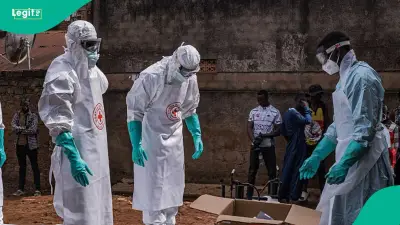
The Federal Government of Nigeria has announced its readiness to implement the Africa Health Workforce Investment Charter through strategic policy implementation, increased investment, and accountability measures. This declaration was made by the Minister of State for Health and Social Welfare, Dr. Adekunle Salako, during the 2nd Africa Health Workforce Investment Forum.
Financing Gap and Workforce Shortages
Dr. Salako emphasized that the financing gap remains one of the most critical obstacles to achieving Universal Health Coverage (UHC) across Africa. He noted that while Africa's health worker density improved from 11 per 10,000 people in 2013 to 27 per 10,000 in 2024, projections indicate a shortfall of approximately 6.1 million health workers by 2030 if current trends persist.
Nigeria's National Policy on Health Workforce Migration
The minister highlighted Nigeria's National Policy on Health Workforce Migration, describing it as a landmark framework built on ethical recruitment, bilateral agreements, diaspora engagement, retention incentives, and rural deployment. This policy aims to address the growing migration of health workers and aligns with the World Health Organization (WHO) Global Code of Practice on International Recruitment of Health Personnel.
Health Sector Renewal Investment Initiative
Under the administration of President Bola Tinubu, Nigeria launched the Health Sector Renewal Investment Initiative, targeting approximately $900 million in health system investments between 2024 and 2026. Dr. Salako explained that the initiative focuses on rebuilding primary healthcare infrastructure, expanding training capacity, and deploying community health workers nationwide.
Nigeria has also completed the National Health Workforce Country Profile and established the National Health Workforce Registry (NHWR) with technical support from the WHO. A Health Labour Market Analysis (HLMA) is currently underway to inform Nigeria's investment compact under the Africa Health Workforce Investment Charter.
Training and Retraining Initiatives
To close workforce gaps, training quotas in health training institutions have been increased. Additionally, over 70,000 frontline health workers have been retrained as part of the primary healthcare workforce strengthening initiative, with a target of 120,000. The government remains committed to deploying community health workers nationwide as part of Nigeria's UHC roadmap.
Proposal for Managed Migration Agreements
On workforce migration, Dr. Salako advocated for a new compact on health workforce mobility through managed migration agreements with clear terms and key performance indicators. He proposed structured investments by destination countries in the training of health workers in source countries such as Nigeria. The current arrangement, where low-income countries bear the cost of training while high-income countries benefit from the workforce, is unsustainable and inequitable, he stated.
Dr. Salako also called for structured bilateral and multilateral agreements that include compensation for source countries, joint training programmes, and circular migration pathways that allow health workers to gain experience abroad and return with enhanced skills. He urged increased investment in health training infrastructure in countries of origin and proposed an annual report on each country's graduate-employment ratio as part of a standardized Africa Health Workforce Scorecard.
Health Workforce Situation in Africa
Dr. Salako highlighted that the financing landscape for health workforce in Africa is undergoing a significant shift, with Overseas Development Assistance (ODA) declining by an estimated 70% between 2021 and 2025. He also noted that 27% of skilled professionals are unemployed despite workforce shortages, a 41% increase in public health emergencies between 2022 and 2024, and Africa carrying about 25% of the global disease burden.
To address these challenges, the minister stated that a 43% increase in employment investment is required. He urged African countries to meet the 15% Abuja Declaration target for health sector funding, noting that only three of Africa's 54 countries—Rwanda, Botswana, and Cabo Verde—have achieved this target.