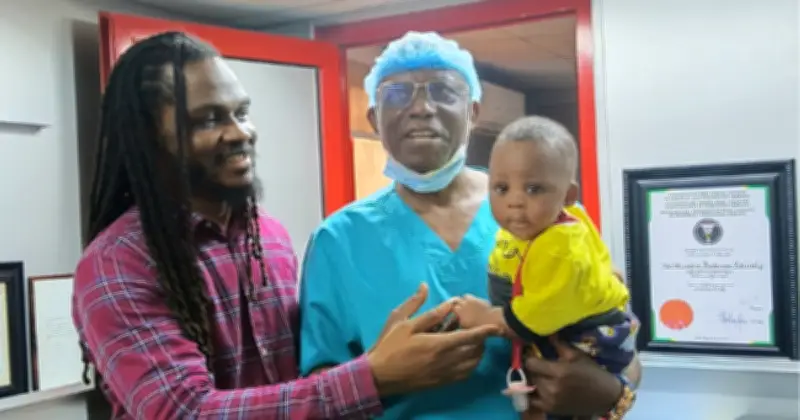
A Nigerian family has welcomed a baby boy conceived through in vitro fertilization (IVF) using sperm the child's late father preserved before undergoing cancer treatment. The child, named Chinonso Francis Jidenna Ezeokoye II, was born about six months ago, and his uncle has committed to raising him as his own son.
Family's IVF Journey After Tragic Loss
A man who uses the name Mufasa on X shared the emotional story online on September 23, 2026. He said his elder brother was diagnosed with lung cancer in 2025. Before beginning chemotherapy, his brother decided to bank his sperm in case the treatment affected his ability to have children later.
That decision became significant after his brother died from the disease in February 2025. According to Mufasa, the family had already started discussing and planning an IVF procedure during his brother's final weeks. After his death, they decided to continue with the process using the sperm he had preserved before treatment.
About six months ago, the family welcomed the baby boy. Mufasa said the baby looks remarkably like his late brother did at the same age. “Science is amazing!” he wrote while sharing the story online. He also described the role he intends to play in the child's life, saying, “For his lifetime, I'm his daddy.” The family thanked Trucare Fertility Clinic for helping them complete the IVF process.
Understanding Sperm Banking for Cancer Patients
Sperm banking is a form of fertility preservation in which sperm is collected, tested, frozen and stored for possible use in the future. It is commonly used by men who may undergo treatments that could affect their fertility. This procedure is particularly helpful because some cancer treatments can damage the cells responsible for producing sperm.
Chemotherapy, for example, can harm healthy reproductive cells as it attacks cancer cells. The effect can be temporary or permanent, depending on factors including the type and dose of treatment, the patient's age and the cancer itself. For this reason, the American Society of Clinical Oncology (ASCO) recommends that sperm cryopreservation be discussed with males before cancer-directed treatment begins.
ASCO Guidelines and the Process
ASCO's 2025 guideline update specifically recommends sperm banking before treatment because sperm collected after treatment starts may have reduced quality or a higher risk of DNA damage. The process can be relatively quick. A semen sample is collected and examined in a laboratory before the sperm is frozen and stored. If a man cannot provide a semen sample, sperm may sometimes be retrieved directly from the testicle before treatment.
The number of samples collected can also affect the options available later. ASCO notes that multiple samples can provide greater flexibility for future fertility procedures, although even a single preserved sample can potentially provide a chance of biological parenthood.
For Mufasa's family, a decision made before chemotherapy became far more than a medical precaution. After his brother's death, the preserved sperm allowed them to welcome a child who is biologically connected to him. It has also left Mufasa with a role he says he will carry for the rest of the boy's life: raising his late brother's son as his own.