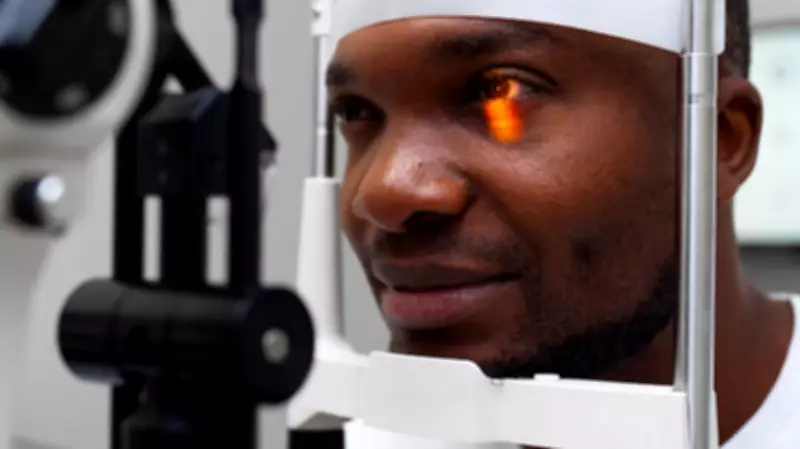
The recent disclosure by the Federal Government that between 12 million and 14 million Nigerians may be living with glaucoma, most of them undiagnosed, is alarming. It points to a massive hidden disease burden and systemic gaps in the country’s healthcare system. It is time for the authorities to move urgently to mitigate the looming human and economic cost by prioritising eye care, making routine screening a public habit, and treating early detection as a national priority.
The Silent Threat of Glaucoma
Glaucoma is one of the world’s leading causes of irreversible blindness. In Nigeria, it reportedly accounts for about 16.7 per cent of all blindness, moving stealthily without pain, dramatic symptoms, or warning signs discernible to an untrained person. Consequently, many victims discover they have the disease only after permanent damage has already been done. Figures from the World Health Organisation show that at least one billion people worldwide have a near or distance vision impairment that could have been prevented or has yet to be addressed. The International Agency for the Prevention of Blindness notes that glaucoma cases worldwide were estimated at 76 million in 2020 and could rise to 112 million by 2040. That millions of Nigerians live with the scourge is a warning that the country sits within a global epidemiological pattern and must decisively confront its own local vulnerability.
Low Awareness and Its Consequences
Studies indicate that 90 to 94 per cent of citizens living with glaucoma do not know they have it. This lack of awareness calls for stakeholders to reorder priorities. Loss of sight among millions of citizens must be considered a major public health threat, one that is capable of crippling productivity on a frightening scale. Many homes are already grappling with high living costs, a situation made worse by recent fuel price hikes. Blindness should not be allowed to further narrow their economic opportunities.
Government Efforts and Gaps
It is instructive that the Federal Government and the Lagos State Government spoke out about the danger of the disease during World Glaucoma Week 2026. The Federal Ministry of Health and Social Welfare disclosed that more than 2,220 primary healthcare workers across 16 states have been trained and equipped under the Better Vision 2.0 initiative to conduct vision screening and make referrals. In Lagos, officials have backed advocacy with public outreach, urging residents to get screened. However, there is a question: Do these efforts match the scale of the challenge? Are deliberate and measurable steps being taken to upscale the response?
Specialist Shortage and Rural Neglect
According to the World Health Organisation and the VISION 2020 global initiative, developing regions should have a recommended minimum of four ophthalmologists per million people or one ophthalmologist for every 250,000 people. While this figure is the baseline for Sub-Saharan Africa, the broader recommendation for achieving universal eye health in developing countries is often cited as one specialist per 50,000 people (or 20 per million). Sadly, Nigeria operates below both benchmarks, with about 700 ophthalmologists serving a population of over 200 million. Over 80 per cent of the country’s eye care specialists are concentrated in urban areas, yet 70 per cent of the population lives in rural communities where access to basic eye examination is often non-existent. As of late 2025, Jigawa State, with a population exceeding seven million, reportedly had only one state-employed ophthalmologist and no glaucoma specialist. Training 2,200 healthcare workers across 16 states is commendable, but the country has 36 states and a population, the majority of whom have never had an eye test.
Integrating Eye Care into Primary Healthcare
The WHO’s World Report on Vision has long urged countries to integrate eye care into primary healthcare and strengthen health information systems and the eye-care workforce. The Federal Government should embrace this guidance with renewed focus. Eye checks, especially for people aged 40 and above and for those with a family history of glaucoma, should become a routine part of primary healthcare. Screening should not be limited to teaching hospitals or specialist clinics. General hospitals, primary health centres, workplaces, markets, religious centres, and community outreaches must step up involvement, backed by referral systems that ensure prompt care after a positive screen.
Lifelong Management and Cost Barriers
The management of glaucoma is not a one-day affair. It requires repeated examinations, lifelong monitoring, and adherence to a strict treatment regimen. Alongside inflation and other demands of daily living, many Nigerians will find this difficult to sustain. The Federal Government must advance a strategy that reduces costs and ensures patients have access to essential medicines. Too many people seek care for glaucoma only when sight has already begun to fail. While this habit is not confined to eye health, the consequences for eye care are severe because lost vision from glaucoma cannot be restored.
Changing Behaviour and Government Responsibility
Citizens must change their behaviour on health issues. The absence of pain or clear sight is not a signal that all is well. However, the larger part of responsibility lies with the government, which alone has the federal might to deploy resources commensurate with the scale and coordination required to tackle the disease. The country’s decades-long experience with organising immunisation campaigns should be replicated for glaucoma detection and management. The government should also set targets for screening, expansion of staff, and access to treatment, and disclose periodic data on progress.
The Role of Media, NGOs, and Private Sector
As Permanent Secretary Kachallom Daju rightly noted, the media must do more to demystify the disease and reach the millions who have never heard of it. Non-governmental organisations and the private sector must also invest more in community eye health. As the world begins another countdown to next year’s Glaucoma Week, how Nigeria approaches the disease will show the international community whether it intends to be a republic that accepts preventable disability as normal, or one that understands that public policy exists to prevent avoidable suffering before it becomes permanent.
Every minute lost brings millions closer to lost vision. The cost of inaction is huge. No responsible nation should be willing to pay it.