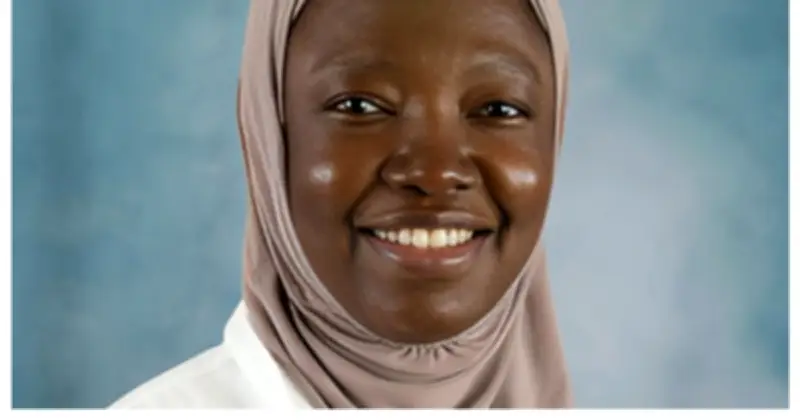
Dr. Salamat Ahuoiza Aliu-Ibrahim, who made history as Nigeria's first female neurosurgeon, now works as a pediatrician in Joplin, Missouri, after relocating to the United States. Her journey highlights both personal ambition and the systemic challenges facing Nigeria's healthcare system.
Who Is Dr. Salamat Ahuoiza Aliu-Ibrahim?
Dr. Aliu-Ibrahim is widely recognized as the first female certified neurosurgeon in West Africa and the first female neurosurgeon to receive her training entirely in Nigeria. She studied medicine at the University of Ilorin and specialized in neurosurgery under the West African College of Surgeons. Before moving to the U.S., she served as a Senior Consultant Neurosurgeon at the University of Ilorin Teaching Hospital (UITH), where she performed complex cranial and spinal procedures. Her achievement was a landmark in a field long dominated by men, making her a symbol of what Nigerian women can accomplish in medicine.
Why She Left Nigeria
Dr. Aliu-Ibrahim has been clear about her reasons for leaving. According to her, the decision was driven by a desire for “better opportunities and professional growth.” She explained, “I left because I wanted better opportunities and professional growth. I wanted to practise neurosurgery in the U.S., but I didn’t match. So I decided to go for paediatrics, a field I also love.” After completing her pediatric residency in the United States, visa requirements mandated that she work in a medically underserved area. Joplin, Missouri, met that requirement, leading her to join the Freeman Health System. “Joplin, Missouri, fits that description, and that is how I found my way to Freeman Health System. This is my home now,” she said.
From Brain Surgery to Caring for Children
One of the most misunderstood aspects of her story is the transition from neurosurgery to pediatrics. Pediatric neurosurgery is a subspecialty of neurosurgery that requires completing a neurosurgery residency before additional fellowship training. Dr. Aliu-Ibrahim did not complete that pathway in the U.S. Instead, after not matching into a U.S. neurosurgery residency, she retrained in pediatrics and now works as a pediatrician. Her current role underscores that even highly accomplished international specialists may need to reinvent their careers when relocating.
Nigeria's Neurosurgeon Shortage
While her personal story stands on its own, it intersects with a troubling reality: Nigeria faces a severe shortage of neurosurgeons. A 2024 geospatial analysis reported that Nigeria had about 132 neurosurgeons and 114 neurosurgery residents serving a population of roughly 218 million people — a ratio of one neurosurgeon to about 1.65 million Nigerians. Other reports highlight the scale of the challenge: in 2021, experts cited by Punch Newspapers said Nigeria had only 97 neurosurgeons for a population exceeding 200 million, far below the estimated 2,000 specialists needed. The shortage leads to long waiting times, limited access to specialized care, and the burden of traveling across states for treatment. In that context, the migration of even one highly trained neurosurgeon carries symbolic weight.
More Than One Doctor's Journey
Dr. Aliu-Ibrahim's journey should not be reduced to a simple narrative of “brain drain.” It is, first and foremost, the story of a woman who achieved an extraordinary milestone, pursued new opportunities, and adapted to a different medical system. But it also serves as a mirror for Nigeria's healthcare sector. Her departure invites policymakers to ask why a country with such a profound shortage of neurosurgeons cannot retain its pioneers and what must be done to create an environment where future specialists can thrive at home. For now, Dr. Aliu-Ibrahim continues to care for children in Missouri, thousands of miles away from the operating theaters where she once made history.