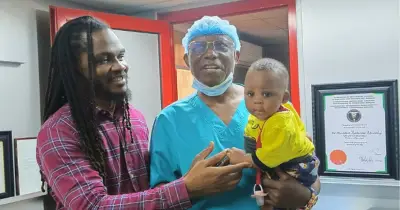
A grieving mother has publicly thanked a doctor who refused to perform a tubal ligation last year, a decision she now says she is eternally grateful for after the tragic loss of her 7-year-old son.
A Fateful Refusal
The woman, who chose to remain anonymous, recounted on Facebook how she had begged her doctor to tie her fallopian tubes during a scheduled cesarean section for her twins. She had decided she was done having children and saw the C-section as the perfect opportunity to undergo sterilization.
However, when she arrived at the hospital to sign the consent forms, the doctor, identified as Dr. Chinweike, advised against the procedure. He cautioned that she was still young and that life was unpredictable, suggesting that circumstances could change and she might regret the decision.
A Heartbreaking Loss
In a poignant twist of fate, the woman lost her 7-year-old son on April 1, 2026. The tragedy made her realize the profound wisdom in the doctor's refusal. She took to social media to express her gratitude, writing: "May God continue to bless Doctor Chinweike for me, it's good to take advise sometimes."
The woman detailed her initial persistence: "During my antenatal in my twins pregnancy, I always beg my doctor to close my fallopian tubes after the Cs because that's the main reason why I chose to deliver them through Cs." She recalled how the doctor had initially agreed but then changed his mind on the day of the signing.
A Lesson in Humility
Reflecting on the doctor's words, she shared: "He said I could be a divorcee tomorrow or I could l0se a child tomorrow and still want to give birth again, I pleaded and begged him to do it for me, but he refused and said I am too young to do that and life is unpredictable, he said I will remember this day and forever be grateful to him."
The woman admitted she did not understand the doctor's warning at the time but now sees it as prophetic. Her story has sparked widespread discussion about the importance of considering long-term implications of irreversible medical procedures.
Medical Ethics and Patient Autonomy
This case highlights the delicate balance between respecting patient autonomy and a physician's duty to provide comprehensive counsel. While patients have the right to make decisions about their bodies, doctors are encouraged to ensure that decisions are well-informed and consider future contingencies.
The doctor's refusal, though initially frustrating for the patient, ultimately proved beneficial. The woman's story serves as a reminder that medical advice, even when it contradicts our immediate wishes, can sometimes be a safeguard against unforeseen life events.
As the woman continues to mourn her son, she finds solace in the possibility of future children, a chance she might have forfeited had the doctor not intervened. Her public thanks to Dr. Chinweike underscores the profound impact that compassionate, forward-thinking medical care can have on a patient's life.