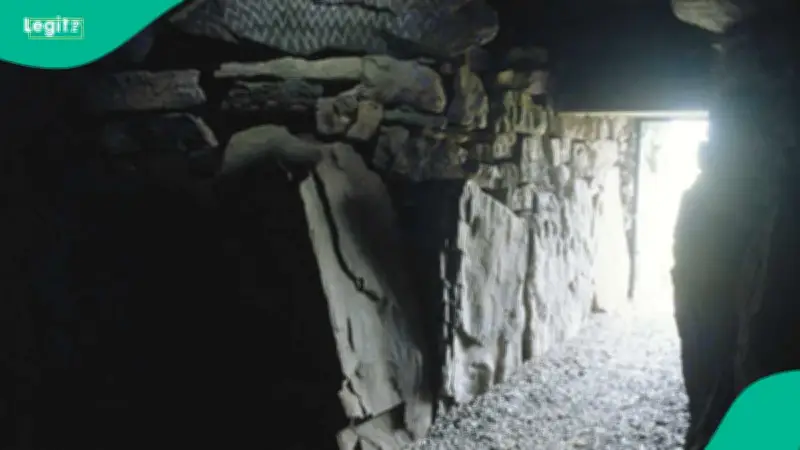
An international team of researchers has discovered cave art in south-west Ireland dating back at least 15,000 years, indicating that the first humans to reach the island arrived from what is now Wales via a land bridge exposed during the last Ice Age. The findings, coordinated by Dr George Nash, a rock art specialist at the University of Liverpool, push back the earliest confirmed human presence in Ireland by roughly 5,000 years, surpassing the previous oldest archaeological evidence of about 10,500 years.
Land Bridge Connected Wales and Ireland
During the most recent Ice Age, falling sea levels exposed a strip of land connecting modern-day Pembrokeshire in Wales to the Rosslare area on the south-east tip of Ireland. Nash estimated the crossing was about 46 miles (76 km) of forested and grassland terrain. Despite summer temperatures ranging from -10°C to -20°C, the route supported herds of wild horses, mammoths, bison and reindeer feeding on mosses and sedges in the near-frozen soil, making it viable for hunter-gatherers to follow and exploit.
Nash said south Wales had itself been settled between 35,000 and 40,000 years ago by early modern humans moving up from southern England, France and Spain. The art traditions found in the Irish caves represent a further evolution of what those communities developed over thousands of years.
AI Helped Pinpoint the Caves
Rather than conducting a blind field search, the team fed a computer algorithm with data on the characteristics of cave dwellings in south Wales, allowing it to flag comparable sites in Ireland. The model identified 28 candidate caves, and eight were confirmed to contain rock art. The engravings, ochre and charcoal paintings, and finger-drawn line sketches in clay all point to a date of at least 15,000 years ago, and Nash said the actual age could be considerably earlier.
The team, which also included researchers from University College Dublin, the University of Adelaide, and institutions in Dubai, Wales and Portugal, has chosen not to disclose the precise locations of the caves to guard against vandalism and looting.
Population Pressure and Further Discoveries
Nash said the pressure of a growing population in Wales, where roughly 100 caves on the Gower Peninsula alone were occupied at the time, likely pushed groups further west in search of resources and shelter. The researchers believe there is much more still to find. Nash noted that it would make little logical sense for early humans to have bypassed counties Wexford, Waterford and Cork entirely, and said the project was "pushing the boundaries of what we consider to be the final vestiges of a north-west European frontier."