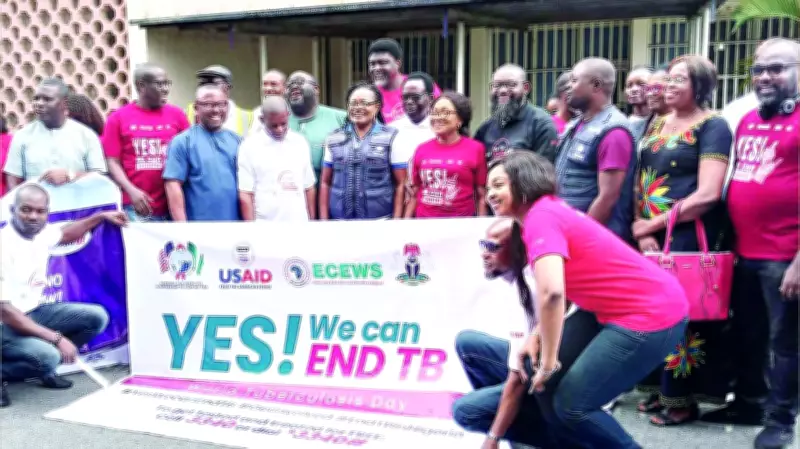
Global Tuberculosis Risk Should Not Be Determined by Place of Birth
In many high-income nations, even a minimal number of tuberculosis (TB) diagnoses can trigger headlines and swift public health actions. Recent instances in U.S. cities like Seattle and San Francisco demonstrate this, where media attention has centered on testing children after TB was detected in a school. Conversely, in sub-Saharan Africa, such situations are perceived differently. While some areas have relatively low TB levels, others confront significant challenges.
Disparities in TB Burden Across Regions
Several countries in East and Southern Africa—including Ethiopia, Kenya, Uganda, Nigeria, and South Africa—remain among the world's high TB-burden settings, with notable variations in drug-resistant TB both between and within nations. In these regions, sustained transmission continuously strains health systems, necessitating responses focused on large-scale, ongoing disease control rather than isolated incidents.
Globally, an estimated 10.7 million people fell ill with TB in 2024, and the disease claimed 1.23 million lives, surpassing any other infectious disease. It is the leading cause of death for individuals living with HIV and a major contributor to fatalities related to antimicrobial resistance. Although TB is a recognized risk in many parts of the world, in the U.S., it is relatively uncommon and often viewed by the public as a relic of the past.
Our exposure risk should not hinge on something as arbitrary as our birthplace. This principle drives the work of scientists like Alemnew Dagnew, who is dedicated to developing a TB vaccine. The goal is to elevate high-burden areas, whether affected by drug-resistant or drug-sensitive TB, to a status similar to San Francisco or Seattle—where the disease is so rare that even a few diagnoses are considered exceptional events.TB as a Disease of Poverty
Tuberculosis is frequently described as a condition strongly linked to poverty. Transmission thrives in environments with poor ventilation and close contact, such as underground mines, crowded workplaces, and densely populated urban settlements. Undernutrition, commonly associated with poverty, weakens immune defenses and heightens the risk of developing active TB. The illness can also impose a severe financial strain on households when the primary wage earner falls sick, exacerbating economic hardship and vulnerability.
Ethiopia, a high TB-burden country, provides a stark example. Dagnew, having lived in the community and worked as a physician and researcher there, witnessed firsthand the disease's impact on families and communities. The devastation of many lives around him left a profound impression, fueling his career motivation.
The Need for Improved TB Vaccines
The current TB vaccine, the BCG vaccine, is a century-old tool that is important but imperfect. Studies indicate that while it protects young children from severe TB forms, it offers limited defense against pulmonary TB in adolescents or adults. Since adolescents and adults bear the greatest burden of pulmonary TB and are primary transmission drivers, preventing TB in these groups could help safeguard people of all ages.
Widespread use of an effective TB vaccine could also aid in reducing drug-resistant TB. By lowering TB incidence, it would decrease the need for antibiotic treatments—a crucial step in combating antimicrobial resistance. The World Health Organization estimates that over 25 years, a vaccine with 50% efficacy in protecting adolescents and adults could save 8.5 million lives, prevent 76 million new TB cases, and save $41.5 billion for affected households.
Lessons from Measles Vaccination
The experience with the measles vaccine underscores the importance of equitable access. Introduced over 60 years ago, its success has relied on sustained efforts to ensure widespread use. Today, measles outbreaks still make news, but they are minor compared to pre-vaccination epidemics. In the past 25 years alone, measles vaccination is estimated to have prevented about 59 million deaths.
The TB vaccine candidate under evaluation at the Gates Medical Research Institute is among several in late-phase clinical trials. The TB vaccine pipeline has never shown such promise, bringing us closer than ever to improving prospects for communities most affected by this disease. If one of these candidates proves effective, collaboration among governments, global health organizations, and communities will be essential to ensure it reaches those who would benefit most.
Broad and equitable access is critical to reducing the global TB burden and advancing toward a TB-free world.Dagnew, M.D., is head of Vaccines and Biologics Development at the Gates Medical Research Institute, leading the clinical development of the M72 tuberculosis vaccine. He holds an M.D. and M.Sc. in Medical Microbiology from Addis Ababa University, an M.Sc. in Vaccinology and Pharmaceutical Clinical Development from a joint program with Novartis Vaccines and the University of Siena, and an MPH focusing on epidemiologic and biostatistical methods from the Johns Hopkins Bloomberg School of Public Health.