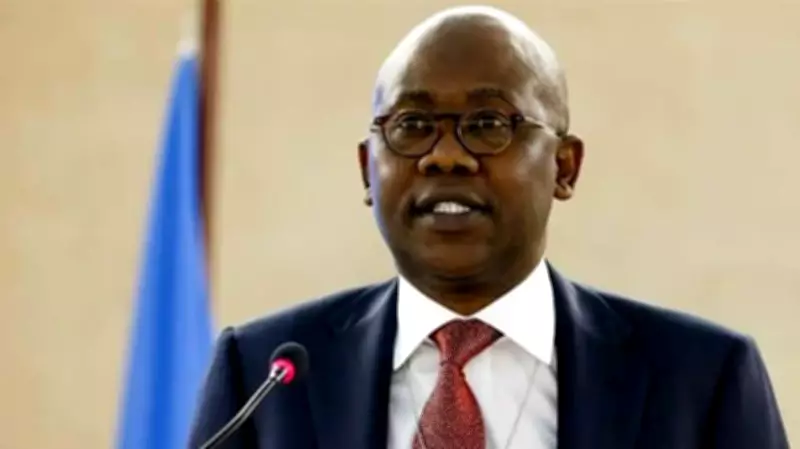
Former Attorney General of the Federation and Minister of Justice, Mohammed Bello Adoke, SAN, has called on Nigerians to protect and strengthen the country's democratic process, warning that the nation stands at a critical democratic crossroads. He made the appeal while delivering a lecture titled 'Safeguarding Nigeria's Democratic Process: Issues and Prospects' at the 2026 Annual Law Week of the Nigerian Bar Association in Abuja.
Democratic Crossroads
Adoke stated that the appeal had become urgent because 'a closer examination of our polity will reveal that Nigeria stands at democracy's precarious crossroads.' He noted that although Nigeria has sustained civilian rule for 27 years since the advent of the 1999 Constitution, public confidence in the electoral process has continued to decline.
'It has been 27 years since the 1999 Constitution heralded civilian rule and vested sovereignty in the people, yet trust in the electoral process continues to erode,' he said.
Concerns from 2023 Elections
Adoke cited concerns arising from the 2023 general elections, including low voter turnout, electoral violence, and allegations of vote-buying. He maintained that such developments have raised questions about the credibility of democratic institutions and processes. He emphasized that while democracy in Nigeria has endured since 1999, endurance alone should not be mistaken for institutional strength.
'A democracy is not measured merely by how often it holds elections, but by how deeply its people trust the outcomes of those elections,' he stated.
Need for Integrity
The former minister warned that democracy weakens when electoral processes lose credibility, stressing that public trust remains central to democratic stability and national cohesion. According to him, Nigerians desire a democratic system that guarantees meaningful participation through free, fair, and credible elections, rather than mere ceremonial participation.
'Safeguarding the democratic process demands more than procedure. It demands integrity in the process, discipline among political actors, courage from institutions, and vigilance from citizens,' he said.
He added that laws must not only exist but must be obeyed, while institutions must not only be established but must also earn public trust.
Structural Challenges
Adoke called for urgent attention to structural challenges confronting Nigeria's democratic process, including concerns surrounding internal party democracy, electoral administration, political financing, and electoral violence. He stressed the need for strict adherence to constitutional and legal provisions governing elections and democratic participation, noting that sovereignty ultimately belongs to the people.
While acknowledging that the Nigerian Constitution provides a framework for political participation, he observed that practical challenges such as financial barriers, weak party structures, and electoral malpractice continue to undermine inclusiveness and equal opportunity.
'I submit with respect that a democracy where sovereignty is only partially realised is a democracy still in search of itself,' he said.
Call to Action
Adoke also spoke on issues relating to electoral violence, monetisation of politics, internal party democracy, and electoral administration, urging stakeholders to strengthen democratic institutions in the interest of national development and the rule of law.