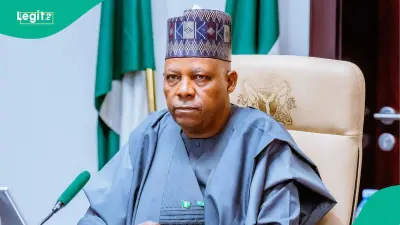
One of the fundamental strengths of a democratic state is the right to free speech, which fosters both praise and constructive criticism. However, this right is sometimes exploited by political factions that spread misleading narratives and propaganda to serve their own interests. At the forefront of this scenario in contemporary Nigerian discourse is Joash Ojo Amupitan, an accomplished academic and attorney now leading the Independent National Electoral Commission (INEC). Despite facing some ungrounded criticism, his impressive background as a university scholar and his commitment to electoral integrity deserve recognition.
Early Challenges and Case Studies
Under Amupitan’s leadership, INEC is navigating an important transitional phase marked by the critical challenge of building operational confidence in Nigeria’s electoral processes in anticipation of nationwide general elections. To assess his early performance, we can explore two significant case studies: the Anambra State governorship election which took place within weeks of his assumption of office late last year, and the more recent council elections in the Federal Capital Territory (Abuja). These examples not only showcase his vision and commitment to strengthen our democratic system, but also highlight ongoing efforts to counter misinformation that may undermine public trust in the electoral process.
The Anambra Governorship Election
The 2025 gubernatorial election in Anambra State posed a major test for Amupitan and initially seemed to have been conducted successfully. About 22% of registered voters participated in the election, strengthening the subsisting trend of abysmally low voter turnout which has typified elections in Nigeria’s fourth republic, with the winning candidate receiving approximately 80% of the total votes. The results appeared decisive, and reports of post-election violence or conflict were minimal. Several procedural enhancements stood out, including improved timelines for result uploads and a more effective use of the Bimodal Voter Accreditation System (BVAS), which led to a reduction in multiple voting and impersonation. However, the voter turnout raises important considerations about the election’s representativeness, indicating potential voter disengagement or concerns about the integrity of the electoral process.

The FCT Council Elections
In the Federal Capital Territory (Abuja), the emphasis shifted from the outcomes alone to examining the integrity of the electoral processes, especially given the complexities of an urban environment. Here, the voter turnout was approximately 30%, reflecting more competitive multi-party dynamics. Reports indicated that the voter accreditation process functioned almost flawlessly, signaling a positive trend compared to Anambra. Abuja’s experience provided a stronger indication of democratic health, marked by increased voter participation, enhanced electoral competition, and a greater sense of legitimacy among the electorate. Nevertheless, challenges persisted, including connectivity issues that affected real-time result uploads and concerns regarding outdated entries on the voter registry.
Refining Electoral Mechanisms
Overall, Amupitan’s focus has been on refining existing electoral mechanisms rather than introducing entirely new tools. His leadership emphasizes enhancing the effectiveness of established systems, such as improving result upload speeds where connectivity allows and ensuring consistent and reliable voter accreditation. This approach is essential, as Nigeria’s electoral challenges often arise not from a lack of innovation but from the execution phase, where plans transition into practice.
Persistent Issues: Vote-Buying and Prosecution
Despite these advancements, vote-buying remains a significant concern, with reports of cash inducements—commonly referred to as “nairaisation”—surfacing in both Anambra and Abuja. The tools for addressing these practices need strengthening, and INEC has yet to develop a comprehensive strategy for prosecuting electoral offences. This persistent issue reflects the complexity of restoring public trust in Nigeria’s electoral framework and emphasises the importance of continued progress in building a fair and transparent electoral system.

Conclusion: A Promising Start
Professor Amupitan seems committed to translating the same rigour and energy which typified his near four-decade sojourn in the academia, to INEC. Nigeria’s electoral bodies through the ages have repeatedly turned to the ivory tower for their choice of ombudsmen, against the backdrop of their presumed apolitical neutrality. Within the brief span of his stewardship thus far, the results declared by Amupitan’s INEC have reflected the overwhelming will of the electorate. There are as yet no accusations or litigations against INEC within this space of time which, to borrow the Yoruba aphorism, implies that cream-coloured corn-pap, can indeed be produced from the belly of the coal-blackened fire pot.