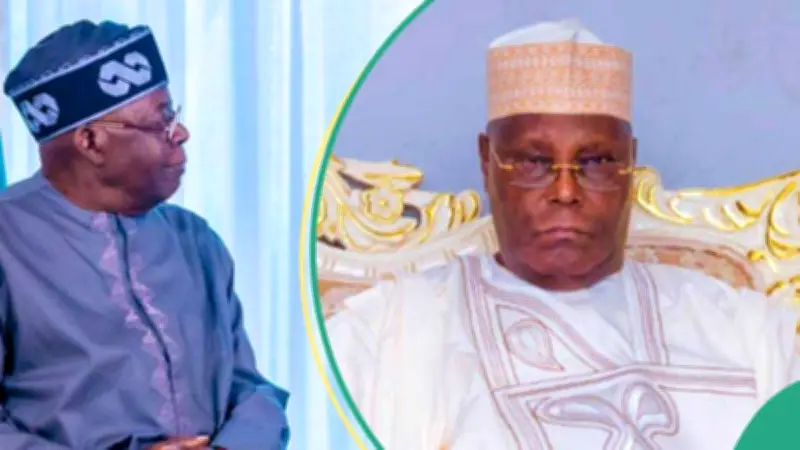
Former Vice President Atiku Abubakar has sharply criticised the Federal Government over its decision to raise fees in Federal Unity Colleges and introduce a uniform ₦50,000 examination fee for WAEC and NECO candidates, effective from 2027. Atiku, the presidential candidate of the African Democratic Congress (ADC), called the move cruel and constitutionally irresponsible, warning it would push more Nigerian children out of school and worsen the country's already critical out-of-school crisis.
Atiku Demands Reversal of Fee Hike
In a statement issued on Sunday, July 12, 2026, by his Senior Special Assistant on Public Communication, Phrank Shaibu, Atiku accused President Bola Tinubu's administration of compounding the hardships facing Nigerian families at a time of record inflation, stagnant wages, and widespread unemployment. He argued that a government that genuinely believes in the future of its people does not erect financial barriers between children and education but removes them. Education, he said, is not a privilege reserved for the wealthy but the birthright of every Nigerian child and the foundation upon which prosperous nations are built.
Atiku pointed to Nigeria's dire education situation, noting that between 10.5 million and roughly 15 million children and young people are currently out of school, depending on the age group and methodology used. He argued that any administration confronted with such figures should be channelling resources into bringing those children back into classrooms, not introducing policies that will push more out.
Fee Hike a Systemic Filter
According to Atiku, the proposed examination fee hike goes beyond a financial inconvenience. He described it as a systemic filter that will cut off academically qualified but economically disadvantaged students before they even reach the university application stage. He also highlighted a structural contradiction in the government's approach: Nigerian universities can only absorb between 500,000 and 700,000 students annually, while more than two million young Nigerians seek admission each year. Rather than expanding infrastructure and capacity to close that gap, he said, the administration is further restricting entry through higher fees.
Atiku urged President Tinubu to reverse both the Unity School fee increase and the proposed ₦50,000 examination charge, and to convene a national stakeholders' dialogue on education financing. He further called for increased investment in public school infrastructure, teacher recruitment, and expanded university capacity. Atiku pledged that an ADC-led government would reverse the fee increases and ensure that poverty is never the reason a Nigerian child is denied an education.
Context of Broader Criticism
This is not the first time Atiku has criticised the Tinubu administration on education and governance. Earlier, he faulted Tinubu's directive to the ICPC to probe the PFIPC affair, calling it a reluctant response to his seven-day ultimatum. Atiku argued that referring the matter to a government agency contradicted the standard of independence Nigerians expected and demanded a 10-member Special Independent Commission of Inquiry to conclude work within one month. He also criticised Tinubu's government for alleged budgetary manipulations and public ridicule, claiming that the use of an education commission for road projects betrays children's needs and priorities.