At the risk of sounding like a broken record, the continued advocacy for women in leadership and decision making should and continues to remain top of the agenda. Nigeria remains a developing country to date and will shift from this category when there is a deliberate, not tokenistic, mainstreaming of women into positions of authority. The case for women in decision making tables, who actually contribute and make decisions, is essential. Women's participation brings about a rare and inclusive lens and direction that has been proven to make great things work.
Why Aren't Women in Peacebuilding?
At a very crucial time in our nation's trajectory, our communities have encountered and keep suffering from multiple bouts of insecurity. Every member of a community, irrespective of age, gender, class, ethnicity, geographical location, religion or position, is being consistently impacted by insecurity. The current architecture of peacebuilding and conflict resolution decision making 'owners' remain exclusive. The data speaks for itself: women in the National Assembly less than five percent, women in the Federal Executive Council less than 10 percent, women in ambassadorial positions less than 10 percent, women in decision making military positions less than 10 percent, women in ministerial positions less than 10 percent, women in leading government parastatals less than 10 percent, women in political positions that can influence change less than 10 percent. The list goes on.
Women in peacebuilding and conflict resolution is a very important space that has limited number of women despite the unique perspectives and experiences that women live through and bring to negotiations for achieving sustainable peace in our communities. Research proves that women involved in conflict resolution and peacebuilding precipitates an inclusive lens into phased and lasting resolutions that contribute to development, especially in a context and comprehensive specific solution. Women carry a resilience that can promote reconciliation and rebuilding spaces even after conflict.
The Herculean Issues
Our nation is being governed by very strong patriarchal structures, mindsets and norms that keep a society from benefiting from women's innate 'super power' of peacebuilding, limiting our nation from opportunities of a conflict-free society. Globally, there is an increased importance of gender in peacebuilding with countries taking very decisive steps to ensure women are aligned in policy making, governance and leadership. Africa has had and still has many women who have been presidents, vice presidents and women making decisions that demonstrate core competence and capacity. Research shows that Nigeria is yet to key into this transformative strategy.
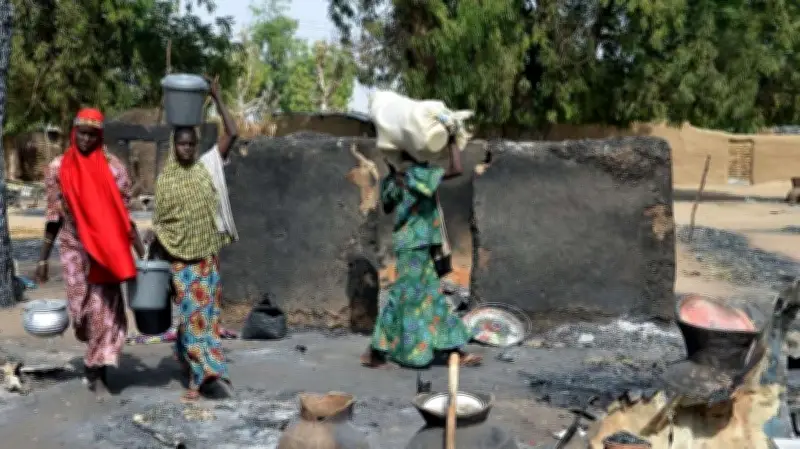
Insecurity is not knocking on our gates; it is living within our environments. Insecurity becomes the 'enemy within' and sadly so. When innocent children as young as three years old are abducted and remain in captivity in conditions that are not climate friendly for more than 14 days at a stretch, we have to question the power imbalances that have created such phenomena of conflict dynamics and perhaps created opportunities for perpetrators, shaped victims' vulnerabilities and delayed professional and tactical rescue responses. In the most recent abductions by armed bandits in Nigeria, abductors utilise women for uptake. A woman is used to make a video for public plea and bandit negotiations, and a mother to trigger sensibilities of weakness and victimhood vis-à-vis threats for quick outcomes and returns on insecurity from the government.
The Risk of Sentimentality
The United Nations has documented the multifaceted nature of insecurity and conflicts, which create sexual violence as a weapon and 'spoil' of war, forced recruitment of child soldiers and young men (sometimes girls and women) into armed groups (Machel Report, 1996). The justification of recruitment offers range from economic desperation, perceptions of (in)security, armed (state) actors and social pressures that are influenced by masculinities and honour. Peace processes that prioritise political settlement without accountability may entrench impunity, fanning the flame on insecurity and acts of banditry as a 'glorified' form of economic entitlement. Where markets are controlled by armed groups, sexual exploitation can be woven into systems of patronage, and access to women's bodies become resources that armed actors commodify.
The Price of Exclusion
United Nations Security Council Resolution 1325 on Women, Peace, and Security clearly outlines the very devastating impact of armed conflict on women and then the very critical, essential and crucial need for women in peace building. Keeping women out of decision making and leadership continues to mar the inclusion strategies that our nation can leverage. Peace is expensive! Nigeria is paying a huge price with innocent lives. How many more abducted citizens will signal that this level of impunity is unacceptable? When will active listening be a core governance strategy? Can the capacity to investigate and prosecute gendered crimes be scripted into agencies of security through international cooperation, resources and training?
Is Insecurity Avoidable?
Women are paying huge prices from structural and systemic violence. From bodies as sites of crime and violence, tasked to reproduce societal ideals or risk shaming and labelling, to being reduced to campaign 'fixtures' and elements such as clapping, dancing and 'asoebi-ing' levels. Women look first to nurturing and care-taking as a gender normative value and are greatly impacted by insecurity and violence when they lose family members in the process. Women have suffered historical marginalisation both economically and socially; however, these few points still make a very strong case for women to be in leadership and peacebuilding agendas in our nation. Women are built, raised and scripted ready.
Hopeful Futures Include Women
As an optimist, Nigeria will become a nation at peace someday. While realities of these futures are seemingly afar, leveraging on gaps unexplored in the full utilisation to tackle insecurity is pertinent. Inclusion strategies is a beneficial framework that needs to be explored and engaged. Everyone matters and hence all persons must be integrated into transforming the current trends of unsafety. While we continue to advocate, speak and represent the vulnerable members of our society, we strongly suggest that a refined architecture needs to be developed with an engine room inclusive of women and girls.
Without a shadow of doubt, I believe in the power of women. I believe we are built with the unique and intersectional lens to be involved effectively, contribute to tackling insecurity and promoting peace-building. Aniebo, executive director of HEIR Women Hub and Gender and Inclusion in Practice, wrote from Abuja.