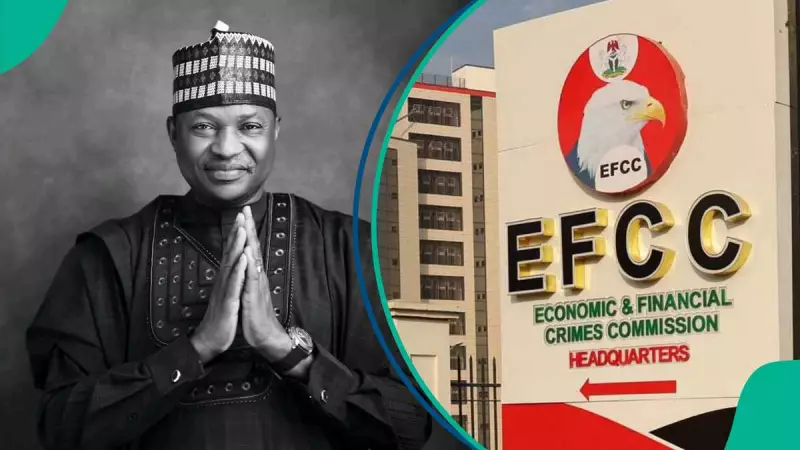
Operatives of the Economic and Financial Crimes Commission (EFCC) have executed coordinated raids on multiple properties linked to former Attorney-General of the Federation, Abubakar Malami. The searches targeted his private residences and offices in Abuja and Kebbi State.
EFCC Confirms Raid as Part of Ongoing Investigation
The anti-graft agency confirmed the operation on Wednesday, December 17, 2025. In a statement, the EFCC described the action as a necessary search connected to its ongoing investigation of the former minister. This confirmation came in response to Malami's own public statement alleging the raids.
The former senior advocate of Nigeria (SAN) is being probed for a total of 18 alleged offences. These serious charges include money laundering, abuse of office, and terrorism financing. Specific aspects of the investigation focus on the ownership of 46 bank accounts and allegations related to the recovery of the $322.5 million Abacha loot.
Malami's Allegations and Demand for Recusal
Through a press release signed by his media aide, Mohammed Bello Doka, Malami strongly criticised the raids. He claimed they were "carried out without prior notice" and were aimed at finding documents connected to Chapter 9 of the Justice Ayo Salami Judicial Commission of Inquiry Report.
The chieftain of the African Democratic Congress (ADC) has called for the public release of the Salami report. He also made a significant demand for the EFCC chairman, Ola Olukoyede, to step aside from the probe. Malami insists the chairman can no longer oversee the investigation impartially, alleging the probe is politically motivated following his defection to the ADC.
EFCC and Presidency Push Back on Claims
The EFCC has firmly dismissed Malami's allegations of a partisan or vindictive investigation. The agency maintains its actions are strictly based on law enforcement considerations.
In a related development, the presidency has clarified President Bola Tinubu's stance. A statement from spokesperson Bayo Onanuga asserted that the president does not direct anti-corruption agencies on who to investigate or prosecute. The presidency labelled claims of EFCC "weaponisation" as distractions from politicians lacking substantive campaign issues.
The investigation into the former justice minister, who served from 2015 to 2023, continues to unfold as both sides present their narratives to the public.