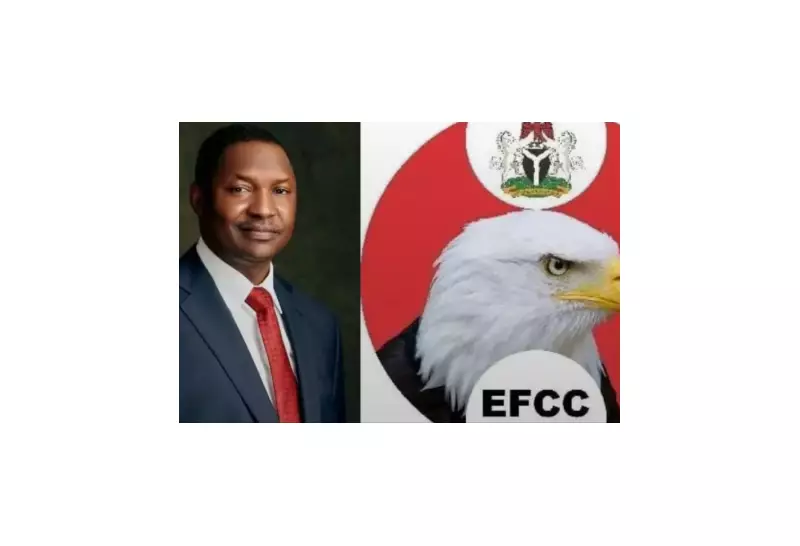
In a significant development, operatives of the Economic and Financial Crimes Commission (EFCC) have conducted simultaneous searches at properties linked to the former Minister of Justice and Attorney General of the Federation, Abubakar Malami, SAN.
Coordinated Operations in Abuja and Kebbi
The anti-graft agency executed raids on Tuesday, December 16, targeting both the private residences and official offices of the former minister in Abuja and Kebbi State. According to a statement released on Wednesday, December 17, by Malami's media aide, Mohammed Doka, the operations were carried out without any prior notification to the former minister or his staff.
Doka, who posted the statement on Malami's Facebook page, revealed that the searches were "expressly directed at searching for documents allegedly connected to Chapter 9 of the Salami Report." This detail has become the central point of contention following the raids.
Allegations of Intimidation and Retaliation
The statement from Malami's camp expressed deep alarm over the EFCC's actions. It connected the raids directly to recent public calls for the EFCC Chairman's recusal from certain matters due to alleged bias linked to the same chapter of the judicial report.
"We consider this development deeply alarming," the statement read. "Coming on the heels of a public call for the EFCC Chairman’s recusal on grounds of bias arising from Chapter 9, these raids raise grave concerns about intimidation, retaliation, and the safety of our staff and of Abubakar Malami, SAN."
In a strong warning, the statement placed Nigerians and the international community on notice, asserting that any harm to Malami or his personnel would be solely attributable to this pattern of conduct by the EFCC.
Critical Questions for the Media and Public
Malami's media office urged the Nigerian public, and particularly the press corps, to demand answers to several pressing questions surrounding the incident:
- Why did these raids occur immediately after public reference to Chapter 9 of the Salami Report?
- What specific legal authority justified searches focused exclusively on documents related to Chapter 9?
- If the EFCC's process is impartial, why resort to forceful raids and secrecy instead of following established due process?
- Why has Chapter 9 remained a matter of intense controversy years after the Salami Report was submitted?
The statement concluded with a call to action, urging civil society organisations, professional bodies, and human rights groups to pressure the Federal Government, the Federal Ministry of Justice, and the Office of the Attorney General of the Federation. The demand is for the full and immediate release of the Justice Ayo Salami Judicial Commission of Inquiry Report, with particular emphasis on the controversial Chapter 9, in the interest of transparency, accountability, and public confidence.
As of now, the EFCC has not issued an official statement regarding the reasons for the raids on the former Attorney General's properties. The development marks a new flashpoint in the ongoing discussions about the independence of anti-corruption agencies and the handling of the long-submitted Salami report.