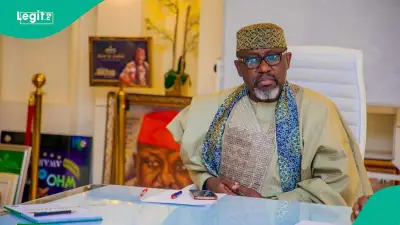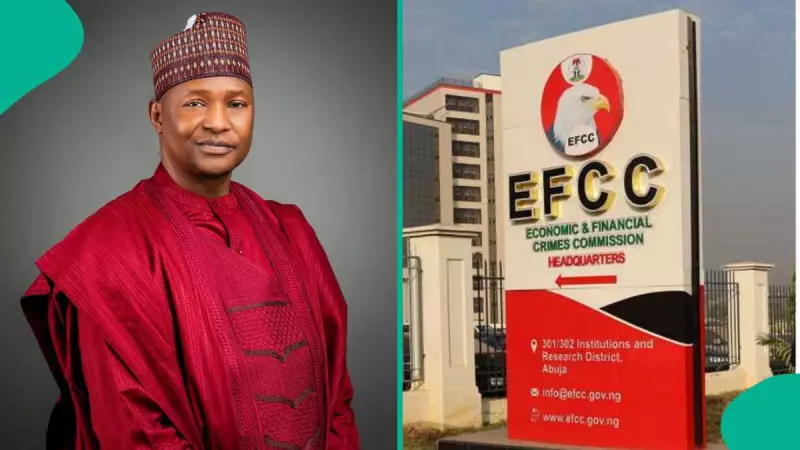
The ongoing legal battle between Nigeria's Economic and Financial Crimes Commission (EFCC) and former Attorney General of the Federation, Abubakar Malami, has ignited a national conversation about political accountability and wealth acquisition. The case, involving allegations of laundering ₦8.7 billion and the interim forfeiture of properties valued at over ₦200 billion, has drawn sharp reactions from political commentators and the public alike.
Court Orders Forfeiture of 57 Properties Linked to Ex-Minister
In a significant development, the Federal High Court in Abuja has issued an interim order for the forfeiture of 57 properties linked to Abubakar Malami to the Federal Government. Presiding Judge, Justice Emeka Nwite, granted the order following an ex parte motion filed by the EFCC and presented by the agency's counsel, Ekele Iheanacho (SAN).
The properties, discovered by the anti-graft agency, span across several states. They include hotels, residential buildings, schools, lands, and a printing press located in Kano, Kebbi, and the Federal Capital Territory (FCT). According to valuation reports, the assets in Kebbi State are worth approximately ₦162.2 billion, those in Kano State are valued at around ₦16 billion, and the properties in the FCT are estimated at ₦34.7 billion.
₦8.7 Billion Money Laundering Trial and Political Witch-Hunt Claims
Simultaneously, Malami, a Senior Advocate of Nigeria (SAN), is standing trial alongside his son, Abdulaziz, and one of his wives, Bashir Asaba. The EFCC has brought a 16-count charge against them, accusing the trio of money laundering to the tune of ₦8.7 billion. All defendants have entered a plea of not guilty to the charges during their arraignment on Monday, December 29, 2025.
The trial has been mired in political controversy. Some opposition figures and supporters of the former minister allege that the prosecution is a form of political persecution. They claim Malami is being targeted for defecting from the ruling All Progressives Congress (APC) to the African Democratic Congress (ADC) and for reportedly nursing a governorship ambition ahead of the 2027 elections. In response to these allegations, Malami has publicly called for the EFCC chairman to recuse himself from the investigation, accusing the agency of witch-hunting.
Analyst Calls for Philosophical Re-evaluation of Political Support
Amid the heated exchanges, political commentator Atoyebi Paul has urged Nigerians to fundamentally reassess how they choose to support political figures. Reacting to the criticism surrounding Malami's prosecution, Paul argued that the EFCC is merely performing its statutory duty.
"Nothing really happened here. It's just the law enforcement agency doing its work," Paul stated. "When a man who was not worth ₦1 billion in assets and cash could become that stupendously rich in a few months, there's a need for questioning. This is what is obtainable in a saner climate."
He further criticized the tendency of some supporters to operate on emotion rather than logic, a trait he says politicians exploit. "The problem with many Nigerians, most especially some politicians' supporters, is that we walk by emotions, not by logic... they lack philosophy, they don't have a doctrine to back their support," he remarked. Paul's central message is a call for citizens to develop a strong, principled stand when aligning themselves with political actors, rather than blind allegiance.
The case continues to unfold, highlighting enduring questions about governance, accountability, and the sources of sudden wealth among Nigeria's political elite. The outcome of the trial and the final forfeiture proceedings will be closely watched as a test of the nation's anti-corruption institutions.