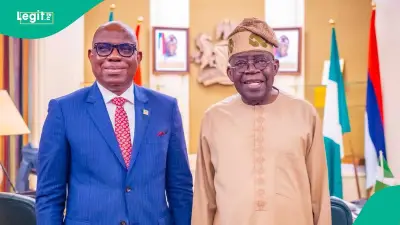
Prince Justice Faloye, president of the ASHE Foundation and national publicity secretary of Afenifere, has accused Nigeria's mainstream media of actively promoting neoliberal economic policies that have impoverished large segments of the population since the 1980s. In a press statement, Faloye argued that subsidy removals, currency devaluations, and privatizations are often presented in news coverage as inevitable natural laws rather than political choices influenced by foreign interests.
Media Framing and Public Debate
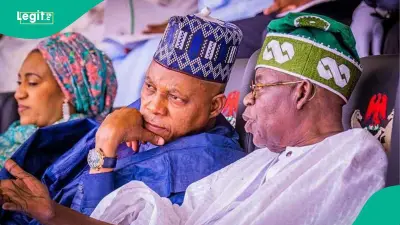
Faloye stated that this framing narrows public debate, replacing discussions of ideology and economic empowerment with ethnic, religious, and personality-driven narratives. He pointed to the 2023 presidential campaign, noting that media outlets gave heavy coverage to candidates whose manifestoes embraced neoliberal reforms, including President Bola Tinubu, Atiku Abubakar, and Peter Obi, while sidelining parties that promoted economic welfarism, such as the Social Democratic Party (SDP). He stressed that mainstream reporting often portrays success or failure as a matter of individual effort rather than outcomes shaped by structural inequality and policy choices.
Historical Role of the Press
Faloye traced the historical role of the press in African liberation, citing the First Pan-African Conference in London in July 1900, where delegates resolved to create newspapers to “educate, educate and then agitate.” He referenced landmark publications such as the West African Pilot, founded by Nnamdi Azikiwe in 1937, and Chief Obafemi Awolowo’s Tribune in 1949, which used journalism to propagate economic welfarism and uplift communities. He contrasted these nationalist-era missions with contemporary media ownership and funding models, noting that the shift from public-minded outlets to privately owned cable and online platforms dependent on advertising has compromised editorial independence. Faloye added that social media, while amplifying mass voices, is constrained by algorithms controlled by Western tech companies.
Broader Historical Context
Faloye placed Nigeria’s experience in a broader historical context, recalling how Keynesian welfarist policies—such as the U.S. New Deal and Britain’s postwar welfare state—delivered mass public works and social protections. He warned that the later global push for neoliberalism under leaders like Ronald Reagan and Margaret Thatcher, enforced through institutions including the IMF and World Bank, reversed those gains. He mentioned that neoliberal prescriptions imposed on many Black nations have led to increased poverty, inequality, and social tensions.
Local Austerity Measures
Locally, Faloye traced early austerity measures to 1978 under the military regime of General Olusegun Obasanjo, when student subsidies and other supports were withdrawn. He argued that colonial-era balkanization of Nigeria’s peoples into regions and tribes has been used to prevent national adoption of economic-welfarist policies. He also criticized domestic political discourse that foregrounds corruption as a singular issue while leaving ideological choices off the national agenda.
Economic Commentary
Citing economic commentary and shifting views among economists, Faloye referenced public statements by scholars such as Professor Angus Deaton and Professor Jeffrey Sachs, as well as Nigeria’s former president Olusegun Obasanjo, as evidence that neoliberal policies have worsened poverty and inequality. He warned that with poverty estimates at 65 percent, Nigeria sits on a “precipice for revolution” if media discourse does not center the political and economic roots of mass hardship.
Call to Journalists
The Afenifere scribe called on journalists to revive the press’s historic role as a tool for emancipation by explaining the political choices behind austerity measures and by giving space to economic-welfarist perspectives and movements, including Afenifere and the Social Democratic Party. Faloye urged reporters to “show the light” by informing citizens about economic sovereignty and the five-century history of exploitation that shapes contemporary policy choices.