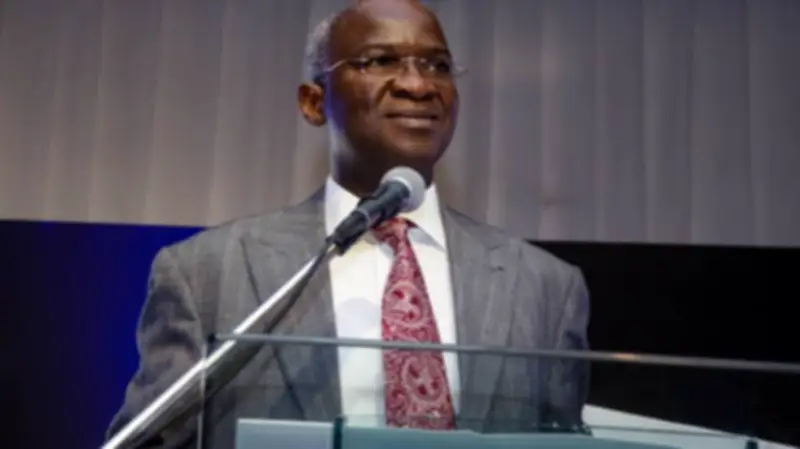
Former Lagos State Governor Babatunde Fashola has stated that he never received security votes during his eight-year tenure as governor. Fashola, who later served as Minister of Works, Power, and Housing under former President Muhammadu Buhari, made this revelation on Friday, June 12, while speaking on a panel at an event commemorating Nigeria’s Democracy Day.
Clarifying the Security Vote Issue
Responding to a question about the impact of security votes received by governors, especially amid rising security challenges, Fashola said he never experienced such payments. He was speaking alongside former Senate President Bukola Saraki. According to Fashola, all funds accruing to Lagos State under his watch were domiciled in the Lagos State Ministry of Budget and Economic Planning.
“This security vote thing, whenever I hear some of my colleagues talk about it, I don’t know what it means because I never had it in Lagos,” Fashola said. “I speak for what I know. I was the governor, there was no security vote. All our acquisitions were domiciled in the Ministry of Budget and Planning.”
Constitutional Responsibility
Fashola emphasized that the constitution designates governors as chief security officers of their states, a responsibility he proudly accepted. He highlighted his commitment to security, noting that he never missed a monthly security meeting during his eight years in office. These meetings were held every first Wednesday of the month.
“We used to have a monthly security meeting. It held every first Wednesday of the month. In eight years, I never missed that meeting,” he said.
Security Trust Fund and Policies
Fashola also discussed the establishment of a security trust fund, which was audited annually. He noted that the state held town hall meetings to update citizens on security efforts and crime statistics. He credited the cashless policy of the Central Bank of Nigeria, implemented under his watch, as a key factor in reducing crime.
“It wasn’t also guns and policemen. We were the first state to embrace the cashless policy of the CBN regime at that time under Sanusi Lamido Sanusi,” Fashola added.
He concluded by stating that the battle against crime in Lagos was won through policies rather than force, making it less attractive for criminals to target homes.