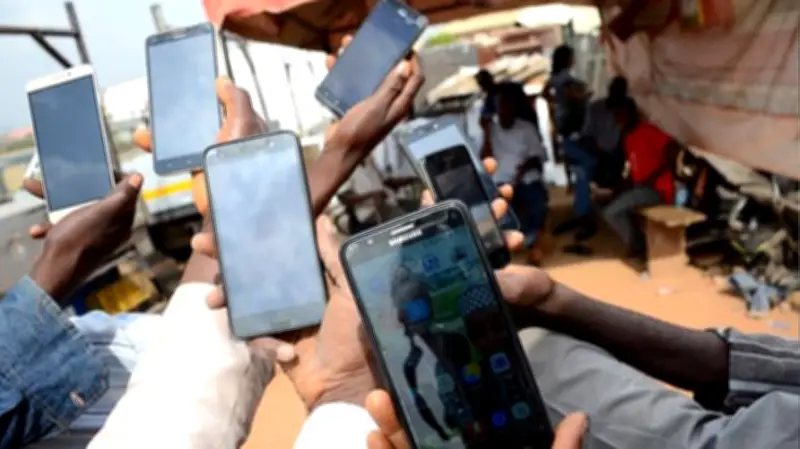
Global conflicts and rising costs have slashed smartphone supply to Nigeria and other parts of Africa and the Middle East, exacerbating the digital divide, particularly for women in low-income countries.
Smartphone Shipments Decline
Mobile device shipments to Nigeria, other parts of Africa, and the Middle East declined by seven per cent year-on-year (YoY) in Q1 2026, marking the region’s first quarterly decline after a strong 2025, according to Counterpoint’s latest market monitor. The decline was driven by increasing prices stemming from the memory crisis, as well as the regional conflict in the Middle East, which led to skyrocketing shipping prices and weakened market performance in several countries.
Digital Divide Worsens
In another development, more than 810 million women across low- and middle-income countries (LMICs) remain offline, with sub-Saharan Africa recording one of the world’s widest mobile internet gender gaps. According to the GSM Association’s (GSMA’s) Mobile Gender Gap Report 2026, women in LMICs are still 12 per cent less likely to use mobile internet than men, leaving an estimated 200 million fewer women connected than their male counterparts. This is despite mobile Internet becoming the primary gateway to the digital economy, according to new research from the GSMA.
Market Pressures
Further on the drop in smartphone shipments to Africa, Research Analyst Ahmad Shehab said: “The region’s Q1 2026 performance came in below earlier expectations, with the surging memory prices being the primary headwind. Further, the escalating conflict in the Middle East began to weigh heavily on the regional markets toward the end of March. These factors are more likely to exert greater pressure in Q2 2026 and the second half of the year.”
On the macro side, Shehab added: “Rising layoffs and corporate downsizing are pushing unemployment higher in the GCC’s premium markets, particularly the UAE, Qatar, and Bahrain. Further, the spikes in fuel and logistics prices are adding another layer of cost to consumer goods prices across the region. Collectively, these factors are expected to lead to a net effect: a significant squeeze in purchasing power throughout the region. More critically, uncertainty has begun reshaping the market performance, particularly across emerging markets, where purchases are likely to become driven by need rather than premiumization or upgrades.”
Price Bands Affected
Counterpoint observed that the $50-$99 price band saw a 41 per cent YoY decline, impacting overall smartphone market performance in Q1 2026. This segment was particularly exposed to regional conflicts and to price increases related to the memory crisis. Looking ahead, volume declines are also expected to extend to higher price tiers in Q2 2026, hurt by seasonality and ongoing geopolitical and macroeconomic difficulties.
5G and AI Growth
Despite the overall market downturn, 5G adoption continues to gain momentum across the region. The growth in 5G adoption is particularly strong in the region’s emerging markets, driven by expanding coverage and strategic 2G and 3G sunset plans across several countries in the near future. These factors have driven a 42 per cent YoY growth in 5G shipments in the MEA. Moreover, AI-capable smartphones have seen a significant 64 per cent YoY growth in Q1 2026. However, most of this growth is still happening at the higher end of the market, i.e. the $400 and above price range, meaning the premium segment continues to capture the bulk of the AI impact in the region.
Gender Gap in Mobile Internet
Meanwhile, the GSMA revealed that of the 810 million women who remained offline globally, more than two-thirds live in SSA and South Asia regions that continue to experience the widest disparities in digital access. The findings highlighted significant implications for Africa, and the challenges facing governments, mobile operators and development agencies seeking to expand digital inclusion. GSMA noted that SSA’s mobile Internet gender gap stands at 26 per cent, second only to South Asia’s 25 per cent. The divide becomes even more pronounced outside major cities.
“In LMICs, the gender gap in mobile internet adoption tends to be two to three times wider in rural areas than urban areas. In 2025, across all LMICs, the gender gap in mobile internet adoption was more than three times wider in rural areas than in urban areas. There is also a difference at the regional level, where the gender gap in mobile internet adoption is wider in rural than urban areas of LMICs in every region except Europe and Central Asia.”
GSMA warned that the rural challenge is particularly severe in Africa. According to the report, smartphone ownership remained a major obstacle to digital inclusion. The report found that women across LMICs are 13 per cent less likely than men to own a smartphone, representing approximately 210 million fewer women with access to internet-enabled devices. Across SSA, only 34 per cent of women own smartphones, resulting in a 22 per cent gender gap in smartphone ownership. Access to Internet-enabled devices remains one of the most important factors influencing whether women eventually adopt mobile internet services.