The Erudite Growth and Advancement Foundation-Africa (ErGAF-Africa) has expressed concern over the slow implementation of the national Safe School Initiative, noting that rising cases of mass student abductions in states like Oyo have traumatised pupils and forced vulnerable parents in rural communities to withdraw their children from classrooms.
Criticism of security architecture
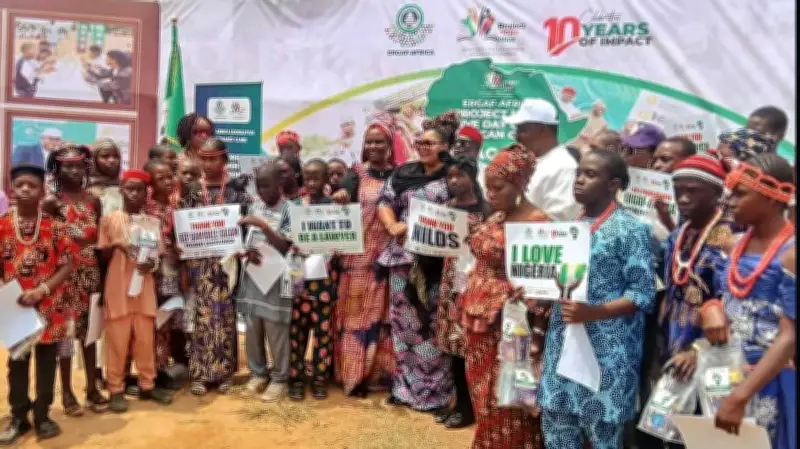
President of the Foundation, Chibuzo Okereke, stated this yesterday in Abuja during a legislative advocacy session convened under its flagship ‘Project Hope Alive’ initiative to commemorate the 2026 international Day of the African Child. He argued that Nigeria’s current counter-insecurity architecture is structurally flawed because it relies heavily on centralized federal directives rather than subnational frameworks.
“Insecurity is affecting children in Nigeria, we know that. We have the Safe School Initiative, but implementation and funding became a problem. We cannot achieve this from Abuja or the federal government. There must be an integrated model for children’s development that goes across from federal to state to local government. As of today in Nigeria, we only have local government, we don’t have local governance,” Okereke said.
Disparity in security arrangements
He further criticized the disparity in the security arrangements of the state, maintaining that while children of the political elite enjoy maximum state protection, vulnerable children in public schools are routinely exposed to terror syndicates.
“The children of the elite are well protected and guarded but the children of the poor don’t have that privilege. The state must take responsibility under the social contract to ensure that vulnerable children are protected. Every child is your child because you don’t know the child that will become the savior of the country tomorrow,” he insisted.
Call for sanitary banks in schools
The ErGAF-Africa boss also called on the Federal Government to establish sanitary banks in all public junior and senior secondary schools to reduce female absenteeism. Speaking on this year’s theme “Assuring Universal Access to Water, Sanitation, and Hygiene for Every Child in Africa”, Okereke stated that millions of children in underserved Nigerian communities remain cut off from safe drinking water and basic hygiene kits, a situation that directly undermines their right to basic education.
He said: “Our advocacy and policy trust for this program is that the government and institutions of power should establish a sanitary bank in all public junior and senior secondary schools across Nigeria. There should be a sanitary bank in all schools so that our young girls are not kept out of school over such natural hygiene issues. There should also be toilets built that have access to water and clean water provided so that we can protect the health of our children.”
Mock Children’s Parliament
The program featured a mock Children’s Parliament where students debated regional deficits in the Water, Sanitation, and Hygiene (WASH) sector. The event concluded with the distribution of educational and hygiene materials to less privileged pupils alongside spoken word performances advocating for the enforcement of the Child Rights Act across all 36 states of the federation.