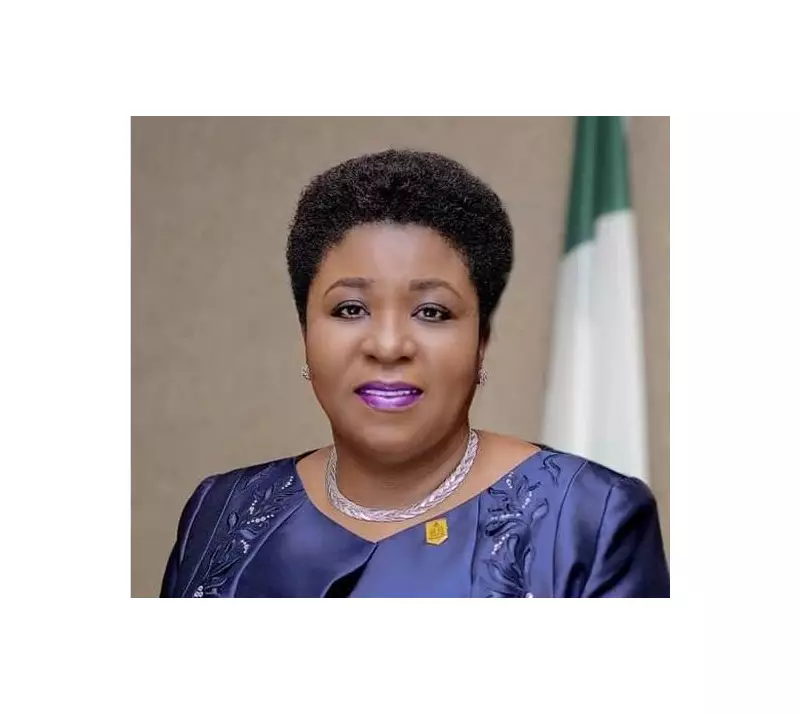
In a surprising contradiction to its own digital transformation agenda, the Office of the Head of the Civil Service of the Federation (HCSF) and ten key federal ministries have collectively budgeted a staggering N2,463,596,694 for papers and office stationery in the 2026 fiscal year. This planned expenditure comes despite a high-profile declaration that all government ministries and departments have fully transitioned to a paperless operational system.
The Paperless Promise vs. The Budget Reality
The Head of the Civil Service of the Federation, Mrs Didi Esther Walson-Jack, had championed the 1Gov Enterprise Content Management System (ECMS) as a cornerstone of the Federal Civil Service Strategy and Implementation Plan (FCSSIP 2025). The system was designed to fast-track Nigeria's shift to a digitally driven public service. By 31 December 2025, Mrs Walson-Jack announced that all 38 ministries and extra-ministerial departments were operating digitally and that physical paper submissions were no longer being accepted in government registries.
A primary objective of this digitalisation drive was explicitly stated: to curb the enormous sums of money historically spent on paper and other office consumables. However, an analysis of the 2026 budget proposal submitted to the National Assembly reveals a starkly different trajectory, with planned stationery spending soaring rather than shrinking.
Breakdown of the Rising Stationery Costs
The proposed N2.46 billion for 2026 represents a sharp increase of N731.85 million, or 42.3 per cent, from the N1.73 billion spent by the same entities in 2025. The details of the budget show significant hikes across major ministries:
- Head of the Civil Service (HCSF): The very office leading the digital migration proposed to spend N300,875,037 on stationery in 2026. This is N101.1 million, or 84.4%, above its 2025 expenditure.
- Ministry of Defence: Its stationery budget jumped from N350.57 million in 2025 to N638,041,668 in 2026, an 82% increase.
- Ministry of Justice: Recorded the most dramatic rise, planning to spend N525 million in 2026 compared to N125 million in 2025—a 320% surge.
- Ministry of Budget and Economic Planning and the Ministry of Police Affairs also increased their allocations.
Notably, only the Ministry of Women Affairs significantly reduced its budget, cutting it from N138.47 million to N40 million. Five other ministries simply replicated their 2025 stationery budgets for 2026 without change.
A Persistent Drain on Public Funds
This pattern highlights a persistent fiscal leak. Over the years, spending on stationery has been a major drain on the government purse, with estimates suggesting the entire Nigerian public sector spends about N50 billion annually on paper and related accessories. The 1Gov ECMS was initiated precisely to check this drain, promising not only cost savings but also faster workflow, enhanced transparency, efficiency, and seamless document sharing among MDAs.
Mrs Walson-Jack had described the shift as a "cultural shift — moving from 'file-walking' to real-time digital decision-making." The 2026 budget proposals, however, raise critical questions about the depth of this cultural and operational change within the bureaucracy, revealing a significant gap between policy announcement and budgetary implementation.