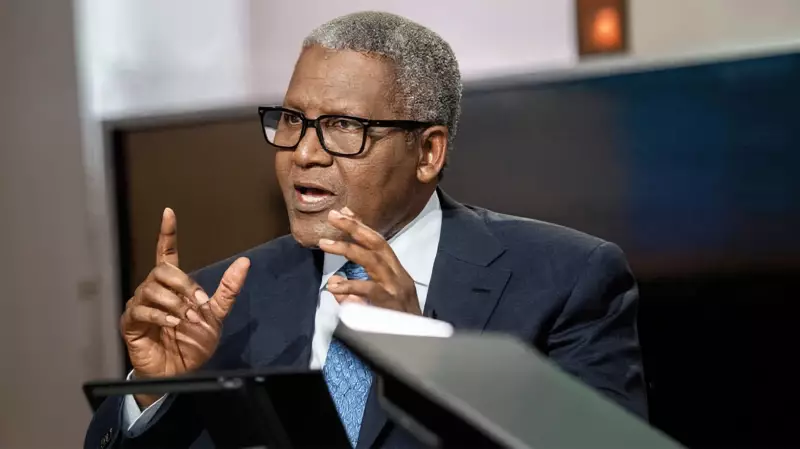
The National Association of Nigerian Students (NANS) and a Coalition of Civil Society Organisations (CSO) have stepped in to mediate the escalating public dispute between Africa's richest man, Aliko Dangote, and the chief of Nigeria's downstream petroleum regulator.
Allegations and Counter-Calls for Restraint
The conflict erupted when Aliko Dangote, the President of Dangote Industries Limited, held a press conference at his Lekki refinery in Lagos. He publicly accused the Chief Executive of the Nigerian Midstream and Downstream Petroleum Regulatory Authority (NMDPRA), Engr. Farouk Ahmed, of serious misconduct.
Dangote alleged that Ahmed was colluding with international oil traders to deliberately frustrate the operations of local refineries, an act he labeled economic sabotage. In a more personal attack, Dangote claimed the regulator was living lavishly beyond his means, citing an alleged payment of $5 million for the school fees of Ahmed's four children at a secondary school in Switzerland.
Student Body Advocates for Institutional Integrity
In a joint statement released on Monday, NANS and the CSO cautioned Dangote against his call for a probe. The statement was signed by NANS National PRO, Comrade Samson Adeyemi, and the CSO's National Coordinator, Mr. Humphrey Jonathan.
The groups urged the business mogul to seek collaboration over confrontation with the NMDPRA boss. They emphasized that synergy between investors and regulators is crucial for the downstream oil sector's health. While reaffirming their strong support for indigenous industrial growth, which includes their past solidarity with the Dangote Refinery's operational take-off, they drew a clear line.
"We draw a firm red line at character assassination, media trials, and reputational attacks against credible public servants," the statement declared. They described the allegations against Engr. Farouk Ahmed as "totally unacceptable."
A Plea for Peace and Proper Channels
The student and civil society coalition expressed deep concern that dragging regulatory disputes into the media could create unnecessary national tension, potentially escalating into protests and unrest. They identified dialogue, mutual respect, and institutional integrity as the only viable path to resolve the feud.
The statement firmly defended the NMDPRA's role, noting it is a statutory authority established to act independently and in the national interest. "The Authority can not and must not be coerced, intimidated, pressured, or blackmailed to serve the interest of any individual or corporate entity, regardless of status or influence," it read.
They advised that if Dangote Refinery has legitimate grievances, the proper approach is to engage government institutions through established legal frameworks, not through "media wars." The groups also commended NMDPRA's recent steps toward transparency, such as publishing regulatory reports.
In conclusion, their call was unambiguous: "Collaboration, not Confrontation; Partnership, not Blackmailing; Synergy, not Intimidation; Unity, not Division." They declared solidarity with Engr. Farouk Ahmed and urged all stakeholders to prioritize national peace and progress.