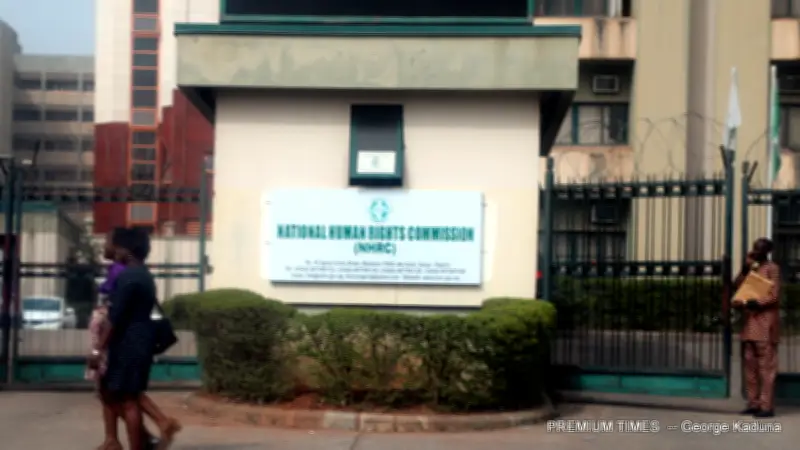
The National Human Rights Commission (NHRC) has inaugurated a National Working Committee to address human rights violations associated with climate change in Nigeria. The committee’s formation was announced in a statement on Tuesday, emphasizing that “climate change is no longer just an environmental issue. It is a human rights issue.”
Climate Change as a Human Rights Concern
NHRC Executive Secretary Tony Ojukwu urged Nigerians to view climate change differently. “It’s not just about rising temperatures. It’s about people. It’s about families losing their homes, farmers losing their livelihoods, communities being uprooted and vulnerable people falling deeper into poverty,” he said.
Mr Ojukwu noted that the committee is a partnership between the NHRC, the Federal Ministry of Environment, and the National Council on Climate Change. The partnership focuses on protecting the rights and dignity of Nigerians as the nation fights climate change.
Working Group Collaboration and Commitments
According to the statement, the Working Group will collaborate with government institutions, civil society organisations, academics, and development partners. “Every flooded community, every displaced family, every child forced out of school by disaster, every farmer who loses a harvest and every community struggling to survive tells a story that deserves attention,” Mr Ojukwu said.
During the inauguration ceremony, Special Assistant to President Bola Tinubu on Climate Change, Yussuf Kelani, affirmed the presidency’s support for the committee’s activities. Similarly, Iniobong Awe, representing the Minister of Environment, assured the ministry’s commitment to inclusive climate policies.
Omotenioye Majekodunmi, Director-General of the National Council on Climate Change, stated: “The evidence is impossible to ignore: flooding, migration, farmer-herder conflicts, rising temperatures. These are no longer isolated environmental problems. They are daily realities affecting lives, livelihoods and human dignity across the country.”
Support from Stakeholders
Other attendees, including Priscilla Achakpa, founder of the Women Environmental Programme, and Aliyu Ahmed, Commissioner for Refugees, Migrants and Internally Displaced Persons, pledged their commitment to supporting climate justice, especially for vulnerable groups.
The statement noted that for the NHRC, the inauguration of the National Working Group “is not simply the launch of another committee. It is a promise. A promise that as Nigeria responds to climate change, people, not just policies, will remain at the centre of every action. Because protecting the climate should also mean protecting humanity. After all, when people suffer because of climate change, protecting human rights becomes everyone’s responsibility.”
Climate Impacts in Nigeria
Nigeria is facing significant shifts in climate patterns, marked by unusual rainfall, heat waves, and severe flooding that has displaced communities and destroyed farmlands. In 2025, the National Emergency Management Agency (NEMA) disclosed that floods impacted 25 states, killing 228 people and displacing many.
Additionally, the Nigeria Hydrological Services Agency issued a seven-day flood advisory, warning of a medium flood risk in 17 states between 21 and 27 July. According to the agency, Adamawa, Bauchi, Benue, Borno, Edo, Gombe, Imo, Jigawa, Kaduna, Kano, Kebbi, Nasarawa, Niger, Plateau, Taraba, Yobe, and Zamfara are at risk.