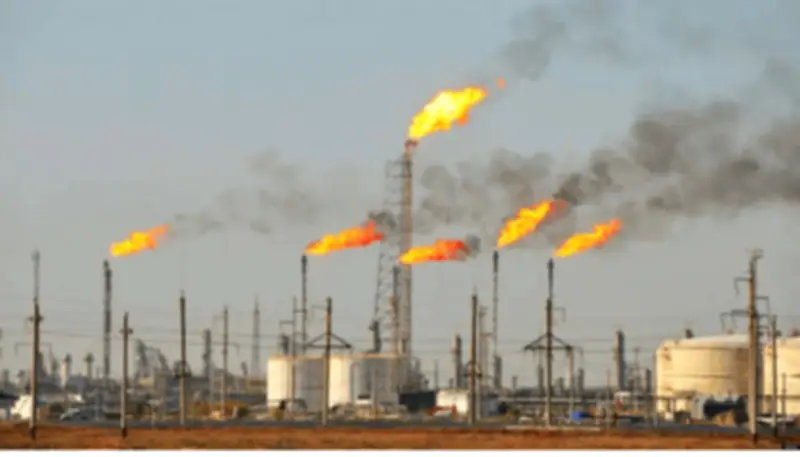
Nigeria remained among the world’s top gas-flaring countries in 2025, according to the World Bank’s latest Global Gas Flaring Tracker Report released this week. The report ranked Nigeria seventh globally, flaring approximately nine billion cubic metres (bcm) of gas, as global flare volumes rose to their highest level in six years.
Global flaring trends
The World Bank reported that global flare volumes reached 167 bcm in 2025, the highest since 2019. This represents a 16 per cent increase over 2012 and about 23 bcm over the period. Nearly half of the recent increase occurred in 2025 alone, with an additional 10 bcm flared during the year. The nine largest flaring countries—Russia, Iran, Iraq, Venezuela, Mexico, Libya, Nigeria, Algeria, and the United States—accounted for 83 per cent of all gas flared worldwide, despite contributing only 46 per cent of global oil production.
Nigeria’s flaring volume
Nigeria flared approximately 9 bcm of gas in 2025, placing it seventh among the world’s largest flaring nations. While its flaring volume remained relatively stable compared with larger producers, the country continued to rank among the largest contributors to global gas waste despite years of policy efforts to reduce the practice. Russia remained the world’s largest flaring country, with volumes rising by 9 per cent to around 30 bcm, followed by Iran with approximately 30 bcm and Iraq with nearly 24 bcm. Venezuela and Mexico occupied the fourth and fifth positions, respectively.
Environmental and climate implications
The World Bank warned that rising gas flaring undermines global climate goals and represents a significant waste of resources. According to the report, the volume of associated gas wasted through flaring in 2025 was comparable to Africa’s entire annual gas consumption. “Globally, more gas is flared than passes through the Strait of Hormuz,” the report noted. The institution added that several countries import substantial quantities of natural gas while simultaneously flaring large volumes of associated gas that could be captured and utilised for domestic energy needs. Countries such as Egypt, India, and Iraq were identified as examples where flare-gas recovery could strengthen energy security.
Beyond carbon dioxide emissions, the World Bank emphasised the climate impact of methane from flaring operations. It estimated that gas flaring globally in 2025 resulted in approximately 429 million tonnes of carbon dioxide equivalent emissions, including methane released through incomplete combustion and venting. Methane is regarded as one of the most potent greenhouse gases with a significantly higher warming effect than carbon dioxide over a shorter period.
Nigeria’s efforts and challenges
Nigeria has for decades sought to eliminate routine gas flaring through regulatory measures, penalties, and investment incentives. The federal government introduced initiatives such as the Nigerian Gas Flare Commercialisation Programme (NGFCP), designed to attract private-sector investment into flare-gas capture projects. Launched in 2016 and administered by the Nigerian Upstream Petroleum Regulatory Commission (NUPRC), it auctions previously flared gas to third-party investors to harness, process, and commercialise, with the ultimate target of achieving zero routine gas flaring by 2035. The country has also committed to international efforts to end routine gas flaring and reduce methane emissions, as partly enshrined in its Nationally Determined Contribution Documents submitted to the United Nations Framework Convention on Climate Change.
However, infrastructure deficits, financing challenges, operational constraints, weak enforcement, and delays in gas gathering projects have continued to hamper progress. Industry experts argue that significantly reducing flaring will require sustained investment in gas processing facilities, pipelines, power generation projects, and domestic gas utilisation schemes.
Growing urgency
The World Bank said the latest figures highlight the urgent need for stronger action by major oil-producing countries to curb routine flaring and capture associated gas. With global demand for cleaner energy increasing and governments seeking to reduce greenhouse gas emissions, the report stressed that reducing gas flaring remains one of the fastest and most cost-effective measures available to improve environmental performance while boosting energy security. For Nigeria, the findings reinforce the challenge of balancing rising oil production ambitions with commitments to climate action and efficient utilisation of the country’s vast natural gas resources.