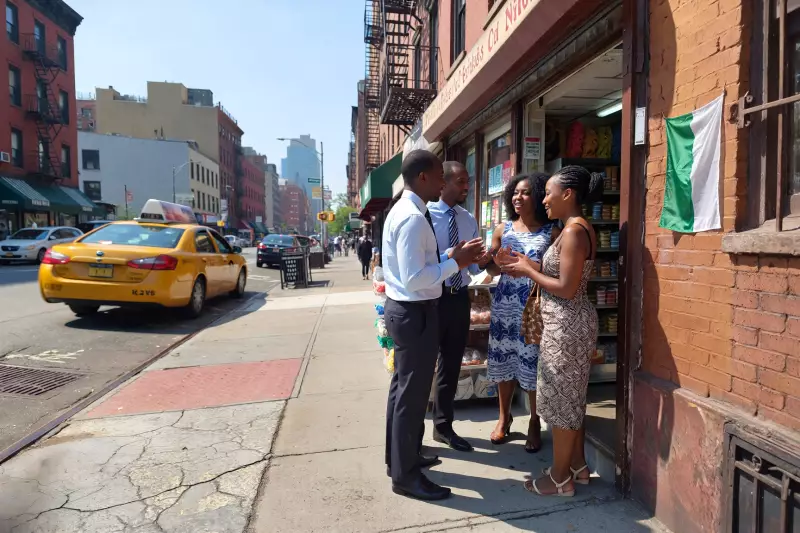
Forget simple census maps. To truly understand where Nigerians have built their homes in New York City, you need to walk the streets, smell the suya grilling, and hear the familiar cadence of Yoruba and Igbo in local markets. Based on extensive fieldwork and research into settlement patterns, a clear picture emerges of a dynamic community strategically anchored across three key boroughs.
The Three Boroughs: Nigerian Hubs in New York
Nigerian immigrants in New York City are not scattered randomly. They have established strong, vibrant enclaves primarily in the Bronx, Brooklyn, and Queens. While Houston, Texas, holds the title of America's Nigerian capital, New York's estimated 50,000 to 65,000 Nigerian-born residents form arguably the most diverse and economically varied Nigerian community in any single U.S. metropolitan area.
The pattern follows a logical flow, much like water finding its path. Newcomers gravitate toward areas where earlier settlers have already laid the groundwork—establishing churches, opening markets, and weaving social networks that provide crucial support.
The Bronx: The Affordable Gateway
If you are a Nigerian newly arrived in New York, someone will almost certainly mention the Bronx. This borough is the undisputed hub for African immigrants in the city, home to over 70,000 African-born residents, with Nigerians forming a substantial part of this community.
Neighbourhoods like Highbridge, Tremont, Morrisania, and Parkchester pulse with Nigerian life. Here, you will find Nigerian groceries wedged between Dominican barbershops and churches hosting vibrant congregations. The driving force is economics: the Bronx offers the most affordable housing in NYC, with one-bedroom apartments renting for roughly ₦350,000 to ₦550,000 monthly. This allows new immigrants to gain a foothold, save for the future, and send remittances home while being surrounded by familiar cultural infrastructure.
Brooklyn: The Established Community
Brooklyn tells the story of Nigerian immigration's mature phase. Pioneers from the 1970s and 1980s first settled in areas like Crown Heights and Flatbush, creating networks that still draw people today. The heart of Brooklyn's Nigerian community now beats strongest in Flatbush and East Flatbush.
These neighbourhoods feature a unique blend of Caribbean and West African cultures, with Nigerian restaurants, hair salons, and churches lining major avenues like Flatbush Avenue. The community here is more established, with higher rates of homeownership and business ownership. Reflecting this stability, housing costs are higher than in the Bronx, with rents for a one-bedroom averaging ₦550,000 to ₦900,000.
Queens: The Suburban Ascent
Queens represents upward mobility for many Nigerian families. Areas like Jamaica and Queens Village attract professionals and families seeking a more suburban feel—single-family homes, quieter streets, and well-regarded schools—while maintaining excellent transit links to Manhattan.
The borough's incredible overall diversity makes it a comfortable fit for Nigerians accustomed to multicultural environments. The focus here is on long-term settlement, education, and property ownership. Housing costs sit between the Bronx and Brooklyn, making it a target for dual-income families building their American dream.
How to Find Nigerian Communities in NYC
Finding these communities requires knowing where to look beyond a map. Here is a practical guide:
1. Follow the Churches: Nigerian-led churches like the Redeemed Christian Church of God (RCCG) and Deeper Life Bible Church are community anchors. They are not just places of worship but centres for networking, housing leads, and cultural preservation, especially in the Bronx's Parkchester and Brooklyn's Flatbush areas.
2. Locate African Markets and Restaurants: Grocery stores selling stockfish, egusi, and palm oil are informal community hubs. In the Bronx, check Mount Hope and Mott Haven. In Brooklyn, explore Flatbush Avenue. Shop owners often have the best local information.
3. Understand Chain Migration: Nigerian immigration heavily relies on family networks. One person settles, then sponsors relatives, leading to entire extended families living within blocks of each other in specific Bronx and Brooklyn neighbourhoods.
4. Listen for Language: Data shows Igbo and Yoruba are among the top languages in several Bronx neighbourhoods, including Woodlawn and Mott Haven, creating linguistic comfort zones for newcomers.
Economic Realities and National Context
Living in New York requires careful financial planning. A single immigrant needs an annual income of roughly ₦22 million to ₦26 million to live modestly in the Bronx, with higher sums needed for Brooklyn or Queens. This economic pressure is a key reason Nigerian Americans boast some of the highest educational attainment rates among immigrant groups.
Nationally, while New York's community is large and diverse, Houston and the Washington D.C./Maryland area are home to larger concentrations of Nigerian immigrants, drawn by the energy sector and government jobs, respectively.
The communities in New York's boroughs are not static; they are success stories of determination and strategic settlement. From the affordable gateway of the Bronx to the established streets of Brooklyn and the suburban aspirations of Queens, Nigerian immigrants have carved out spaces that honour their heritage while fully embracing the opportunities of their new home.