In Nigerian public discourse, a troubling contradiction often emerges. Citizens who vocally condemn theft and fraud swiftly change their tune when the Economic and Financial Crimes Commission (EFCC) indicts a politically exposed individual. The narrative shifts to claims of witch-hunts, persecution, and appeals to tribal, religious, or partisan solidarity. This behaviour, according to UK-based columnist Folorunso Fatai Adisa, transforms people into what renowned author Ayi Kwei Armah termed the "chichidodo."
The Chichidodo Metaphor and Nigeria's Moral Crisis
In his seminal 1968 novel, The Beautyful Ones Are Not Yet Born, Armah presents the chichidodo bird as a powerful moral metaphor. This bird, he writes, hates excrement with all its soul but feeds exclusively on maggots, which thrive best within that same filth. It is a creature defined by a fundamental contradiction: it despises corruption yet survives on its proceeds. Adisa argues that this metaphor perfectly captures a widespread tragedy in Nigerian society. The proliferation of such "chichidodo" attitudes has made genuine accountability painfully difficult.
Alleged looters are frequently shielded not by compelling evidence of their innocence, but by raw ethnic sentiment, blind religious loyalty, and rigid partisan allegiance. The columnist notes that justice is stalled not because facts are absent, but because collective conscience has been outsourced to identity. This environment creates a parasitic relationship where defending public plunderers is mislabeled as patriotism.
Staggering Allegations: Malami's ₦212 Billion and Farouk's $5 Million School Fees
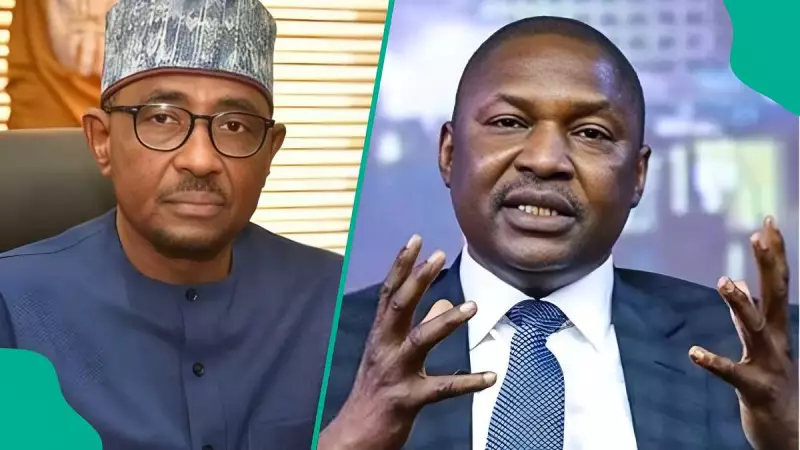
The theoretical cost of this moral failure becomes concrete when examining recent allegations. A report by TheCable indicates that the EFCC has traced 41 properties with an alleged combined value of approximately ₦212 billion to Abubakar Malami, the former Attorney-General of the Federation and Minister of Justice. These assets, reportedly including hotels, residential buildings, land, schools, and a printing press, are said to be spread across Kebbi State (over ₦162 billion), Kano State (about ₦16 billion), and the Federal Capital Territory (nearly ₦35 billion).
In a separate but equally startling claim, Africa's richest man, Aliko Dangote, alleged that Engr. Farouk Ahmed, Chief Executive of the Nigerian Midstream and Downstream Petroleum Regulatory Authority, sent four children to a Swiss secondary school at a cost of $5 million. While these remain allegations, they provoke unavoidable questions about the source of lawful income that could sustain such extraordinary expenditure.
Adisa emphasizes that these figures are not abstract. They represent hospitals not built, roads not repaired, and classrooms left unequipped. He cites political economist Susan Rose-Ackerman, who frames corruption as a systemic tax on development, diverting public resources from productive use and eroding institutional trust.
The High Price of Complicity and a Path Forward
Perhaps more disheartening than the allegations themselves, the columnist observes, is the public reaction they often trigger. Struggling Nigerians frequently rush to defend those under investigation, creating a scenario where poverty argues on behalf of privilege and hunger becomes a shield for power. This mob mentality, he warns, blinds people to long-term ruin for short-term tribal or political excitement.
Corruption is not confined to politicians alone; it seeps through institutions, with civil servants, regulators, and gatekeepers forming the hidden machinery that sustains the rot. The World Bank has consistently noted that corruption thrives where accountability is weak and social tolerance for abuse of office is high.
Adisa concludes that Nigeria need not imitate extreme punitive models to confront this challenge but must rediscover seriousness. Without firm and consistent accountability, the future damage will eclipse current suffering. He proposes enforceable measures like asset forfeiture, restitution, and lifelong disqualification from public office for convicted looters. A society that habitually defends looters, he argues, is not just corrupt—it is complicit. The ultimate cost is paid in diminished state capacity, deepened inequality, and the collective freedoms sacrificed for the private comfort of a few.