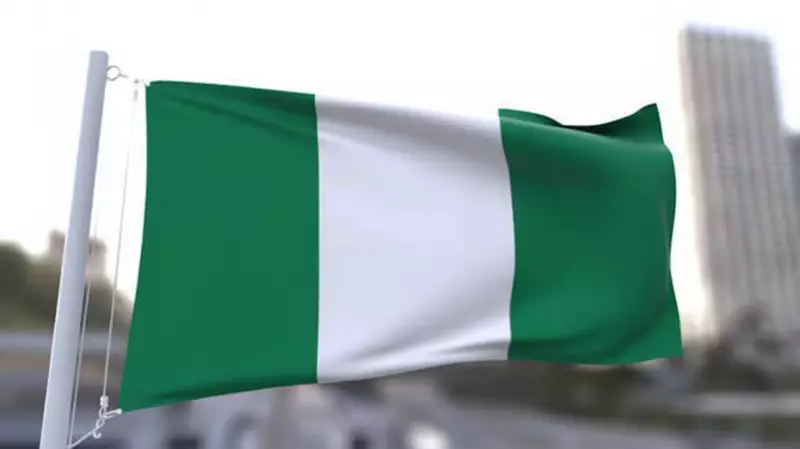
Nigeria's international reputation has plummeted to a historic low, culminating in a stark condemnation from a global power. This analysis delves into the systemic failures that prompted this label and the urgent need for national redemption.
The Tweet That Shamed a Nation
In late 2025, the President of the United States, Donald Trump, issued an undignified statement on his official X platform, describing Nigeria as a 'Disgraced Country'. He further threatened to direct the US military to intervene aggressively. This moment laid bare the extent to which Nigeria's global image has deteriorated. While rampant insecurity, featuring unchecked massacres of both Christians and Muslims, kidnappings, and banditry, is a visible symptom, it is not the sole cause. The nation's crisis is rooted in deeper, institutionalized problems.
The Pillars of Institutional Failure
The foundation of Nigeria's challenges is built on several interconnected issues: corruption, electoral fraud, a weak constitution, lack of genuine separation of powers, and tribalism. Among these, corruption stands as the central pillar supporting all other failures. The flawed process of selecting leaders fosters a culture of impunity and a profound lack of empathy, causing every other sector of society to collapse.
The fight against corruption is persistently weakened because the very individuals accused of corruption are often the ones overseeing the anti-graft agencies. A telling example is the case of the immediate past Minister of Justice and Attorney General of the Federation, Alhaji Abubakar Malami. Recently arraigned with family members over allegations of multi-billion-naira corruption, Malami was, during President Muhammadu Buhari's administration, the supervising authority over the Economic and Financial Crimes Commission (EFCC). This irony highlights a system seemingly structured to prevent success.
The Nigerian constitution, as framed, created overwhelmingly powerful individuals at the expense of weak institutions. This leaves the entire system vulnerable to the character of those occupying high offices like the President and state governors. For instance, the President holds the power to appoint and approve the heads of nearly all major government agencies. This includes the chairman of the Independent National Electoral Commission (INEC), the body tasked with supervising the very elections the President contests. This inherent conflict of interest undermines electoral integrity from the start.
Furthermore, when other arms of government—the legislature and judiciary—must go to the executive, cap in hand, to approve their operational funds, the principle of checks and balances becomes a paper tiger. The nation's fate rests on the empathy and disposition of the sitting President. The current administration, led by President Bola Ahmed Tinubu (PBAT), who emerged from a controversial electoral process, has been criticized for a lack of such empathy.
Leadership Disconnect and Recycled Corruption
This disconnect was starkly visible during periods of severe national hardship, such as the fuel subsidy removal crisis. While citizens struggled, the political elite engaged in extravagant spending. Notable examples include the procurement of a N150 billion presidential jet, a N5 billion presidential yacht, a N39 billion renovation of the International Conference Centre (ICC), and a N21 billion renovation of the Vice President's residence. A coastal highway project, awarded at an astonishing N21 billion per kilometre to a company with alleged ties to the President's family, also drew public ire.
This pattern of behavior raises a poignant question: what kind of father would force his family to eat once a day, downgrade their housing, move children from private to public schools, only to then upgrade his own car, wardrobe, and personal lifestyle? Such actions, many argue, depict a form of leadership wickedness that has become Nigeria's unfortunate reality.
Corruption is effectively recycled because there are no consequences. Why would an incoming governor refrain from stealing when three generations of corrupt predecessors walk free, enjoying their loot globally? The EFCC has been reduced to a tool for hunting the political enemies of the sitting president, not for impartially fighting corruption. Compounding this is a segment of the populace that cheers on corrupt leaders, hoping for a future share of the national cake.
Insecurity: A Political Choice, Not a Military Failure
The security situation further illustrates leadership failure. During the 2023 election campaign, a revelation by Hajia Najatu Mohammed indicated that PBAT, in a London meeting, expressed unwillingness to offend powerful northern interests by decisively tackling insecurity. This suggested that under his potential presidency, the security fight would be dead on arrival.
This prediction seemed accurate, as the fight against terrorists and kidnappers was treated with kid gloves—until the threatening tweet from the White House. Suddenly, with 'orders from above', the military gained traction, terrorists scampered, and Nigerians experienced a peaceful Christmas period in 2025. This sequence begs a critical question: where was Nigeria's sovereignty and military strategy before the US threat? It appears leaders played politics with citizens' lives, only acting when external pressure threatened their own political safety.
The fact that it took a tweet from a foreign president to trigger security successes signals a grave danger to national sovereignty. While President Tinubu frantically seeks an audience with Donald Trump, who has threatened more strikes, the real plea from Nigerians should be for a different kind of intervention.
The Path from Disgrace to Grace
To restore Nigeria's grace, the most crucial demand on the international community should be for electoral integrity in 2027. The tweet Nigeria needs should insist that votes must count and threaten consequences for electoral offenders. Since Nigeria's political class has vowed only to act under compulsion, such external pressure may be the only path to resetting a broken system.
Nigeria, a potentially rich nation of about 250 million people with over 80% living in poverty, desperately needs a leader of empathy. It needs one who prioritizes the weakest citizens in every policy, not one who plunges people into penury and then embarks on a personal and governmental spending spree. Until such leadership emerges and systemic flaws are surgically addressed, the label of a 'Disgraced Country' will remain a fitting, albeit painful, description. May Nigeria succeed.