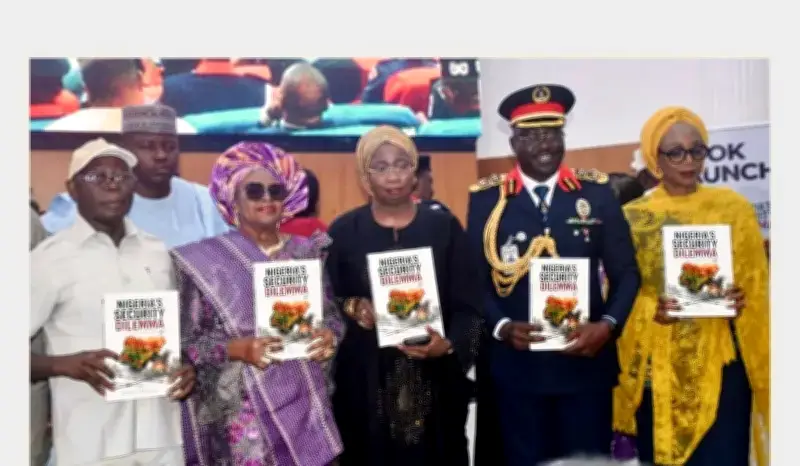
Commandant of the Federal Capital Territory (FCT) Command of the Nigeria Security and Civil Defence Corps (NSCDC), Dr. Olusola Odumosu, has identified unhealthy rivalry among security agencies as one of the factors undermining efforts to tackle insecurity in Nigeria. Odumosu stated this Friday in Abuja during the launch of his book titled: “Nigeria’s Security Dilemma: Rivalries and Implications.” He stressed the need for greater synergy and intelligence sharing among security agencies to effectively combat criminal activities across the country. According to him, no single agency possesses a monopoly of strategy, adding that coordinated efforts were necessary to address banditry, kidnapping and other security threats.
Inter-agency rivalry as a bane
“We are having what is called unhealthy inter-agency rivalry, which has been a bane to coordinated national responses to our security challenges. Security agencies must understand that we have the same focus and a collective responsibility to ensure peace and order in Nigeria,” he said. Odumosu noted that insecurity can only be effectively addressed when security agencies see themselves as collaborators rather than competitors. “The only way we can achieve this is by sharing intelligence and presenting a united front against criminality. When we continue to fight each other and see ourselves as competitors rather than collaborators, we still have a lot of work to do,” he added.
Senator Oshiomhole calls for NSCDC Act review
Speaking at the event, Chairman of the Senate Committee on Interior, Senator Adams Oshiomhole, called for a review of the Nigeria Security and Civil Defence Corps Establishment Act, arguing that the word “Civil” in the agency’s name no longer reflects the realities of the threats faced by its personnel. Oshiomhole said the designation suggests that NSCDC operatives are not expected to bear arms, despite confronting heavily armed criminals involved in illegal mining, vandalism and oil bunkering. “To be civil means you should not bear firearms. But how do you deal with hardened criminals carrying sophisticated weapons? You cannot expect officers protecting critical national assets to preach to criminals who are armed,” the Edo North senator said.
Exclusion from security meetings
He also expressed concern over the exclusion of the NSCDC Commandant-General from some meetings involving service chiefs, describing such omissions as a gap in the country’s security architecture. He maintained that no security agency can tackle insecurity alone and urged Nigerians and security institutions to put aside their differences in the interest of national unity. He said President Bola Tinubu remained committed to ensuring the safety of Nigerians and reducing insecurity across the country.
Defence Ministry steps up collaboration
Representing the Minister of Defence, General Christopher Musa, Rear Admiral Olusanya Bankole (retd.) said the ministry had already begun taking steps to strengthen collaboration among security agencies. Bankole disclosed that the minister had reviewed a draft of the book and commended its emphasis on addressing inter-agency rivalry. “The stability of Nigeria is more important than the ego of any agency,” he said.
Global challenge and collective action
Also speaking, Deputy Commandant-General Zakari Ibrahim Ningi, who represented the Commandant-General of the NSCDC, Professor Ahmed Audi, described insecurity as a global challenge affecting every sector and noted that the timing of the book launch was apt. Security expert and reviewer of the book, Prof. Tyor Terhemba, said Nigeria’s security challenges require collective action and stronger cooperation among security agencies, regional actors and international partners. He noted that the book highlights issues such as political interference, ambiguous laws, accountability, security sector reforms, communication systems and intelligence sharing.
Odumosu reiterates call for collaboration
Odumosu reiterated that effective collaboration remains the key to restoring peace and ensuring a coordinated national response to insecurity. “No one has a monopoly of wisdom or strategy. We have a collective responsibility to ensure peace and order in Nigeria,” he said.